Why Were Five Bangladeshi Students Suspended by NIT Silchar and Deported?

Synopsis
In a shocking incident at NIT Silchar, five Bangladeshi students were suspended and deported due to their involvement in violent campus clashes. The actions taken by the institute highlight the importance of maintaining discipline and security in educational environments.
Key Takeaways
Campus violence can lead to severe disciplinary actions.
Possession of narcotics compounds the severity of incidents.
Educational institutions must ensure student safety .
Internal investigations are crucial for addressing misconduct.
Authorities are focused on maintaining a secure learning environment.
Guwahati, Sep 16 (NationPress) Five students from Bangladesh, who faced suspension from the National Institute of Technology (NIT) located in Assam’s Silchar, have been returned to their homeland, as confirmed by officials on Tuesday.
Dilip Kumar Baidya, the director of NIT, stated to IANS, “We have implemented strict measures against these five students studying under Indian Council for Cultural Relations (ICCR) scholarships, following their involvement in violent confrontations on campus earlier this month. After their suspension, the students were sent back to Bangladesh as they will no longer be able to attend classes here.”
All five students, currently in their third year, were reportedly found with narcotic substances, according to officials.
Prof. Dilip Kumar Baidya confirmed that they have been suspended for two semesters.
“We possess sufficient evidence establishing their participation in the violence. They have been suspended for one full academic year and expelled from the hostel. As they cannot continue their studies here, they have been repatriated,” Baidya mentioned.
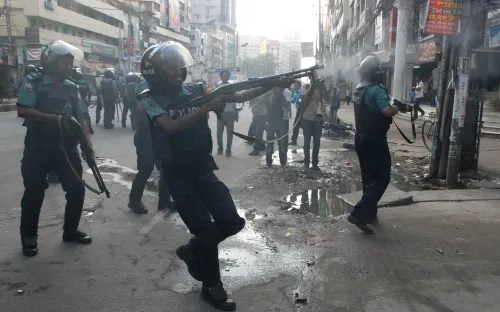
The violence occurred on the night of September 8, when a group of Bangladeshi students allegedly assaulted their fellow compatriots. Eyewitnesses reported that the accused, seemingly under the influence of drugs, engaged in a rampage wielding rods, knives, and screwdrivers, resulting in injuries to multiple students.
The assault lasted nearly 30 minutes, leading to two students being admitted to Silchar Medical College and Hospital with serious head injuries.
S.S. Dhar, the dean of students’ welfare, noted that narcotic substances were seized from the rooms of the accused.
“The main motivation for disciplinary action was the campus violence, but suspected drug use was also a factor,” he remarked.
According to fellow students, the attackers initially targeted peers from their own batch before turning on senior students who attempted to intervene.
Witnesses claimed that the lights were intentionally switched off during the assault to exacerbate the attack. The institute conducted an internal investigation, while an ICCR representative from the Guwahati zonal office also visited the campus.
“We are satisfied with the investigation and the disciplinary actions taken. The visiting ICCR director was also convinced, hence there was no necessity to involve the police,” Dhar concluded.
Point of View
It is vital to recognize that the actions taken by NIT Silchar in suspending and deporting these students reflect a commitment to maintaining a safe educational environment. While the situation is unfortunate, the institution must prioritize the safety and well-being of all its students.
NationPress
26 Sept 2026
Frequently Asked Questions
What led to the suspension of the students?
The students were suspended for their involvement in violent clashes on campus and possession of narcotic substances.
How long were the students suspended?
They have been suspended for one academic year and expelled from the hostel.
What was the outcome of the violence?
The violence resulted in injuries to several students, with two requiring hospitalization for serious head injuries.
What actions did the NIT take following the incident?
NIT conducted an internal inquiry and decided to suspend the involved students, leading to their deportation.
Was police involvement necessary?
Authorities determined that police involvement was not needed as the ICCR director was convinced with the internal investigation.