Is Fear Taking Over Indian Students in Bangladesh?
Synopsis
Amid rising violence against minorities, Indian students in Bangladesh are living in fear, prompting calls for stronger protections. This report delves into the troubling situation faced by these students and the urgent need for action.
Key Takeaways
Zero-tolerance approach needed for student safety.
Over 9,000 Indian medical students enrolled in Bangladesh .
Violence against minorities has surged, escalating fears.
Education must not be collateral damage in geopolitical disputes.
Governmental action is essential to restore safety and confidence.
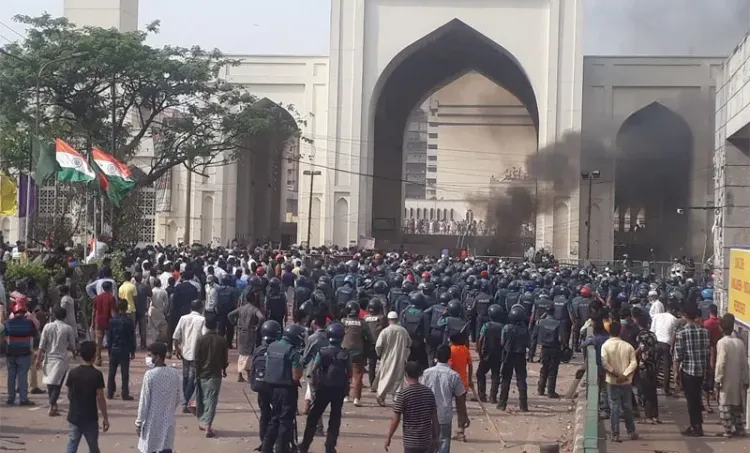
Dhaka, Jan 14 (NationPress) Bangladesh must embrace a zero-tolerance policy towards violence against international students, underpinned by effective legal action rather than mere promises, a report emphasized on Wednesday. It urged local educational institutions to extend their support beyond campus borders and advocate for their students' safety.
“A nation can lose its moral compass in various subtle ways. One of the most insidious is when students dread stepping out of their accommodations due to their nationality. Bangladesh is perilously approaching this threshold,” remarked a report from Eurasia Review.
Referencing a recent interview with an Indian medical student in Dhaka, known by the alias Karim, the report revealed that he confines himself to his hostel every evening out of fear—not due to academic pressure or fatigue.
“He listens intently before opening his door. He steers clear of marketplaces. He conceals his accent. His education—funded by his father's hard-earned savings—has morphed into a daily exercise in caution. What was once a second home now feels, as he puts it, like a prison,” it stated.
The report indicates that this situation is widespread, with over 9,000 Indian medical students currently enrolled in Bangladesh, motivated not by adventure but by economic viability.
“India generates aspirations faster than it provides educational opportunities. Over two million candidates compete for fewer than 60,000 government medical seats annually. While private institutions exist, their costs are exorbitant. In contrast, Bangladesh offers medical degrees at nearly half the cost. For numerous middle-class Indian families, this is not merely a choice but a necessity,” it elaborated.
“For years, this arrangement functioned smoothly. Indian students integrated into Dhaka’s urban tapestry, studied alongside their Bangladeshi counterparts, and quietly bolstered the academic landscape. Political tensions were merely background noise. That understanding has now disintegrated,” it further explained.
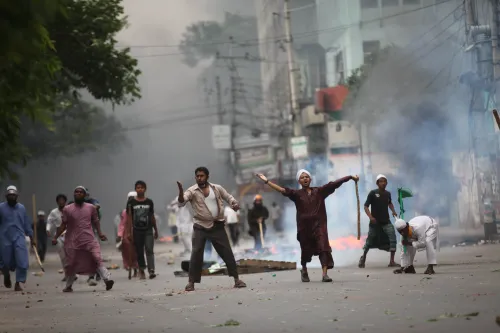
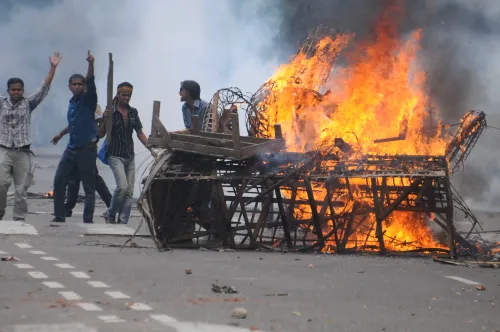
The report underscored that since the removal of former Prime Minister Sheikh Hasina, assaults on religious minorities, particularly Hindus, have reportedly surged, exacerbating fears.
“Dhaka maintains that these incidents are politically driven, not religiously motivated. However, that distinction offers little solace to a student whose examiner's demeanor grows stern once his identity is revealed. In politics, the effects often overshadow intentions,” it remarked.
The issue transcends bilateral relations, posing a risk of turning education into collateral damage in the South Asian context.
“When students become pawns in geopolitical disputes, it results in losses for everyone involved: host nations, sending nations, and the fragile notion that education can rise above politics,” it concluded.
Point of View
It is crucial to acknowledge the heightened concerns surrounding the safety of international students in Bangladesh. The reported violence against minorities is alarming and requires immediate governmental action to ensure a safe educational environment for all students. Upholding the safety of these students is vital not only for bilateral relations but also for maintaining the integrity of educational institutions.
NationPress
7 Oct 2026
Frequently Asked Questions
What sparked the fear among Indian students in Bangladesh?
The rise in violence against minorities, particularly Hindus, has created an atmosphere of fear, prompting many Indian students to feel unsafe.
How many Indian medical students are currently in Bangladesh?
There are over 9,000 Indian medical students enrolled in Bangladesh, seeking affordable education.
Why do Indian students choose to study in Bangladesh?
Many Indian students opt for Bangladesh due to the significantly lower costs of medical education compared to India.
What is the current situation for these students?
Students are increasingly isolating themselves in hostels, avoiding public places due to fears of violence.
What needs to be done to support these students?
A zero-tolerance policy towards violence and proactive measures from universities and authorities are crucial for ensuring student safety.