Flipkart's Controversial Rs 1 Milk Sale Sparks Demand for Modi's Intervention in Karnataka
Synopsis
On March 14, Flipkart's announcement of Rs 1 milk sales has ignited a significant controversy in Karnataka, prompting the state government to seek Prime Minister Modi's intervention and raise concerns about its impact on local farmers.
Key Takeaways
Flipkart's milk sale at Rs 1 has sparked controversy.
The Karnataka government seeks PM Modi's intervention .
Farmers express concerns about market stability.
BAMUL reports a significant drop in milk sales.
Farmers are encouraged to protest against the pricing strategy.
Bengaluru, March 14 (NationPress) On Saturday, Flipkart's announcement of selling milk at just Rs 1 has sparked a significant controversy in Karnataka.
The state government has reached out to Prime Minister Narendra Modi for intervention and plans to file a complaint with the Competition Commission of India (CCI).
In a press briefing in Bengaluru, D.K. Suresh, the President of the Bangalore Urban, Rural and Ramanagara District Co-operative Milk Producers' Societies Union Limited (BAMUL), expressed concerns over the impact this initiative could have on the agricultural community in the region.
Suresh noted that a formal complaint would be lodged against Flipkart with the CCI in New Delhi for allegedly offering one litre of milk for the unreasonably low price of Rs 1.
He stated, "Flipkart's decision to sell one litre of milk for just Rs 1 is purely a profit-driven move that threatens to dismantle the farming community. It is imperative for both the central and state governments to act swiftly, or we risk widespread protests nationwide."
The BAMUL President pointed out that such cutthroat competition aimed at market dominance ultimately harms farmers.
He mentioned that approximately Rs 2,000 crore has been invested in this initiative, questioning the ethical use of shareholders' funds.
Suresh warned that this strategy could undermine established cooperative milk unions that have been in existence since before the country gained independence.
"Multinational corporations are jeopardizing farmers' welfare. Flipkart must clarify in its advertisements the duration for which it intends to maintain such low prices. They should retract this policy that endangers the agricultural community," Suresh asserted.
He added that around 14.5 lakh litres of milk have already been sold under this promotion, and the advertisements have been extensively disseminated.
"Public funds are being utilized to lure customers. The company should reveal how long this pricing strategy will last," he stated.
When asked about the sales figures for Nandini milk, Suresh acknowledged the presence of various companies in the market.
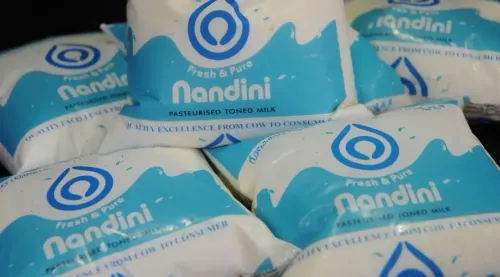
"It's not just Nandini. Sales within the BAMUL union have decreased by approximately 40,000 to 50,000 litres. We need to investigate when this decline began," he remarked.
In response to inquiries about potential influences behind the initiative, Suresh indicated that further information was still being collected.
"I've observed several advertisements. I will also confer with officials. It is unacceptable to exploit the farming community in the name of business. If domestic entities are involved, that is even more troubling," he added.
He mentioned that farmers currently receive between Rs 38 and Rs 40 per litre for milk.
"How is it feasible for anyone to sell milk for Rs 1 per litre? We need to ascertain the sources from which they are procuring this milk," he remarked.
Suresh encouraged the media to bring attention to this issue on a national level and to support farmers.
"I urge farmers to initiate protests. The Union government must take preventive measures," he stated.
When questioned about advising farmers against selling milk to such companies, Suresh highlighted the difficulty in tracing procurement sources.
"We are uncertain about their milk sourcing – whether from bulk suppliers or elsewhere. I am also coordinating to collect samples to verify if milk powder is being added. The samples will undergo laboratory testing. If our cooperative institutions face setbacks, the repercussions will directly impact farmers," he concluded.
Point of View
It's crucial to recognize the significant tension surrounding Flipkart's Rs 1 milk initiative. While it promises affordability for consumers, the implications for local farmers and cooperative unions cannot be overlooked. The government's response and potential regulatory actions will be pivotal in shaping the future landscape of milk sales in Karnataka.
NationPress
23 Sept 2026
Frequently Asked Questions
What is the controversy surrounding Flipkart's milk sale?
Flipkart's announcement to sell milk at Rs 1 has raised concerns among local farmers and cooperative unions in Karnataka, as it threatens their livelihoods and market stability.
What actions are being taken by the Karnataka government?
The Karnataka government has reached out to Prime Minister Modi for intervention and plans to file a complaint with the Competition Commission of India (CCI).
How has this affected local milk sales?
Sales within the BAMUL union have reportedly decreased by 40,000 to 50,000 litres, indicating a significant impact on local milk producers.
What are farmers being paid for milk currently?
Farmers are currently receiving between Rs 38 and Rs 40 per litre for their milk.
What is the farmers' response to Flipkart's actions?
Farmers are calling for protests and urging the government to take immediate action to protect their interests against aggressive pricing strategies.