Karnataka CM Office: Farmers Cheer Milk Price Hike

Synopsis
The Chief Minister's Office of Karnataka on November 4, 2026 shared farmer testimonials celebrating a state government decision to raise milk procurement prices, spotlighting the dairy welfare initiative anchored by the Karnataka Milk Federation's Nandini cooperative network.
Key Takeaways
The Chief Minister's Office of Karnataka posted farmer testimonials on November 4, 2026 welcoming a milk procurement price hike.
The post, in Kannada, calls the move an 'economic vitality' moment for the state's dairy farming community.
The Karnataka Milk Federation (KMF) , which markets milk under the Nandini brand, is the apex body through which the revised price flows to farmers.
Dairy farming is a primary livelihood for a significant share of Karnataka's rural agricultural households, particularly women managing household herds.
Specific per-litre revision amounts and statewide rollout details are yet to be formally confirmed.
District-level milk unions and KMF's consumer pricing response will be the key indicators to watch next.
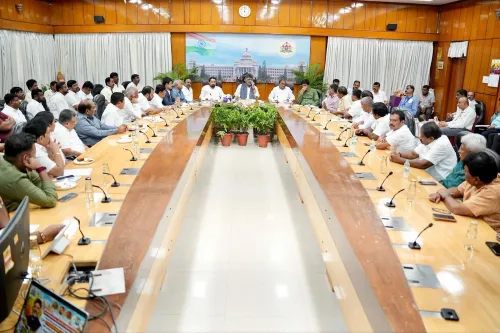
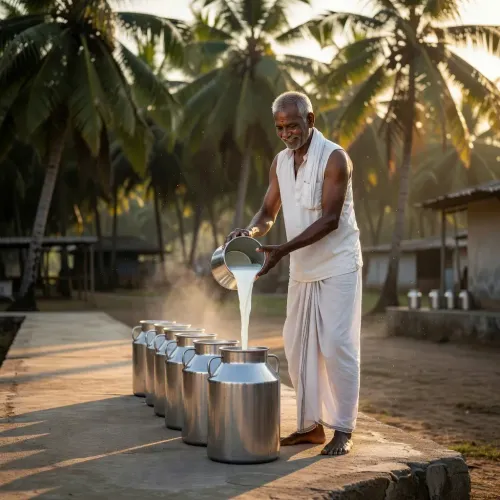
Dairy farmers across Karnataka are speaking in joy — and the state government wants the country to hear it. On Wednesday, November 4, 2026, the Chief Minister's Office of Karnataka shared video testimonials of milk producers welcoming the state's decision to raise the procurement price for milk, calling it a moment of 'economic vitality' in the lives of the state's dairy farming community.
The post, written in Kannada, reads: 'ನಾಡಿನ ಹೈನುಗಾರರ ಬದುಕಿನಲ್ಲಿ ಆರ್ಥಿಕ ಚೈತನ್ಯ!' — 'Economic vitality in the lives of the state's dairy farmers!' — before highlighting that farmers have expressed 'words of joy' in response to the state government's decision to ensure a better price for milk.
What the price revision means for Karnataka's dairy belt
Karnataka has one of India's most organised state dairy ecosystems, anchored by the Karnataka Milk Federation (KMF) — the apex cooperative that procures, processes, and markets milk under the iconic Nandini brand. KMF operates through a network of district-level milk unions, connecting hundreds of thousands of rural households to a structured supply chain. When the state revises the milk procurement price, the effect ripples down directly to small and marginal dairy farmers whose income depends on what cooperative agents pay them at the village collection point every morning.
Dairy farming is not a sideline in Karnataka's rural economy — it is a primary livelihood for a significant share of agricultural households, contributing meaningfully to the state's agricultural GDP and to rural employment, particularly for women who manage household herds. A better floor price, even a modest one, can translate into hundreds of additional rupees per month for a family supplying ten to fifteen litres a day.
A pattern of periodic state intervention in dairy pricing
Karnataka governments across political cycles have periodically stepped in to revise milk procurement prices, recognising that cooperative dairy viability depends on keeping farmers invested in the system. When procurement prices stagnate, farmers either cut herd sizes or divert supply to private traders — both outcomes weaken the cooperative network that underpins Nandini's market position. The current revision, amplified through farmer voice on official government channels, signals that the state is treating this as a visible welfare win, not just an administrative order.
What analysts and district dairy unions will now watch closely: the precise per-litre revision amount, whether KMF adjusts its consumer-end retail pricing in response, and whether the benefit flows uniformly across Karnataka's dairy districts or concentrates in certain milk-surplus belts. The farmer testimonials released today are the government's opening frame — the numbers will tell the fuller story.
For now, though, the dairy farmers speaking on camera have delivered a clear message: when the state listens, the village notices.
Point of View
Who want prices set by cooperative logic, and politicians who see it as a direct rural income lever. By framing the revision as farmers 'speaking for themselves,' the CMO sidesteps technocratic pushback while maximising grassroots resonance. The real test, as always, will be whether the revised price holds, and whether KMF's financial sustainability is managed alongside the farmer benefit.
NationPress
4 Nov 2026
Frequently Asked Questions
What is the new milk procurement price in Karnataka 2026?
The specific revised per-litre procurement price announced by the Karnataka government in November 2026 has not yet been officially confirmed in publicly available detail. The Chief Minister's Office shared farmer testimonials welcoming the hike, but the exact figure is pending formal KMF notification.
What is KMF and what is Nandini milk?
The Karnataka Milk Federation (KMF) is the state-level apex dairy cooperative that procures milk from farmers across Karnataka, processes it, and sells it to consumers under the Nandini brand — one of India's largest state dairy cooperative labels.
How does milk procurement price revision help dairy farmers in Karnataka?
A higher procurement price means farmers receive more money per litre of milk they supply to cooperative collection centres, directly raising household income — especially significant for small and marginal farmers who supply ten to fifteen litres a day.
Will the milk price hike increase Nandini milk retail prices for consumers?
Whether KMF adjusts its retail consumer prices following the procurement hike is not yet confirmed. This is one of the key developments analysts and district milk unions will watch in the coming weeks.
Which department oversees dairy farmer welfare in Karnataka?
Dairy farmer welfare in Karnataka is primarily managed through the Karnataka Milk Federation (KMF) and its network of district-level cooperative milk unions, under the broader oversight of the state's Animal Husbandry and Dairying department.