FM Sitharaman Meets 130 Girl Students in Chennai
Synopsis
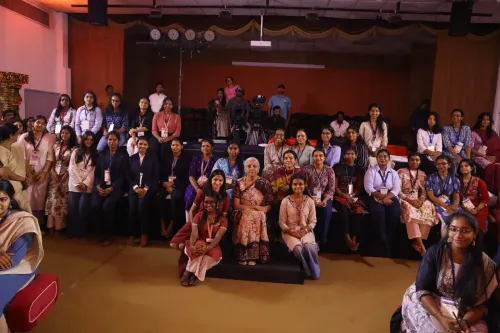
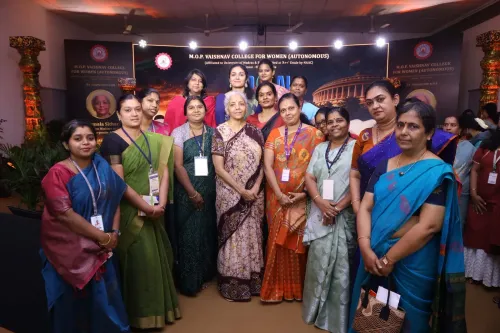
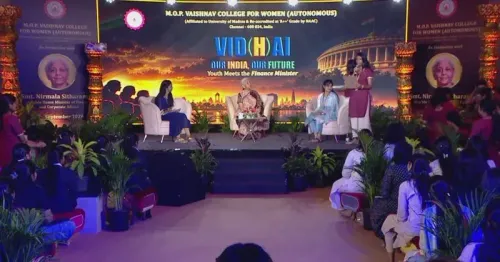
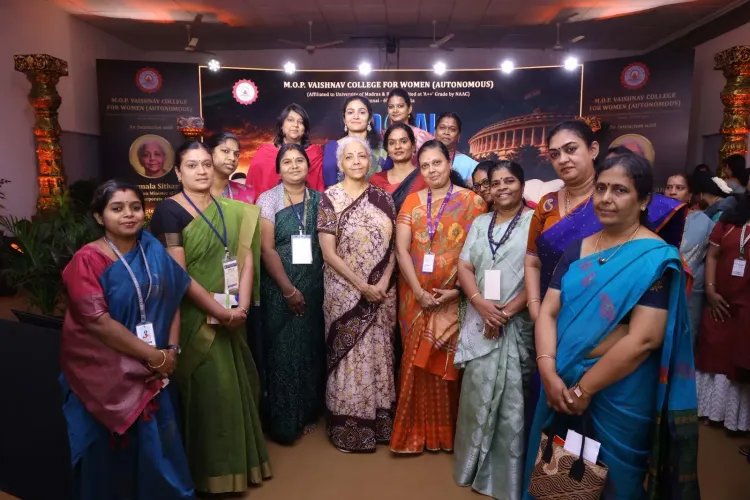
Union Finance Minister Nirmala Sitharaman joined an interactive session with around 130 girl students drawn from 20 colleges at M.O.P. Vaishnav College for Women in Nungambakkam, Chennai, on 25 September 2026, in a cross-institutional outreach engagement.
Key Takeaways
Union Finance Minister Nirmala Sitharaman visited M.O.P.
Vaishnav College for Women in Nungambakkam, Chennai on 25 September 2026 .
Around 130 girl students attended the interactive session.
Participants came from 20 different colleges across the city, giving the event a broad cross-institutional character.
The visit is part of the broader pattern of Union ministers conducting outreach sessions at educational institutions across India.
No specific policy announcement was linked to the session.
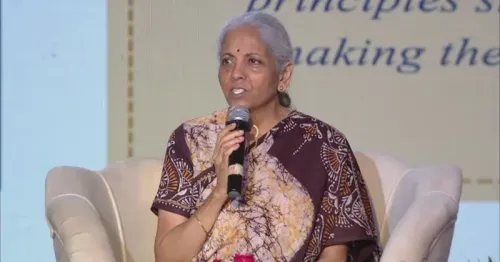
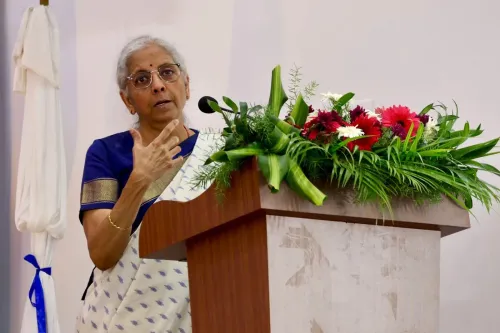
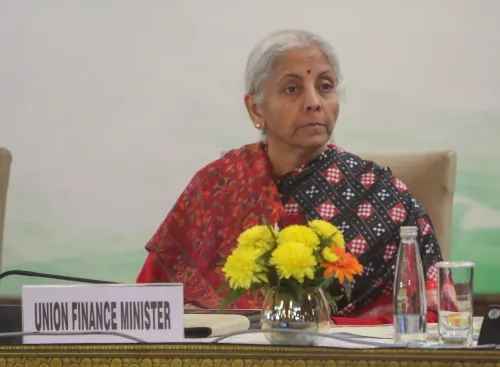
When India's top finance minister walks into a women's college and sits down with 130 students from 20 different colleges, the room carries a charge that no budget speech can quite replicate. Union Finance Minister Nirmala Sitharaman participated in an interactive session with girl students at M.O.P. Vaishnav College for Women in Nungambakkam, Chennai, Tamil Nadu, on Friday, 25 September 2026.
130 Students, 20 Colleges, One Room in Nungambakkam
The gathering drew participants not just from M.O.P. Vaishnav but from 20 different colleges across the city, giving the session a cross-institutional character that went well beyond a routine campus visit. Roughly 130 students filled the hall, representing a breadth of academic backgrounds and institutions that rarely share the same floor at once.
M.O.P. Vaishnav College for Women is one of Chennai's prominent women's institutions, situated in the heart of Nungambakkam — a neighbourhood that also houses diplomatic missions and financial offices, lending the setting a certain symbolic weight for a visit by the country's Finance Minister.
A Minister Who Has Become a Reference Point for Women in Public Life
Sitharaman is both the first full-time woman Finance Minister of India and one of the most visible faces of the BJP's national economic narrative. For the students in that room — many of them studying commerce, economics, or management — her presence carried a dimension no textbook can supply: a live case study in navigating India's highest policy corridors.
Union ministers periodically hold such interactive sessions at colleges as part of broader public outreach, and engagements of this kind typically span multiple states without being tied to specific policy announcements. Still, the Chennai visit lands in a city that is also a major hub of Tamil Nadu's banking, financial services, and education sectors — context that gives even a conversational session a practical edge for students considering careers in those fields.
For 130 young women who came from across Chennai's college circuit, the real takeaway may be less about any single policy answer and more about the question the room itself posed — who gets to sit at that table, and how do you get there.
Point of View
Particularly in states where the party is working to expand its footprint. Tamil Nadu, where the BJP faces stiff regional competition, makes such engagements politically layered even when they carry no overt campaign messaging. For a Finance Minister whose budget speeches shape lives in abstract, sitting face-to-face with women students in a southern metropolis is also soft diplomacy — bridging the distance between New Delhi's policy machinery and the next generation of professionals it aims to reach. Whether these interactions translate into durable connect with Tamil Nadu's young electorate is the question that hangs over every such visit.
NationPress
25 Sept 2026
Frequently Asked Questions
Where did Nirmala Sitharaman meet students in Chennai?
She participated in an interactive session at M.O.P. Vaishnav College for Women in Nungambakkam, Chennai, Tamil Nadu, on 25 September 2026.
How many students attended Sitharaman's session at MOP Vaishnav College?
Around 130 girl students attended the session, drawn from 20 different colleges across Chennai.
What is M.O.P. Vaishnav College for Women?
M.O.P. Vaishnav College for Women is a prominent women's college located in Nungambakkam, Chennai, Tamil Nadu.
Why does Nirmala Sitharaman visit colleges?
Union ministers, including Sitharaman, periodically hold interactive sessions at educational institutions as part of public outreach, engaging students on career, finance, and governance topics.
Is Nirmala Sitharaman the first woman Finance Minister of India?
Yes, Nirmala Sitharaman is India's first full-time woman Finance Minister and also serves as Minister of Corporate Affairs.