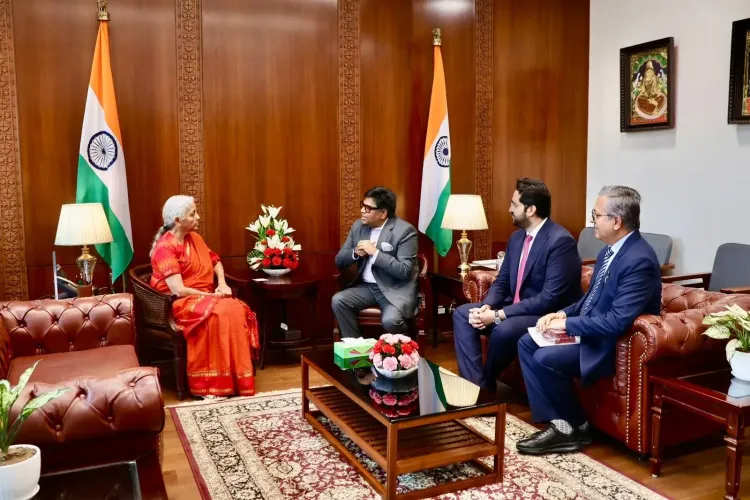
FM Sitharaman meets Indian Chamber of Commerce delegation
Synopsis
Union Finance Minister Nirmala Sitharaman met a delegation from the Indian Chamber of Commerce, Kolkata, on 9 June 2026. The meeting is part of the Finance Ministry's routine consultative outreach with regional industry bodies, particularly ahead of the Union Budget cycle.
Key Takeaways
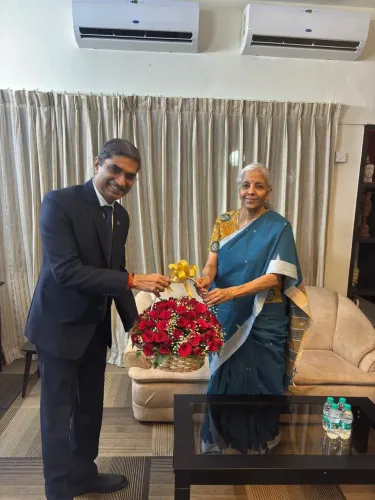
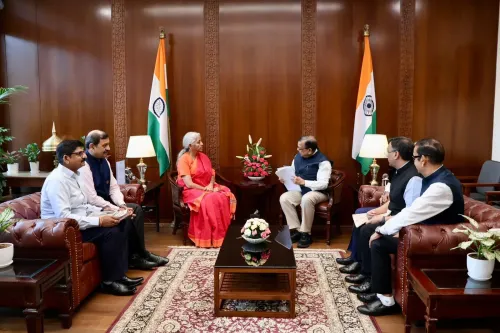
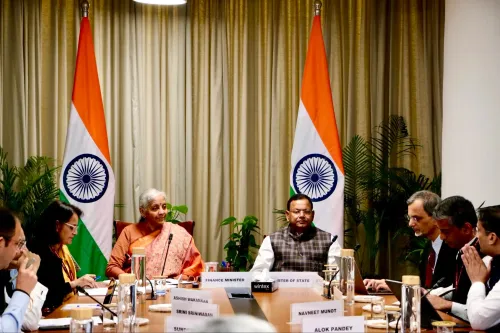
Union Finance Minister Nirmala Sitharaman received a delegation from the Indian Chamber of Commerce (ICC), Kolkata on 9 June 2026 .
The ICC is one of India's oldest business chambers, headquartered in Kolkata , representing trade and industry interests in eastern India.
The meeting is part of the Finance Ministry's standing consultative process with organised business and industry bodies.
Finance ministers have held similar pre-budget consultations with chambers of commerce in multiple prior years, including 2024 .
No specific agenda or outcomes of the meeting were disclosed in the official communication.
Eastern Indian industry inputs from such meetings are watched for their potential influence on upcoming Union Budget proposals.
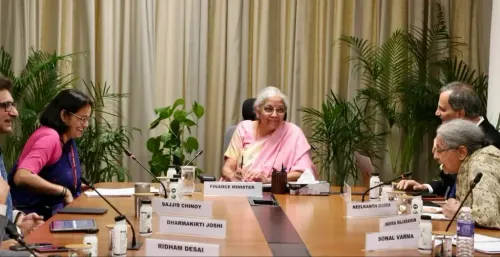
Union Finance Minister Nirmala Sitharaman received a delegation from the Indian Chamber of Commerce (ICC), Kolkata, on Tuesday, 9 June 2026, in what marks a continuation of the Finance Ministry's standing consultative engagement with organised business bodies from eastern India.
Context
The Indian Chamber of Commerce, headquartered in Kolkata, is one of India's oldest trade and industry bodies, with a membership base drawn heavily from eastern and north-eastern India. A delegation calling on the Finance Minister signals an active channel of communication between the chamber and the Union government at a senior level.
The meeting was confirmed through the official handle of Smt Nirmala Sitharaman, noting the delegation's courtesy call. No specific agenda or outcomes were disclosed in the post.
Policy Backdrop
The Finance Ministry has a long-standing practice of holding consultative meetings with chambers of commerce and industry associations as part of its outreach ahead of the Union Budget. Such interactions have been a regular feature in multiple pre-budget cycles, including 2024, allowing industry bodies to present their concerns on taxation, regulatory frameworks, and investment climate.
Eastern India, represented prominently by the ICC, has historically raised issues around infrastructure investment, logistics costs, and incentives for manufacturing in the region. These inputs have, on occasion, informed policy positions in subsequent budgets.
Stakeholders and Impact
The ICC represents a broad cross-section of businesses spanning trade, manufacturing, and services sectors concentrated in West Bengal and neighbouring states. Engagement at the level of the Union Finance Minister carries significance for industries seeking policy relief, tax rationalisation, or enhanced public investment in the eastern corridor.
Business leaders from the region view such meetings as an opportunity to place their priorities directly before the government's top economic decision-maker. The outcomes of such consultations, while rarely announced immediately, can shape the contours of fiscal policy in subsequent budgets.
What's Next
With the next Union Budget cycle on the horizon, inputs gathered through consultations like this one with the Indian Chamber of Commerce will be watched closely by eastern Indian industry. Any subsequent policy announcements — on taxation, infrastructure spending, or ease-of-doing-business reforms — that cite inputs from regional chambers will indicate how effectively these engagements translate into concrete measures.
Point of View
Kolkata, fits squarely into a well-established pattern of pre-budget industry outreach that successive finance ministries have maintained. What makes this engagement noteworthy is its eastern India focus — a region the current government has repeatedly signalled as a priority for investment and development. Regular face-time between the Finance Minister and regional chambers also serves a political signal: that the Centre is receptive to business voices beyond the traditional western and southern industrial corridors. How much of the ICC's agenda finds its way into the next budget will be the real measure of this consultation's weight.
NationPress
19 Sept 2026
Frequently Asked Questions
Why did the Indian Chamber of Commerce meet Finance Minister Nirmala Sitharaman?
The Indian Chamber of Commerce, Kolkata, sent a delegation to call on Finance Minister Nirmala Sitharaman as part of the Finance Ministry's routine consultative engagement with organised business bodies. Such meetings allow industry to present views on taxation, regulation, and investment.
What is the Indian Chamber of Commerce, Kolkata?
The Indian Chamber of Commerce (ICC) is one of India's oldest trade and industry bodies, headquartered in Kolkata. It primarily represents business interests from eastern and north-eastern India across sectors including trade, manufacturing, and services.
Does the Finance Minister regularly meet industry chambers before the Union Budget?
Yes. The Finance Ministry has a long-standing practice of holding pre-budget consultations with chambers of commerce and industry associations. These meetings have been a regular feature across multiple budget cycles, including 2024.
What issues does eastern Indian industry typically raise with the Finance Minister?
Eastern Indian industry bodies like the ICC typically raise concerns around infrastructure investment, logistics costs, manufacturing incentives, and tax rationalisation — issues central to improving the region's competitiveness and attracting investment.
What outcomes came from the 9 June 2026 meeting between Sitharaman and the ICC?
No specific agenda or outcomes were disclosed in the official communication about the 9 June 2026 meeting. The results of such consultations typically become visible only when subsequent budget or policy announcements reflect the inputs shared.