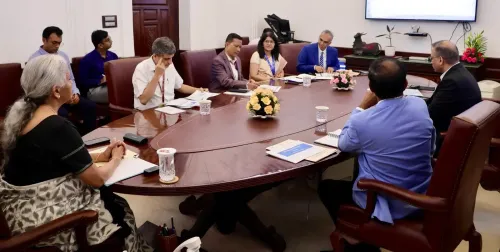
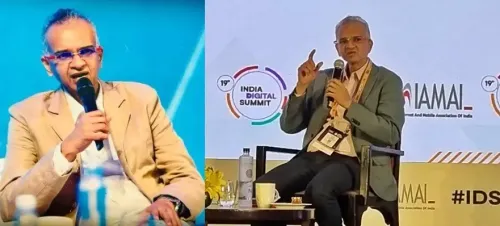
FM Sitharaman meets NPCI chief Dilip Asbe
Synopsis
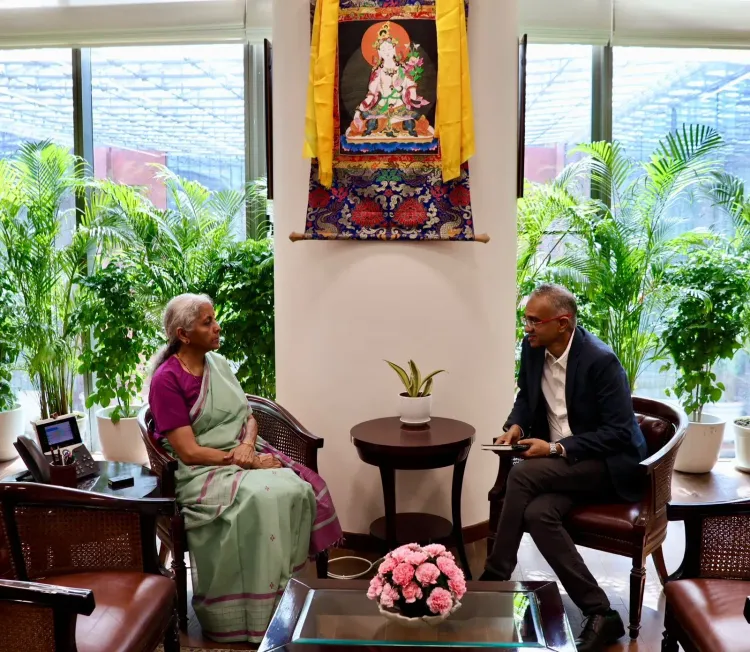
Union Finance Minister Nirmala Sitharaman received NPCI MD and CEO Dilip Asbe for a courtesy call on 22 June 2026 in New Delhi, highlighting continued high-level government engagement with India's retail payment infrastructure as UPI volumes and cross-border linkages expand.
Key Takeaways
Union Finance Minister Nirmala Sitharaman met Dilip Asbe , MD and CEO of NPCI , on 22 June 2026 in New Delhi.
NPCI was incorporated in 2008 under RBI guidance to manage India's retail payment infrastructure.
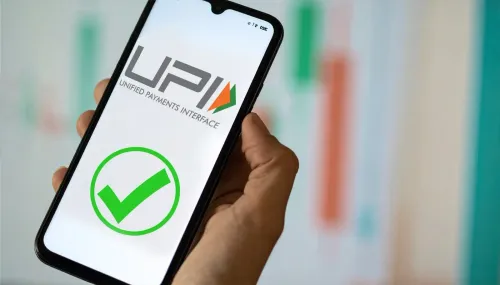
NPCI's Unified Payments Interface (UPI) , launched in 2016 , is one of the world's largest real-time payment rails.
Finance Ministry meetings with NPCI leadership typically address regulatory alignment, system resilience, and financial inclusion goals.
India has been actively expanding UPI linkages with foreign jurisdictions as part of its digital payment globalisation push.
No specific agenda or outcomes from the meeting were disclosed publicly.
Union Finance Minister Nirmala Sitharaman received Dilip Asbe, Managing Director and Chief Executive Officer of the National Payments Corporation of India (NPCI), at a courtesy call on Monday, 22 June 2026, in New Delhi. The meeting brings together the government's top financial policymaker and the head of the organisation that runs India's core retail payment infrastructure.
Context
The Finance Ministry confirmed the meeting through an official post on X, noting that Dilip Asbe called on Smt Nirmala Sitharaman in his capacity as MD and CEO of NPCI. Such engagements between NPCI leadership and the Finance Minister are a routine but significant part of the regulatory and policy coordination that governs India's payment ecosystem. No agenda or outcomes were disclosed in the public post.
NPCI operates as a non-profit entity under the guidance of the Reserve Bank of India and the Indian Banks' Association. It was incorporated in 2008 to build and manage the country's retail payment infrastructure, and its systems now underpin everyday financial transactions for hundreds of millions of Indians.
Policy Backdrop
NPCI's flagship product, the Unified Payments Interface (UPI), was launched in 2016 and has since grown into one of the world's largest real-time interoperable payment rails. UPI volumes have risen sharply over the past decade, cementing India's position as a global leader in digital payments. The platform also operates RuPay, the domestic card network, and a suite of other retail payment products.
Finance Ministry engagement with NPCI leadership typically covers regulatory alignment, system resilience, financial inclusion targets, and the expansion of India's payment rails to foreign jurisdictions. India has actively pursued UPI linkages with several countries as part of its broader push to internationalise its payment infrastructure.
Stakeholders and Impact
The meeting is of direct relevance to banks, fintech firms, and the hundreds of millions of retail users who rely on NPCI-operated systems for daily transactions. Any policy signals emerging from such high-level consultations can influence the direction of digital payment regulations, fee structures, and cross-border payment tie-ups.
For the broader financial sector, the Finance Minister's continued engagement with NPCI signals the government's ongoing prioritisation of digital payment infrastructure as a pillar of economic policy. India's digital public infrastructure stack — of which NPCI's rails are a central component — has drawn significant international attention and is frequently cited in multilateral forums.
What's Next
Observers will watch for any follow-up announcements from the Finance Ministry or NPCI regarding regulatory updates, new UPI linkage agreements with foreign payment systems, or revised guidelines from the Reserve Bank of India on payment system operators. As India's digital payment volumes continue to scale, coordination between the Finance Ministry and NPCI leadership is expected to intensify, particularly around system resilience, consumer protection, and the global expansion of UPI.
Point of View
The Finance Ministry's direct engagement with NPCI leadership carries growing strategic weight. This meeting fits a broader arc in which India is leveraging its payment infrastructure as both a domestic financial inclusion instrument and a soft-power asset internationally. The absence of a disclosed agenda leaves room for speculation about imminent regulatory or partnership announcements, though none should be assumed from the public record alone.
NationPress
22 Jun 2026
Frequently Asked Questions
Why did NPCI chief Dilip Asbe meet Finance Minister Nirmala Sitharaman?
Dilip Asbe, MD and CEO of NPCI, called on Finance Minister Nirmala Sitharaman on 22 June 2026 in what was described as a courtesy call. Such meetings between NPCI leadership and the Finance Ministry typically cover regulatory alignment, UPI policy, and digital payment infrastructure priorities.
What is NPCI and what does it do?
The National Payments Corporation of India (NPCI) is a non-profit entity incorporated in 2008 under RBI guidance. It operates India's core retail payment infrastructure, including the Unified Payments Interface (UPI) and the RuPay card network.
What is UPI and who oversees it?
UPI, or Unified Payments Interface, is a real-time interoperable payment rail launched by NPCI in 2016. It is overseen by NPCI under the regulatory guidance of the Reserve Bank of India, and has grown into one of the world's largest digital payment systems.
What topics are typically discussed when NPCI meets the Finance Minister?
Meetings between NPCI leadership and the Finance Minister typically address regulatory alignment, system resilience, financial inclusion targets, fee structures, and the expansion of UPI linkages with foreign payment systems.
Is UPI being expanded to other countries?
Yes, India has been actively pursuing UPI linkages with several foreign jurisdictions as part of a broader push to internationalise its payment infrastructure. These cross-border tie-ups are a key area of Finance Ministry and NPCI coordination.