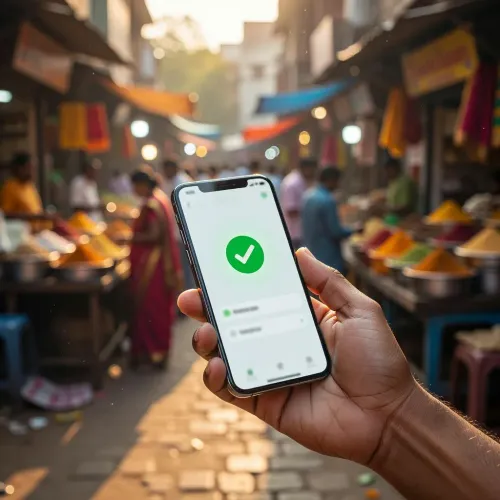
Vaishnaw highlights UPI milestone: 24,000 cr transactions in FY26

Synopsis
Union Minister Ashwini Vaishnaw has cited UPI processing over 24,000 crore transactions worth more than ₹314 lakh crore in FY26, underscoring India Stack's role as the country's core financial highway and a global benchmark for digital public infrastructure.
Key Takeaways
Union Minister Ashwini Vaishnaw shared that UPI processed over 24,000 crore transactions in FY26 .
The total annual transaction value exceeded ₹314 lakh crore , reflecting UPI's massive scale.
UPI was launched by NPCI in August 2016 as part of the broader India Stack digital infrastructure.
India Stack encompasses Aadhaar , UPI , and DigiLocker , enabling paperless and presence-less service delivery.
The minister's post is the 11th in a series documenting India's digital public infrastructure milestones.
Cross-border UPI linkages with countries including Singapore , UAE , and France are part of the system's expanding global footprint.
Union Minister Ashwini Vaishnaw on Wednesday, June 10, 2026 highlighted a landmark milestone for India's digital payments ecosystem, sharing that the Unified Payments Interface (UPI) processed over 24,000 crore transactions in FY26, with a total annual value exceeding ₹314 lakh crore. The minister framed the achievement as part of a broader series on India's digital infrastructure, calling it 'The Financial Highway — UPI and the India Stack.'
Context
Vaishnaw's post is the 11th instalment in what appears to be a running thread documenting India's digital public infrastructure achievements. The minister described UPI as delivering 'empowerment at the click of a button,' underscoring the government's narrative that digital financial rails have democratised access to payments for ordinary citizens and small merchants alike.
The figures cited — over 24,000 crore transactions and a value of more than ₹314 lakh crore — represent the scale at which India's real-time payments network now operates, a volume that places India among the world's highest-volume instant-payment markets.
Policy Backdrop
UPI was launched by the National Payments Corporation of India (NPCI) in August 2016, enabling instant, interoperable bank-to-bank transfers via mobile devices without the need for account numbers or IFSC codes. It sits at the core of India Stack, the open digital public infrastructure layer that also encompasses Aadhaar and DigiLocker, designed to deliver paperless, presence-less services at scale.
NPCI, a non-profit body authorised by the Reserve Bank of India (RBI), operates UPI under a low-cost, open-API model that has allowed thousands of banks and fintech applications to plug into the same payment rails. This regulatory architecture has been central to keeping transaction costs near zero for end users, accelerating adoption across income groups.
Stakeholders and Impact
The primary beneficiaries of UPI's scale are retail consumers and small merchants, who now conduct everyday transactions — from vegetable purchases to utility bill payments — entirely on digital rails. The shift has reduced dependence on cash, expanded financial inclusion, and created a data-rich transaction layer that supports credit underwriting for previously unbanked populations.
For the government, the India Stack framework — of which UPI is the payments pillar — has become a flagship export, with India actively promoting bilateral UPI linkages with countries including Singapore, UAE, France and others. The minister's post reinforces the political salience of this infrastructure as a signature achievement of the current administration.
What's Next
Attention will remain on RBI decisions regarding UPI transaction limits, the expansion of cross-border payment linkages, and any new modules added to the India Stack framework. As transaction volumes grow, questions around system resilience, fraud prevention, and the monetisation model for payment service providers are likely to come into sharper focus for policymakers and regulators.
The minister's ongoing thread suggests further data points on India's digital infrastructure are forthcoming, potentially building toward a consolidated policy or legislative announcement in this space.
Point of View
Data-driven case for the government's technology legacy ahead of any electoral or policy cycle. By anchoring the narrative to concrete transaction volumes, the minister sidesteps ideological debate and lets scale speak for itself. The framing of UPI as a 'financial highway' also signals intent to position India Stack not merely as a domestic utility but as an exportable governance model. Watch for this thread to culminate in a policy announcement or a major international DPI forum.
NationPress
26 Sept 2026
Frequently Asked Questions
How many UPI transactions were processed in FY26?
According to Union Minister Ashwini Vaishnaw, UPI processed over 24,000 crore transactions in FY26, with a total value exceeding ₹314 lakh crore.
What is India Stack?
India Stack is an open digital public infrastructure framework comprising Aadhaar, UPI, and DigiLocker, designed to deliver paperless and presence-less government and financial services at scale.
Who operates UPI in India?
UPI is operated by the National Payments Corporation of India (NPCI), a non-profit body authorised by the Reserve Bank of India to run retail payment systems.
When was UPI launched in India?
UPI was launched by NPCI in August 2016, enabling instant, interoperable bank-to-bank transfers via mobile without requiring account numbers or IFSC codes.
Is UPI available for international payments?
Yes, India has established cross-border UPI linkages with several countries including Singapore, UAE, and France, and is actively expanding these bilateral arrangements.