FNTA Bill 2026: CM Rio says authority will bridge Eastern Nagaland's development gap
Synopsis
After over a decade of demands for a separate state, Eastern Nagaland's six historically marginalised districts are set to get a self-governing territorial authority with control over 46 subjects — and Nagaland CM Rio is pushing the Centre to double the special development grant to ₹10,000 crore to make it meaningful.
Key Takeaways
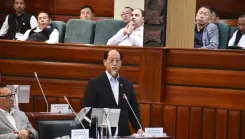
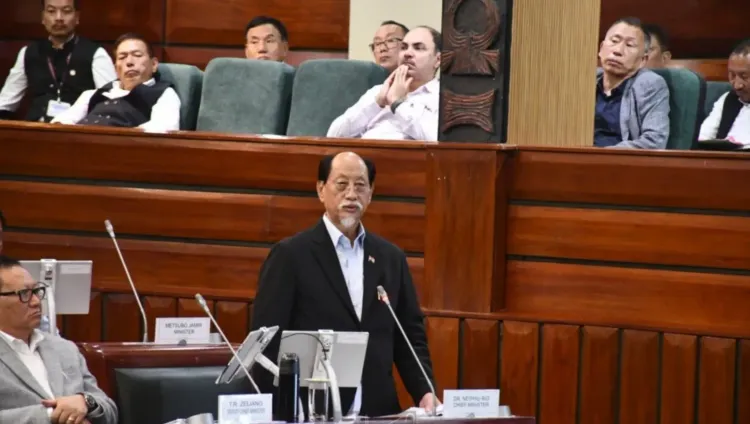
Nagaland CM Neiphiu Rio presented concluding remarks on the FNTA Bill, 2026 in the 9th session of the 14th Nagaland Legislative Assembly on 4 September .
The FNTA will cover six eastern districts : Tuensang, Mon, Longleng, Kiphire, Noklak, and Shamator , home to seven backward tribes .
The state has sought enhancement of the special developmental grant from ₹5,000 crore to a minimum of ₹10,000 crore .
46 subjects are to be devolved to the new authority, which will prepare its own annual plans.
Constitutional protections under Article 371(A) will remain inviolable, Rio confirmed.
The ENPO and allied organisations have been demanding a separate territory or statehood since 2010 .
Nagaland Chief Minister Neiphiu Rio on Thursday, 4 September said the proposed Frontier Nagaland Territorial Authority (FNTA) would help close longstanding developmental gaps in the state's eastern region, ensuring accelerated, inclusive and equitable growth for communities that have faced decades of neglect.
Key Developments in the Assembly
Delivering his concluding remarks on the FNTA Bill, 2026 during the 9th session of the 14th Nagaland Legislative Assembly in Kohima, Rio described the FNTA as a 'unique self-governing territorial authority' designed to fulfil the social, economic, educational, cultural and linguistic aspirations of the people of Eastern Nagaland. He emphasised that the authority would operate within a framework of democratic and decentralised governance.
The six districts brought under the FNTA — Tuensang, Mon, Longleng, Kiphire, Noklak, and Shamator — have historically faced developmental deficits driven by geographical isolation and administrative under-resourcing, Rio noted.
Constitutional Safeguards and Special Grant
Rio reiterated that the protections enshrined under Article 371(A) of the Constitution would remain inviolable under the new arrangement. The state government, he said, had worked in close consultation with the Government of India, the Eastern Nagaland Peoples' Organisation (ENPO), and other stakeholders to address legal and constitutional concerns surrounding the Bill.
Notably, the state has sought an enhancement of the proposed special developmental grant from ₹5,000 crore to a minimum of ₹10,000 crore to accelerate infrastructure development and economic growth in the region. Rio said the Centre would provide funds through Special Development Grants, while the state would allocate additional resources based on population and area.
Powers and Governance Structure
Under the agreed framework, 46 subjects are to be devolved to the new authority, which will also prepare its own annual plans and formulate development programmes grounded in grassroots requirements. Rio described the FNTA as 'not merely an administrative arrangement but a reaffirmation of the collective commitment to equitable development, unity and progress for all sections of the people.'
Background: A Demand Since 2010
The push for a separate territorial arrangement is not new. Since 2010, the ENPO and allied Naga organisations have demanded either a separate 'Frontier Nagaland Territory' or full statehood for the six eastern districts, which are home to seven historically backward tribes — Chang, Khiamniungan, Konyak, Phom, Tikhir, Sangtam, and Yimkhiung. The FNTA Bill, 2026 represents the most concrete legislative response to that demand to date.
How quickly the Centre formalises the special development grant and whether the ₹10,000 crore threshold is accepted will be the immediate test of the authority's viability.
Point of View
But its real test lies in funding. The state's push to double the special grant to ₹10,000 crore signals that Kohima knows a toothless authority will only deepen grievances. Devolving 46 subjects on paper means little if the Centre does not match it with commensurate fiscal transfers. The ENPO's decade-long demand for full statehood has not disappeared — it has been deferred. If the FNTA fails to deliver visible development within its first term, the separatist pressure will return stronger, and the constitutional workaround will have bought time rather than solved the underlying problem.
NationPress
4 Sept 2026
Frequently Asked Questions
What is the Frontier Nagaland Territorial Authority (FNTA)?
The FNTA is a proposed self-governing territorial authority for six eastern districts of Nagaland — Tuensang, Mon, Longleng, Kiphire, Noklak, and Shamator — established under the FNTA Bill, 2026. It will have control over 46 devolved subjects and prepare its own annual development plans.
Why have Eastern Nagaland's districts faced development deficits?
According to Chief Minister Rio, the six eastern districts have faced developmental deficits due to historical neglect and geographical challenges. They are home to seven tribes — Chang, Khiamniungan, Konyak, Phom, Tikhir, Sangtam, and Yimkhiung — classified as historically backward.
How much special grant is being sought for Eastern Nagaland?
The Nagaland state government has sought enhancement of the proposed special developmental grant from ₹5,000 crore to a minimum of ₹10,000 crore, to accelerate infrastructure and economic development in the region.
Will Article 371(A) protections remain under the FNTA?
Yes. Chief Minister Rio explicitly confirmed that the constitutional safeguards under Article 371(A), which protect Naga customary law and land rights, will remain inviolable under the new FNTA arrangement.
How long have Eastern Nagaland groups been demanding a separate territory?
Since 2010, the Eastern Nagaland Peoples' Organisation (ENPO) and allied Naga organisations have demanded either a separate 'Frontier Nagaland Territory' or full statehood for the six eastern districts. The FNTA Bill, 2026 is the most concrete legislative response to that demand.