NHRC Gujarat camp: 73 cases disposed, ₹3.7 crore compensation reported
Synopsis
The NHRC wrapped up a two-day Gandhinagar camp sitting with 73 cases disposed and over ₹3.7 crore in compensation reported — including ₹2 crore to families of four workers killed by toxic gas at Dahej. Custodial abuse, industrial deaths, and bonded labour featured prominently, signalling persistent systemic gaps in Gujarat's human rights compliance record.
Key Takeaways
The NHRC disposed of 73 cases during a two-day camp sitting in Gandhinagar on 2–3 September .
Compensation exceeding ₹3.7 crore was reported across matters resolved during the proceedings.
Families of four workers who died inhaling toxic gases at a Dahej chemical plant received more than ₹2 crore in compensation.
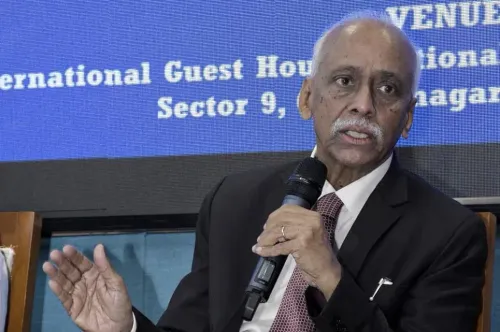
A woman allegedly detained unlawfully was awarded ₹7.5 lakh ; NHRC Chairperson Justice V.
Ramasubramanian said her time in custody 'cannot be wiped out.' 27 bonded labour cases were heard on 3 September in the presence of the Gujarat Labour Secretary and district magistrates.
The Commission also directed remedial action on school infrastructure failures and denial of cremation grounds to Scheduled Caste communities.
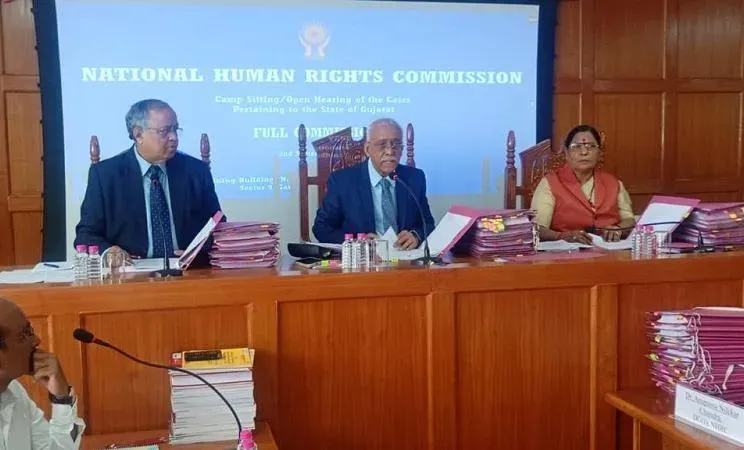
The National Human Rights Commission (NHRC) disposed of 73 cases during a two-day camp sitting and open hearing in Gandhinagar, Gujarat, on 2–3 September, with compensation exceeding ₹3.7 crore reported across matters resolved during the proceedings. The hearings, held at the National Forensic Sciences University, marked one of the Commission's most substantive outstation sittings in recent years.
Key Developments
The Full Commission — comprising NHRC Chairperson Justice V. Ramasubramanian and members Justice (Dr) Vidyut Ranjan Sarangi and Vijaya Bharathi Sayani — heard 45 cases on 2 September and closed 27 after reviewing party submissions and compliance reports. A separate Division Bench comprising Sarangi and Sayani heard 57 cases on 3 September, disposing of 46.
On the second day, Justice Ramasubramanian also separately heard 27 cases concerning alleged bonded labour in the presence of the Gujarat Labour Secretary and district magistrates from the districts concerned.
Cases of Custodial Abuse and Industrial Deaths
Among the more serious matters, the Commission considered cases involving custodial deaths, police excesses, and civic negligence resulting in fatalities. In one case, a woman was allegedly arrested without proper notice and detained unlawfully; the Commission recommended compensation of ₹7.5 lakh.
Justice Ramasubramanian, speaking at a media briefing after the hearing, said the woman had subsequently been released on bail and the police case closed for lack of evidence, but added: 'The fact that she had suffered in jail cannot be wiped out.'
Industrial accident cases from across Gujarat were also taken up. In Bharuch, families of five workers killed in a fire and explosion at a chemical factory received compensation. At a chemical plant in Dahej, four workers died after inhaling toxic gases; their families received compensation totalling more than ₹2 crore. In Ahmedabad, the Commission heard a case involving the deaths of three workers after a large advertising hoarding collapsed — criminal proceedings have been initiated, while compensation details remain pending.
Other Matters Addressed
The Commission also took up a case in which a child was reportedly taken away by a dog and never recovered, recommending compensation for the family. Complaints concerning school infrastructure failures and the absence of cremation grounds for Scheduled Caste communities were also heard, with remedial action directed.
The Division Bench disposed of matters in which proof of payment of ₹27 lakh was submitted as compensation to the next of kin of a deceased person. In remaining matters, the Commission sought further reports from authorities.
Civil Society Engagement
The two-day sitting also included structured interactions with human rights defenders, NGOs, and civil society organisations, followed by a meeting with senior Gujarat state government officials on human rights protection and implementation. The Commission stated that the camp sitting was designed to examine pending complaints directly, assess authority compliance, and provide relief where violations had been established.
With several industrial safety and custodial abuse cases still under review, further compliance reports are expected to be filed before the Commission in the coming weeks.
Point of View
From custodial detention without notice to toxic-gas deaths at industrial plants, point to recurring compliance failures that state authorities have not resolved on their own. The ₹3.7 crore compensation figure, while meaningful to individual families, should not obscure the structural question: why are industrial safety violations and custodial abuses generating NHRC cases at this scale in one of India's most industrialised states? The presence of the Gujarat Labour Secretary at the bonded labour hearing is notable — accountability at that level is rare and warrants follow-through. Camp sittings work best when they trigger systemic reform, not just one-off payments.
NationPress
19 Oct 2026
Frequently Asked Questions
What is the NHRC camp sitting in Gujarat and why was it held?
The NHRC camp sitting is an outstation hearing where the Commission travels to a state to directly examine pending human rights complaints, assess authority compliance, and grant relief where violations are established. The Gujarat sitting on 2–3 September was held at the National Forensic Sciences University in Gandhinagar.
How many cases were disposed of and how much compensation was awarded?
The NHRC disposed of 73 cases in total — 27 by the Full Commission and 46 by a Division Bench. Compensation exceeding ₹3.7 crore was reported across the resolved matters, including more than ₹2 crore to families of four workers who died at a Dahej chemical plant.
What types of human rights violations were heard at the Gujarat camp sitting?
Cases included custodial deaths, unlawful detention, police excesses, industrial accident fatalities, alleged bonded labour, school infrastructure failures, and denial of cremation grounds to Scheduled Caste communities. Industrial deaths in Bharuch, Dahej, and Ahmedabad were among the prominent matters.
Who presided over the NHRC Gujarat hearings?
The Full Commission was chaired by NHRC Chairperson Justice V. Ramasubramanian, with members Justice (Dr) Vidyut Ranjan Sarangi and Vijaya Bharathi Sayani. A Division Bench comprising Sarangi and Sayani separately heard and disposed of 46 cases on 3 September.
What happens to cases that were not disposed of at the camp sitting?
In matters where the Commission was not satisfied with compliance, it sought further reports from the relevant authorities. Those cases remain open before the NHRC and will be followed up at subsequent hearings.