NHRC flags bonded labour detection gaps in Gujarat, to issue SOP and advisory

Synopsis
India's top human rights body found that all 27 bonded labour complaints reviewed in Gujarat were officially cleared — not because workers were free, but because they had already left by the time inspectors arrived. The NHRC is now building an SOP and advisory to close that gap, targeting the legal presumption of bondage created by advance payments with conditions, not just physical presence at inspection.
Key Takeaways
The NHRC reviewed 27 alleged bonded labour cases in Gandhinagar on 3 September ; district authorities had found no bonded labour in any of them.
NHRC Chairperson Justice V.
Ramasubramanian said inspection timing — not absence of bondage — explains the clean reports, as migrant workers often leave worksites before inspectors arrive.
Brick kiln owners in some cases reportedly acknowledged paying advance money to brokers to recruit workers from other states — a potential legal indicator of bonded labour.
Under Indian law, an advance payment coupled with conditions on duration or output creates a legal presumption of bonded labour , regardless of the advance amount.
The NHRC will issue a dedicated SOP and advisory for Gujarat, building on the Union government's national SOP issued in May 2025 .
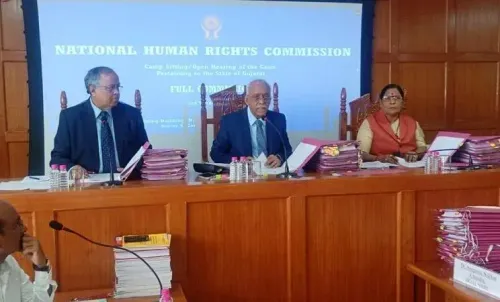
The National Human Rights Commission (NHRC) has resolved to develop a dedicated standard operating procedure (SOP) for identifying bonded labour in Gujarat, after finding that official inspections routinely miss cases involving migrant workers who have already vacated worksites by the time authorities arrive. The decision emerged from a two-day camp sitting and open hearing held in Gandhinagar.
Key Developments
NHRC Chairperson Justice V. Ramasubramanian said the issue surfaced during a hearing of 27 alleged bonded labour cases in Gandhinagar on Thursday, 3 September, when the Commission reviewed reports submitted by District Magistrates and heard officials including the Gujarat Labour Secretary and concerned District Magistrates. In all 27 cases, district authorities had reported finding no evidence of bonded labour.
However, Justice Ramasubramanian said those findings had to be assessed against the timing of inspections. 'The reports were not wrong, factually, they were right, but there are some missing links,' he said, noting that workers who had filed complaints had often already left the workplace before an inspection team was dispatched.
The Structural Gap in Inspections
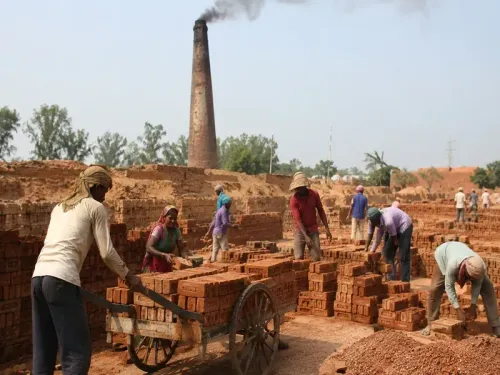
The Commission identified a systemic lag between the lodging of a complaint, the demand for an action-taken report, and the eventual physical inspection — a gap that is particularly acute in seasonal industries employing migrant labour. Justice Ramasubramanian noted that several cases involved workers recruited through intermediaries, and that 'in some instances, owners of brick kilns had acknowledged paying advance money to brokers to bring workers from outside the state.'
This comes amid longstanding concerns about the vulnerability of inter-state migrant workers in Gujarat's construction, brick kiln, and agricultural sectors, where seasonal employment cycles make documentation and oversight structurally difficult.
The Legal Standard on Advance Payments
The Commission drew a clear distinction between an advance payment in the ordinary commercial sense and the legal indicators of bonded labour under Indian law. Justice Ramasubramanian explained: 'If a person is hired upon payment of an advance money, if that advance money is more than the minimum wage, you presume that it is not a case of bonded labour. But in law, if somebody is hired by payment of advance money with the conditions that they must work for three months, six months, produce so much, in law there is a presumption of bonded labour.'
Authorities, the Chairperson stressed, must evaluate such legal indicators rather than limiting their assessment to whether workers are physically present at the time of inspection.
What the NHRC Plans Next
The Commission said it would issue a formal advisory on the matter in addition to the SOP. Justice Ramasubramanian noted that the Union government had already issued a standard operating procedure on bonded labour in May this year, but that state authorities had raised concerns about its implementation. 'We said we will take note of that, and comprehensive guidelines can be issued by us,' he said.
The NHRC also said it had sensitised officials to handle affected families — including women and children — with compassion and to apply bondage indicators consistently when processing complaints.
Why It Matters
India's bonded labour system was formally abolished under the Bonded Labour System (Abolition) Act, 1976, yet enforcement gaps persist, particularly for seasonal migrant workers whose mobility makes detection difficult. The NHRC's focus on preventive identification and legal-indicator-based assessment, rather than presence-at-inspection, marks a notable shift in approach. How quickly Gujarat and other states adopt the forthcoming SOP and advisory will determine whether the framework translates into ground-level change.
Point of View
' the instinct is to accept the reports at face value. What Justice Ramasubramanian has surfaced is that the inspection architecture itself is broken — it is designed to catch workers who stay, not systems that move them on before authorities arrive. The advance-payment legal presumption has existed in statute since 1976; the fact that district magistrates are still not applying it consistently points to a training and accountability failure, not just a procedural one. An SOP and advisory are necessary — but without binding timelines for state adoption and independent monitoring, they risk becoming shelf documents.
NationPress
19 Oct 2026
Frequently Asked Questions
What did the NHRC find during its Gujarat hearing on bonded labour?
The NHRC found that all 27 alleged bonded labour cases reviewed in Gandhinagar had been reported as 'no bonded labour found' by district authorities, but concluded that inspection timing — not actual absence of bondage — explained the outcome. Workers had typically left the worksite before inspection teams arrived, creating a structural detection gap.
What is the NHRC planning to do about bonded labour detection in Gujarat?
The NHRC will develop a dedicated standard operating procedure (SOP) and issue a formal advisory for identifying bonded labour, particularly involving seasonal migrant workers. This will build on a national SOP issued by the Union government in May 2025, addressing state-level implementation concerns.
How does Indian law treat advance payments in the context of bonded labour?
Under Indian law, an advance payment to a worker accompanied by conditions — such as working for a fixed period or producing a specified quantity — creates a legal presumption of bonded labour, regardless of the amount paid. The NHRC stressed that authorities must apply this legal test, not just assess whether workers are physically present at inspection.
Who is most affected by the bonded labour detection gap highlighted by the NHRC?
Seasonal inter-state migrant workers are most at risk, particularly those employed in brick kilns and similar industries in Gujarat. These workers are often recruited through intermediaries, making their employment conditions harder to document and verify once they have moved on.
What is the legal framework governing bonded labour in India?
Bonded labour was abolished under the Bonded Labour System (Abolition) Act, 1976, which also establishes the legal presumption of bondage when advance payments are tied to conditions of service. The NHRC's current initiative aims to ensure state-level enforcement aligns with this statutory standard.