NHRC issues notice over 4 workers' deaths in Surat septic tank

Synopsis
Four workers died from toxic fumes while cleaning a septic tank at a private jewellery manufacturing unit in Surat — and now the NHRC has stepped in, issuing notices to Gujarat's top civil and police officials. Coming just weeks after a similar death in Delhi, this case exposes a stubborn enforcement gap in India's occupational safety laws, even at private industrial facilities.
Key Takeaways
The NHRC took suo motu cognisance of the deaths of four workers at a jewellery manufacturing unit in Surat, Gujarat .
The workers reportedly entered the septic tank without safety protocols and died from toxic fumes .
Notices issued to the Gujarat Chief Secretary and Surat Commissioner of Police , with a report due within two weeks .
The report must cover the investigation status and compensation details for the workers' families.
The NHRC had similarly intervened weeks earlier in a New Ashok Nagar, Delhi sewage tank death case.
The incident raises concerns about safety compliance at private industrial units , not just municipal facilities.
The National Human Rights Commission (NHRC) has taken suo motu cognisance of the deaths of four workers who were asphyxiated while cleaning a septic tank at a jewellery manufacturing unit in Surat, Gujarat. The apex human rights body issued notices on 10 June to the Gujarat Chief Secretary and the Surat Commissioner of Police, seeking a detailed report within two weeks.
What Happened in Surat
According to media reports dated 8 June, the incident occurred on a Sunday when the four workers entered a septic tank at the jewellery unit for routine cleaning. The workers reportedly entered the tank without following prescribed safety protocols and were overcome by toxic fumes. They were rescued and rushed to a hospital, where doctors declared all four dead on arrival.
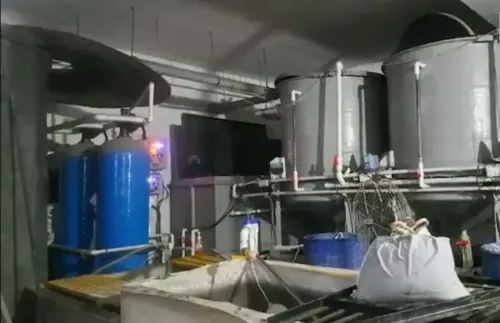
The septic tank in question was used to collect waste generated during the jewellery cleaning process at the manufacturing facility.
What the NHRC Has Sought
The Commission has directed authorities to furnish a report covering the status of the police investigation and details of any compensation disbursed to the next of kin of the deceased workers. NHRC stated in its notice that 'the contents of the news report, if true, raise serious issues of violation of human rights.'
The two-week deadline places the response deadline around late June 2025. Failure to comply typically prompts the Commission to escalate the matter for further proceedings.
A Recurring Pattern of Safety Failures
This intervention follows a similar case just weeks earlier, when the NHRC took suo motu cognisance of a sewage tank cleaning incident at New Ashok Nagar in Delhi, where one worker died and another sustained critical injuries — again, reportedly after entering a tank without adequate safety equipment. In that case too, civic and police authorities were asked to submit reports.
Notably, deaths during manual scavenging and confined-space cleaning operations remain a persistent crisis in India. The Prohibition of Employment as Manual Scavengers and their Rehabilitation Act, 2013 bans hazardous manual cleaning of sewers and septic tanks, yet enforcement gaps continue to result in fatalities across states.
Broader Implications
The Surat case is particularly significant given that the deaths occurred not at a municipal facility but at a private jewellery manufacturing unit — raising questions about occupational safety compliance in the industrial sector. Labour rights advocates argue that private employers routinely bypass safety norms, including the mandatory use of protective gear and mechanical cleaning equipment, when deploying contract or informal workers for such tasks.
With the NHRC now tracking at least two such incidents in quick succession, pressure is mounting on state governments to enforce existing safety regulations more rigorously. The Commission's findings, once submitted, could set the stage for further accountability measures.
Point of View
Not a municipality — suggesting the safety vacuum extends well into the industrial sector. NHRC notices are important signals, but without criminal accountability for employers and mandatory third-party safety audits, the cycle of deaths, notices, and inaction is likely to repeat.
NationPress
26 Oct 2026
Frequently Asked Questions
Why did the NHRC intervene in the Surat septic tank deaths?
The NHRC took suo motu cognisance after a media report described the deaths of four workers overcome by toxic fumes while cleaning a septic tank at a jewellery manufacturing unit in Surat. The Commission found the reported facts, if true, constituted a serious human rights violation and issued notices to state authorities.
What has the NHRC asked authorities to provide?
The NHRC has directed the Gujarat Chief Secretary and the Surat Commissioner of Police to submit a detailed report within two weeks. The report must include the status of the investigation and details of any compensation paid to the families of the deceased workers.
How did the four workers die in Surat?
According to media reports, the four workers entered a septic tank at a private jewellery manufacturing unit in Surat without following prescribed safety protocols. They were overcome by toxic fumes inside the tank, subsequently rescued, and taken to hospital, where all four were declared dead.
Is this the first such case the NHRC has taken up recently?
No. Just weeks before the Surat incident, the NHRC took suo motu cognisance of a similar case in New Ashok Nagar, Delhi, where one worker died and another was critically injured after entering a sewage tank without adequate safety equipment. The Commission had sought reports from Delhi's civic and police authorities in that case as well.
What law governs the safety of workers cleaning septic tanks in India?
The Prohibition of Employment as Manual Scavengers and their Rehabilitation Act, 2013, bans hazardous manual cleaning of sewers and septic tanks and mandates the use of protective equipment and mechanical tools. Enforcement of this law, however, remains inconsistent across states and private establishments.