Four workers die inhaling toxic gas in Surat jewellery unit tank
Synopsis
Four workers — three labourers and a supervisor — died inside an underground effluent treatment tank at a Surat jewellery factory after inhaling toxic gas. None had been given safety gear, preliminary findings suggest, raising serious questions about occupational safety enforcement in Gujarat's vast jewellery manufacturing sector.
Key Takeaways
Four workers — three labourers and one supervisor — died on 7 June at a jewellery unit in Ashwini Kumar area, Surat .
The deaths occurred inside an underground Effluent Treatment Plant (ETP) tank during scheduled cleaning.
Preliminary findings indicate no safety gear or protective equipment was provided to the workers.
Surat Fire and Emergency Services received the distress call at 10:22 am ; all four were declared dead at hospital.
Police have registered a case of accidental death and are examining CCTV footage to fix responsibility.
Exact cause of death will be confirmed after post-mortem examinations ; negligence charges possible.
Four workers died on Sunday, 7 June after allegedly inhaling toxic gas inside an underground Effluent Treatment Plant (ETP) tank at a jewellery manufacturing unit in the Ashwini Kumar area of Surat, Gujarat. Preliminary investigations indicate that safety protocols may not have been followed, and police have registered a case of accidental death.
How the Incident Unfolded
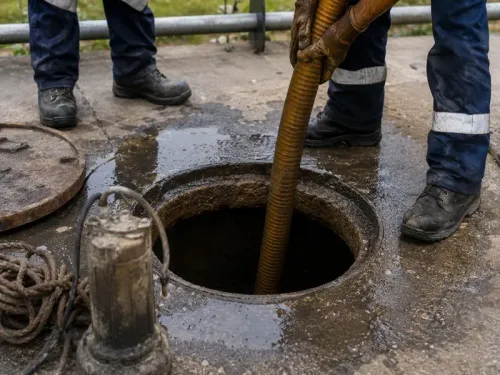
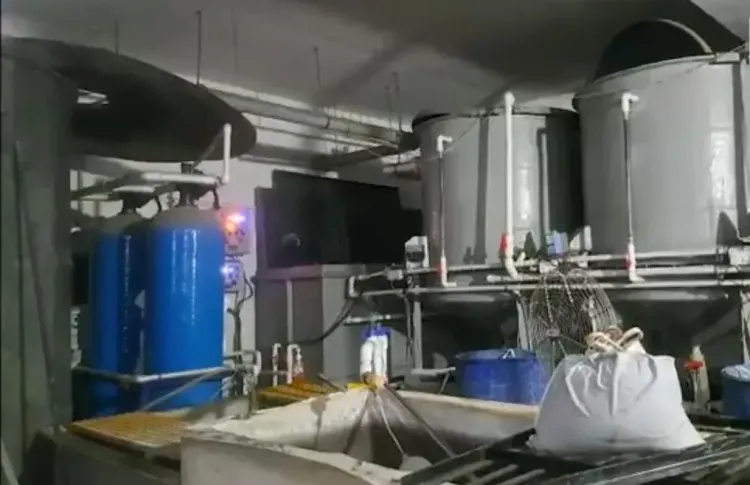
The factory uses an underground ETP tank to collect and treat waste generated during the jewellery cleaning process. The tank undergoes routine cleaning and maintenance every two months. On Sunday morning, three labourers and one company supervisor entered the confined space as part of a scheduled cleaning operation.
According to Deputy Commissioner of Police (Zone-1) Alok Kumar, the workers collapsed inside the tank after exposure to poisonous gas. 'During the cleaning operation, one of the labourers fell into the tank,' Kumar said. All four men succumbed at the site before they could be evacuated.
Fire Brigade Response
The Surat Fire and Emergency Services received a distress call at approximately 10:22 am. Divisional Fire Officer Ranjit Singh Khadia said the initial information suggested only a single person had fallen into a tank. 'After reaching the location, we found that it was an industrial unit. Instead of one person, four people were inside,' Khadia said.
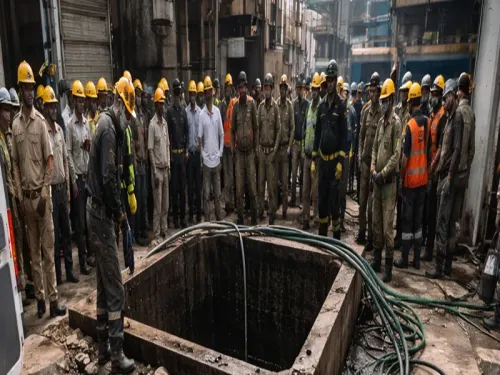
Fire brigade personnel launched a rescue operation, removed all four men from the tank, and rushed them to a nearby hospital, where doctors declared them dead on arrival.
Safety Failures Under Scrutiny
Preliminary findings suggest that none of the four workers had been provided with safety gear or protective equipment before undertaking the hazardous confined-space maintenance. The absence of protective equipment and non-compliance with mandatory confined-space safety procedures are central to the ongoing inquiry.
Notably, police said the supervisor had reportedly contacted the fire department before entering the tank — yet the workers proceeded without adequate safeguards. 'Preliminary investigations indicate that safety protocols were not followed. We will conduct a detailed investigation,' Kumar said.
Investigation and Next Steps
Investigators will review CCTV footage and other evidence to determine what safety measures should have been in place and whether they were implemented. 'We will analyse what safety protocols should have been in place and compare them with what was actually implemented before fixing responsibility,' Kumar said.
While asphyxiation is the suspected cause of death, the exact cause will be confirmed after post-mortem examinations. Further action, including potential charges of negligence, will be taken once investigation and post-mortem reports are complete.
This incident is the latest in a recurring pattern of confined-space fatalities at industrial units across Gujarat, where enforcement of occupational safety norms in small and medium manufacturing facilities has long been flagged as inadequate.
Point of View
No safety harnesses, no standby rescue personnel, and a supervisor who enters the space alongside workers rather than monitoring from outside. Gujarat's jewellery and chemical processing clusters employ hundreds of thousands in facilities that routinely fall below the radar of factory inspectorates. The registration of a mere 'accidental death' case, rather than an immediate negligence FIR, reflects a systemic reluctance to hold industrial employers accountable. Until enforcement moves from post-mortem inquiry to pre-incident compliance audits, the body count will keep rising.
NationPress
26 Sept 2026
Frequently Asked Questions
What happened at the Surat jewellery factory on 7 June?
Four workers — three labourers and a company supervisor — died after inhaling toxic gas inside an underground Effluent Treatment Plant tank at a jewellery cleaning factory in the Ashwini Kumar area of Surat on 7 June. The tank was being cleaned as part of a routine maintenance operation scheduled every two months.
What caused the deaths at the Surat factory?
Asphyxiation from toxic gas exposure in the confined underground tank is the suspected cause of death, according to Deputy Commissioner of Police Alok Kumar. The exact cause will be confirmed after post-mortem examinations are completed.
Were safety protocols followed at the Surat jewellery unit?
Preliminary investigations indicate safety protocols were not followed. None of the four workers were reportedly provided with safety gear or protective equipment before entering the hazardous confined space, according to police findings.
What action has been taken after the Surat factory deaths?
Police have registered a case of accidental death and launched an inquiry. Investigators are reviewing CCTV footage and other evidence to determine what safety measures should have been in place. Further action, including potential negligence charges, will follow completion of the investigation and post-mortem reports.
What is an Effluent Treatment Plant (ETP) tank?
An Effluent Treatment Plant tank is an industrial facility used to collect, treat, and safely dispose of liquid waste generated during manufacturing processes. In jewellery factories, it stores chemical waste from the cleaning process. Cleaning such tanks is classified as confined-space work, which mandates strict safety protocols including gas testing and protective equipment under Indian occupational safety regulations.