Kalol GIDC factory deaths: 3 migrant workers killed in ETP tank suffocation
Synopsis
Three migrant workers entered an industrial ETP tank in Kalol, Gandhinagar — and never came out alive. Each successive worker had entered to rescue the one before him, a cascading confined-space tragedy that safety protocols could have prevented. With FSL teams now on site and negligence questions mounting, this incident exposes a persistent enforcement blind spot in Gujarat's industrial zones.
Key Takeaways
Three migrant workers — Amit Parihar, 32 ; Amarkumar Shrivastav, 37 ; and Shivnath Dubey, 44 — died after suffocating inside an underground ETP tank in Kalol, Gandhinagar .
The incident occurred at Mafatlal Gujarat Industries Limited in the Saij GIDC area during cleaning of a coloured wastewater treatment tank.
A fourth worker, Anil Lodhi , entered the tank in a rescue attempt and remains hospitalised under observation.
Preliminary assessment points to toxic gas accumulation or oxygen deficiency inside the confined space; FSL examination is underway.
Police have registered a case under Section 194 of the BNSS at Kalol Taluka Police Station; investigators are examining whether safety equipment was provided.
Three migrant workers died and one remains hospitalised after a suffocation incident inside an underground effluent treatment plant (ETP) tank at Mafatlal Gujarat Industries Limited in the Saij Gujarat Industrial Development Corporation (GIDC) area of Kalol, Gandhinagar district, Gujarat. The deaths, confirmed by police on Friday, 16 May 2025, occurred a day earlier during routine cleaning operations inside the confined RCC tank.
How the Incident Unfolded
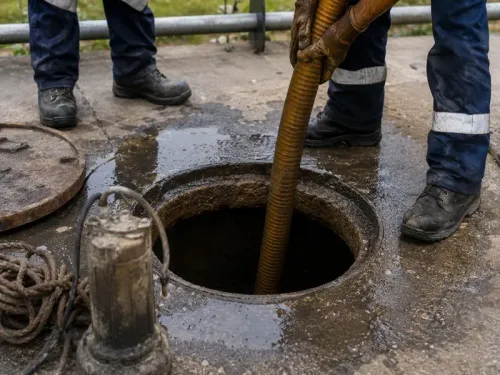
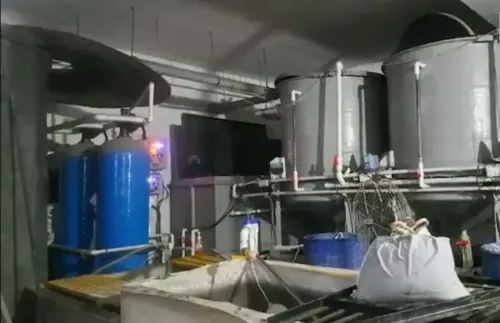
According to police, the cleaning operation required workers to descend into a reinforced cement concrete (RCC) underground tank used to treat coloured wastewater from tarpaulin fabric processing. Prior to the operation, water had been pumped out by motor, but approximately 1 to 1.5 feet of sludge and waste material remained at the bottom.
The first two workers to enter the tank — Amit Parihar, 32, from Datia district, Madhya Pradesh, and Amarkumar Shrivastav, 37, from Faizabad district, Uttar Pradesh — reportedly lost consciousness shortly after descending, allegedly due to oxygen deficiency or the presence of toxic gases. A third worker, Anil Lodhi, entered in an attempt to rescue them and also collapsed. A fourth, Shivnath Dubey, 44, also from Faizabad, followed in another rescue bid and similarly fell unconscious inside the tank.
All four were eventually pulled out. Amit Parihar, Amarkumar Shrivastav, and Shivnath Dubey were declared dead. Anil Lodhi was shifted for medical treatment and remains under observation.
What Authorities Are Investigating
A case of accidental death has been registered at Kalol Taluka Police Station under Section 194 of the Bharatiya Nagarik Suraksha Sanhita (BNSS), following a complaint by Dalpat Chai, 56, a supervisor at the unit originally from Sirohi district, Rajasthan. Preliminary assessment indicates the deaths may have been caused by toxic gas accumulation or critically low oxygen levels inside the confined space, though the exact cause is yet to be determined pending forensic examination.
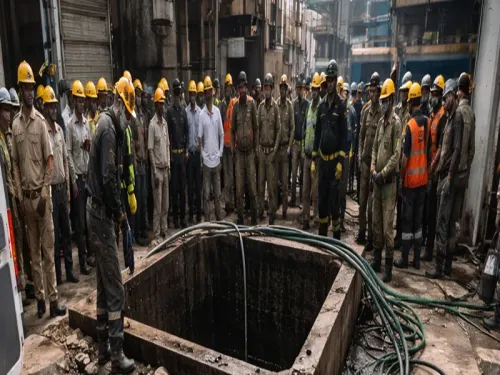
Teams from the Forensic Science Laboratory (FSL) have been deployed to test for hazardous gases and other contributing factors within the ETP tank. Investigators are also examining whether workers were provided with mandatory safety equipment — including gas masks and oxygen support systems — before entering the confined space.
Safety Failures Under Scrutiny
The sequence of events — where each successive worker entered the tank in an attempt to rescue those already unconscious — is a pattern well-documented in confined-space fatalities across Indian industrial sites. Notably, this type of cascading tragedy is preventable when proper confined-space entry protocols, atmospheric testing, and standby rescue equipment are in place.
Officials are now examining whether Mafatlal Gujarat Industries Limited complied with occupational safety norms applicable to confined-space operations at industrial units. The incident has drawn attention to enforcement gaps in GIDC-area factories, where migrant labour is widely employed in hazardous cleaning roles with limited oversight.
What Happens Next
The Kalol Taluka Police have initiated a formal investigation. FSL findings will be critical in determining whether criminal negligence charges are warranted against the company or its management. The injured worker, Anil Lodhi, continues to receive medical care and his condition is being monitored closely.
Point of View
No standby rescue, and workers entering one after another to save those already unconscious. The fact that four people entered the same tank without any safety intervention points to a systemic failure, not a momentary lapse. Gujarat's GIDC zones have a significant migrant workforce in hazardous roles, yet enforcement of confined-space entry norms remains patchy. The FSL probe will determine cause of death, but the harder question — whether the company met its legal duty of care — deserves equal scrutiny from labour and industrial safety regulators.
NationPress
30 Sept 2026
Frequently Asked Questions
What happened at the Kalol GIDC factory in Gandhinagar?
Three migrant workers died after suffocating inside an underground effluent treatment plant (ETP) tank at Mafatlal Gujarat Industries Limited in the Saij GIDC area of Kalol, Gandhinagar. A fourth worker who also entered the tank in a rescue attempt survived and is currently hospitalised.
Who were the workers who died?
The three deceased workers are Amit Parihar, 32, from Datia district in Madhya Pradesh; Amarkumar Shrivastav, 37, from Faizabad district in Uttar Pradesh; and Shivnath Dubey, 44, also from Faizabad, Uttar Pradesh. All were migrant workers employed at the industrial unit.
What caused the deaths inside the ETP tank?
Preliminary assessment by police suggests the deaths were caused by oxygen deficiency or toxic gas accumulation inside the confined underground tank. The exact cause will be confirmed after forensic examination by the Forensic Science Laboratory (FSL), which has been deployed to test the site.
What legal action has been taken?
Kalol Taluka Police have registered a case of accidental death under Section 194 of the Bharatiya Nagarik Suraksha Sanhita (BNSS). Investigators are examining whether the company provided mandatory safety equipment such as gas masks and oxygen support systems to workers before they entered the confined space.
Why are confined-space industrial deaths so common in India?
Confined-space fatalities in industrial units frequently occur due to absent atmospheric testing, lack of standby rescue personnel, and no mandatory personal protective equipment for workers. In this incident, each successive worker entered the tank to rescue those already unconscious — a cascading pattern that proper confined-space entry protocols are specifically designed to prevent.