Will Reducing the Debt-to-GDP Ratio Be the Government's Main Focus in the Upcoming Fiscal Year?

Synopsis
In a recent announcement, Finance Minister Nirmala Sitharaman emphasized that the government's priority for the upcoming fiscal year will be reducing the debt-to-GDP ratio. This focus is crucial for economic stability and sustainable growth as India aims for a significant role in global trade.
Key Takeaways
Core focus on reducing the debt-to-GDP ratio in the next fiscal year.
Importance of managing debt within FRBM limits.
Need for increased transparency in budgeting.
Enhancing access to credit through financial inclusion initiatives.
Ambition for India to contribute 25% to global trade by 2047.
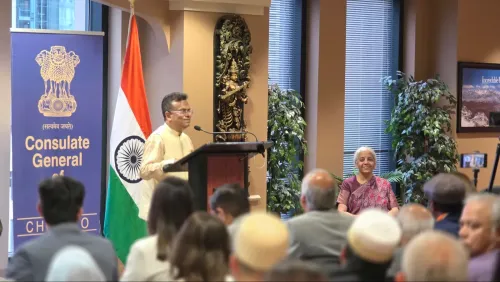
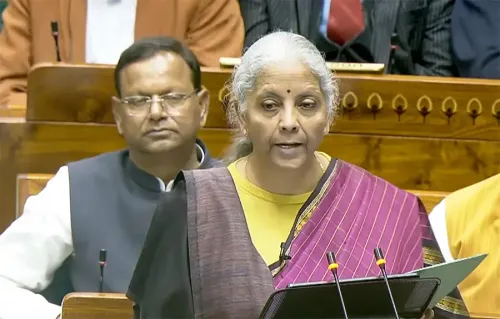
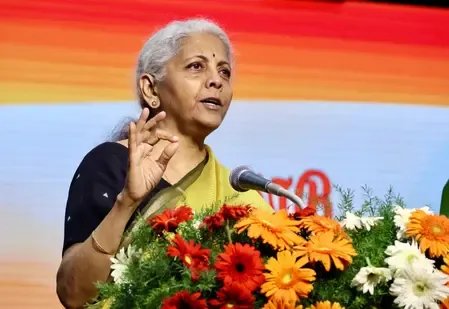
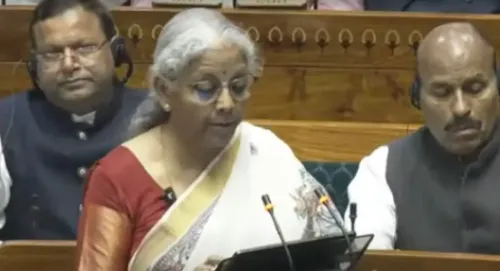
New Delhi, Dec 17 (NationPress) Finance Minister Nirmala Sitharaman announced on Wednesday that the government's primary aim for the next financial year (2026-27) will be to lower the country's debt-to-GDP ratio.
During a media event, Sitharaman emphasized the importance of decreasing the debt-to-GDP ratio, which surpassed 60 percent during the Covid crisis.
"Although it is already on a decline, we must achieve further reductions, and this will be a significant focus for the upcoming financial year," stated the Finance Minister, while referencing concerning debt-to-GDP figures in various states as per RBI reports and studies.
"Unless we operate within the limits set by the FRBM (Fiscal Responsibility and Budget Management Act) and address high-interest debt effectively, states will borrow primarily to cover loan servicing rather than invest in development—an unsustainable fiscal strategy. This jeopardizes our vision for Viksit Bharat by 2047," she remarked.
The Finance Minister further indicated that the Central government has established benchmarks for transparency in budgeting, ensuring that fiscal management complies with accountability standards. "We have successfully lowered the debt-to-GDP ratio from over 60 percent post-Covid; it continues to decline, making debt reduction a key objective for the next fiscal year (with fiscal deficit remaining a critical indicator). Entrepreneurs in banking recognize this transforming landscape," she mentioned.
Sitharaman also highlighted the government's efforts to enhance the bond market to facilitate increased fund flow.
The discipline displayed by the Union government under Prime Minister Narendra Modi—now in its third term—strengthens India's position globally to negotiate effectively. This robustness stems from a stable administration, she noted.
Furthermore, Sitharaman indicated that with increased financial inclusion, access to credit through Mudra, and widespread banking accounts, the credit footprint of every Indian has expanded, thereby enabling formal banking credit.
"I assert this because we can aspire for India to contribute 25 percent to global trade—25 percent of world trade should originate from India. This is our target for Viksit Bharat: to revitalize manufacturing, agriculture, value addition, and the services sector (which has independently grown to over 60 percent of GDP, even with minimal government intervention—this includes not just IT but also tourism and hospitality)," the Finance Minister elaborated.
She acknowledged the significance of private sector R&D in adding value.
"Opposition claims that despite corporate tax cuts in 2019, companies are not expanding their capacity, profiting without reinvesting, are unfounded criticisms. That tax reduction was essential for business growth in the country. Prime Minister Modi advocates for corporate investment to boost jobs and GDP. While questions arise regarding their investment levels, it's ultimately their decision. GCCs and data centers create jobs, necessitating energy security—hence the approval of the nuclear bill, alongside small modular reactors as a clean energy source along with pumped storage, hydro, solar, and wind," Sitharaman clarified.
"Navigating the complexities of geoeconomics represents an opportunity for robust growth, maintaining steady advancement annually—something the Indian populace is achieving. All of us, including all political factions and critics, should acknowledge this fact, as the credit belongs to the citizens of India. Defying all forecasts, whether due to Covid or otherwise, the resilience of India is a narrative we all must uphold and support for future decades," she added.
She expressed concern that "on a global scale, trade practices are neither fair nor free. India is criticized for being insular or a 'tariff king', yet tariffs are weaponized against us—India protects itself against dumping, while others face no scrutiny."
"This is the new norm; India must engage in negotiations prudently, leveraging its economic strength," she concluded.
Point of View
It is imperative to recognize the government's proactive stance on fiscal management. The emphasis on reducing the debt-to-GDP ratio is an essential step toward achieving a stable economy and ultimately enhancing India's global trade position. The government's commitment, under the steadfast leadership of Prime Minister Modi, signals a promising trajectory for sustainable economic growth.
NationPress
26 Sept 2026
Frequently Asked Questions
What is the debt-to-GDP ratio?
The debt-to-GDP ratio is a measure of a country's national debt in relation to its gross domestic product, indicating the country's ability to pay back its debts.
Why is the debt-to-GDP ratio important?
A lower debt-to-GDP ratio suggests better fiscal health and sustainability, enabling a country to invest in growth and development rather than merely servicing debt.
How does the government plan to reduce the debt-to-GDP ratio?
The government aims to implement strategies within the Fiscal Responsibility and Budget Management Act limits, focusing on reducing high-interest debt and increasing transparency in budgeting.
What role does financial inclusion play in this strategy?
Financial inclusion expands credit access for individuals, fostering a more robust economic environment that can support debt management and stimulate growth.
What is Viksit Bharat?
Viksit Bharat is an initiative aimed at transforming India into a developed nation by the year 2047, focusing on various sectors including manufacturing, agriculture, and services.