How Did Rajiben of Kutch Become a Beacon of Women’s Empowerment?
Click to start listening
Synopsis
Rajiben Vankar from Kutch is revolutionizing the narrative of women's empowerment in Gujarat. With her innovative blending of traditional weaving and waste plastic management, she has become a beacon of hope, self-reliance, and community upliftment, inspiring countless others to follow in her footsteps.
Key Takeaways
- Rajiben Vankar's journey epitomizes resilience and innovation.
- Empowerment initiatives are vital for rural women's financial independence.
- Sustainable practices can lead to environmental conservation and job creation.
- Community support plays a crucial role in individual success.
- Education is a powerful tool for breaking the cycle of poverty.
Gandhinagar, Jan 20 (NationPress) In an era where women in Gujarat are consistently reshaping their economic and social landscapes, Rajiben Vankar from Kutch district stands out as a remarkable embodiment of self-sufficiency, tenacity, and environmental stewardship.
By evolving traditional weaving techniques into a sustainable source of income and repurposing waste plastic into valuable goods, Rajiben has not only secured her own future but also created job opportunities for numerous rural women.
Over the years, the ongoing initiatives aimed at empowering women, initiated by the former Chief Minister and current Prime Minister Narendra Modi, have paved the way for women to attain financial freedom.
Consequently, women in Gujarat today are collaborating with men, establishing businesses, and fortifying their communities through self-employment.
In Gujarat, the Deendayal Antyodaya Yojana–National Rural Livelihoods Mission (DAY-NRLM) is being executed by the Gujarat Livelihood Promotion Company (GLPC).
Since the program's launch, by December 2025, nearly 2.89 lakh Self-Help Groups (SHGs) have been created, impacting around 28.70 lakh rural households.
These SHGs have received upwards of ₹1,433 crore in revolving and community investment funds, with more than ₹4,050 crore allocated as cash credit loans — establishing a robust foundation for women-led grassroots entrepreneurship.
Rajiben, hailing from Avadhnagar village in Kutch, has artfully intertwined women’s empowerment with environmental protection.
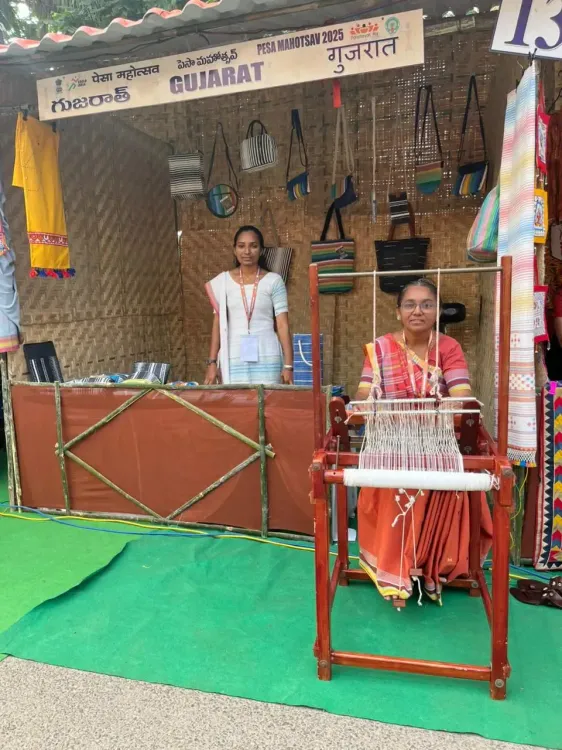
Through the Swachh Bharat Mission (Gramin), she practically realized the waste-to-wealth concept by managing plastic waste and transforming it into livelihood prospects. Using innovative weaving methods, waste plastic is converted into bags, mats, and furniture, ensuring a steady income for several women.
Born in 1979 in Kotay village of Bhuj taluka, Rajiben could only pursue her education until Class II. From a young age, she was involved in labor and weaving.
After the untimely passing of her husband, she encountered significant financial difficulties while raising two sons and a daughter. In 2007, she relocated to Avadhnagar village and supported her family through daily wage labor. Her life took a pivotal turn upon discovering the Mission Mangalam initiative, leading her to establish the 'Kuldevi Sakhi Mandal', marking the commencement of her journey toward self-sufficiency.
With fellow SHG members, Rajiben began gathering waste plastic, transforming it into thread, and weaving it into marketable items. What began as a survival tactic soon blossomed into a small business.
As a single woman overcoming personal challenges, Rajiben not only provided for her family but also restored dignity and self-esteem among rural women by offering them stable job opportunities.
With the guidance of Chief Minister Bhupendra Patel and the Rural Development Department’s assistance, Rajiben received ₹70,000 as Community Investment Fund support and a ₹2 lakh cash credit loan via the village organization. This financial backing enabled her to establish a production unit with 15 women.
Today, over 35 women are directly benefiting from this initiative, collectively generating an annual turnover of ₹8–10 lakh.
Despite her limited formal education, Rajiben ensured her daughter received a higher education, setting an inspiring example for numerous families. Her efforts have garnered recognition on both state and national levels.
She was awarded the President’s Award (Swachh Sujal Shakti Samman) for excellence in plastic waste management, along with the Nari Award (2021 – GLPC), the Social Entrepreneur Award by NABARD, and the Women Excellence Award (2022).
Rajiben’s story is a testament to the fact that dedication, hard work, and timely institutional support can bring about transformative change.
Most importantly, it highlights how rural women, when empowered, can drive progress by cultivating self-reliance, uniting communities, and moving toward a cleaner, more sustainable future.
Point of View
I recognize Rajiben's remarkable journey as a vital representation of the evolving role of women in India. Her story is not just about personal success, but also about the broader impact of women’s empowerment initiatives. It serves as a reminder that with the right support structures, women can lead significant change in their communities.
NationPress
20/01/2026
Frequently Asked Questions
Who is Rajiben Vankar?
Rajiben Vankar is a resident of Kutch district in Gujarat who has become a symbol of women's empowerment through her entrepreneurial efforts in transforming waste plastic into sustainable products.
How has Rajiben contributed to women's empowerment?
Rajiben has established a production unit that employs over 35 women, providing them with stable livelihoods and fostering a sense of community and self-reliance.
What awards has Rajiben received?
Rajiben has received several accolades, including the President’s Award for excellence in plastic waste management and multiple awards for her contributions to social entrepreneurship.
What is the significance of the Deendayal Antyodaya Yojana?
The Deendayal Antyodaya Yojana aims to promote self-employment and financial independence among rural women through the formation of Self-Help Groups.
How does Rajiben's story inspire others?
Rajiben's journey illustrates that with determination and support, women can overcome challenges and create sustainable livelihoods, encouraging others to pursue their own empowerment.