FSSAI seizes 6,500 litres of adulterated ghee in Delhi, Haryana raids
Synopsis
FSSAI's intelligence-led decoy operation — triggered by unlicensed ghee advertisements — led to the seizure of more than 6,500 litres of adulterated ghee from two clandestine units in Delhi and Haryana. The entire stock was packaged and ready for market. Lab tests confirmed vegetable oil substitution, and an FIR has been filed against the operators.
Key Takeaways
FSSAI seized more than 6,500 litres of adulterated ghee in coordinated raids on 18 June across Delhi and Haryana .
Two illegal units were busted — one in Dwarka's Dhulsiras village, Delhi (approx.
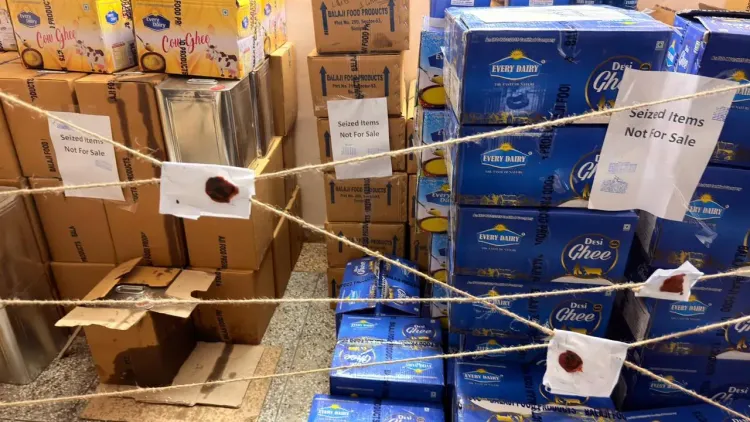
1,500 litres ) and one at M/S Bala Ji Food Products, Sonipat (more than 4,000 litres ).
An additional 1,020 litres of unidentified oil, suspected raw material, was also recovered from the Delhi facility.
NABL-accredited lab tests confirmed samples contained vegetable oils and non-dairy constituents, failing prescribed ghee standards.
The probe began after advertisements for premium ghee were found to lack mandatory FSSAI licence and labelling details .
An FIR has been registered; all seized stock is under regulatory custody pending legal proceedings.
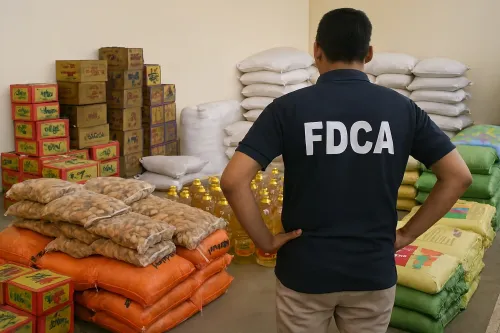
The Food Safety and Standards Authority of India (FSSAI) seized more than 6,500 litres of adulterated ghee and associated raw materials on Wednesday, 18 June, following coordinated enforcement raids across Delhi and Haryana. The crackdown dismantled an inter-state counterfeit ghee network that had been packaging spurious product for immediate market distribution.
What Was Seized and Where
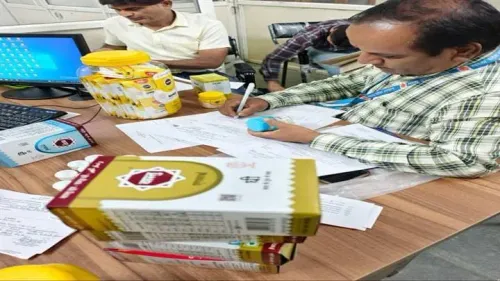
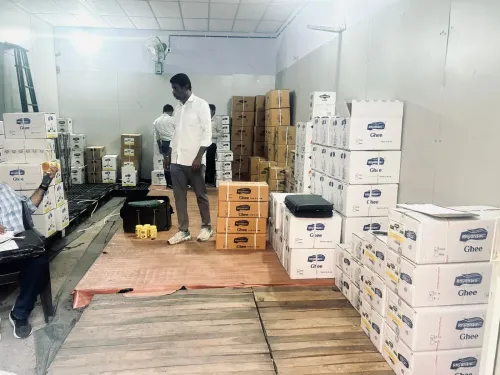
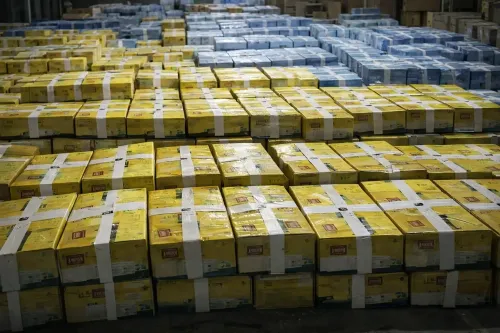
FSSAI inspectors raided two clandestine manufacturing units — one in Dwarka's Dhulsiras village in Delhi and another at M/S Bala Ji Food Products, Plot No. 29A, Sector 53, Phase V in Sonipat, Haryana. From the Delhi facility, officials recovered approximately 1,500 litres of suspected adulterated ghee along with 1,020 litres of unidentified oil believed to be used as raw material. The Haryana unit yielded a larger haul — more than 4,000 litres of counterfeit ghee that had already been packaged for retail distribution.
Notably, the entire stock was ready for dispatch to the market and was intercepted before it could reach consumers, according to officials.
How the Network Was Uncovered
The investigation was triggered by digital and print advertisements promoting premium cow ghee and regular ghee that conspicuously lacked mandatory FSSAI licence details and labelling information. Regulators identified the anomaly and launched a probe.
Central Food Safety Officers (CFSOs) then conducted a decoy operation, posing as ordinary consumers and contacting the sellers through the advertised mobile numbers to procure product samples. Those samples were dispatched under a prescribed chain of custody to a NABL-accredited laboratory for analysis.
Laboratory findings confirmed that the samples did not conform to prescribed standards for ghee and contained a mixture of vegetable oils and other non-dairy constituents. Based on this evidence, FSSAI intelligence teams mapped the full supply chain before executing the simultaneous multi-location raids.
Coordination and Legal Action
The operation was conducted in close coordination between FSSAI inspectors, local police, and Central Food Safety officers, reflecting the inter-state complexity of the network. All seized materials were placed under the regulatory custody of the respective Food Business Operators (FBOs).
An FIR has been registered against the accused for further legal proceedings under applicable food safety statutes.
Why This Matters
Ghee adulteration — typically involving the substitution of dairy fat with cheaper vegetable oils — poses direct health risks to consumers, particularly those using the product for religious, dietary, or medicinal purposes. This is not an isolated incident; food regulators have flagged adulterated ghee as a recurring enforcement challenge across North India.
This crackdown signals a sharper use of intelligence-led operations by FSSAI, moving beyond reactive inspections to proactive digital surveillance of unlicensed advertisers. Further action against other nodes of the supply chain is expected as the investigation continues.
Point of View
Apparently with little friction until now. The inter-state scale of this network — spanning Delhi and Haryana with packaged stock ready for distribution — suggests it was not a fly-by-night operation. The FIR is a start, but the real test is whether prosecutions follow through to conviction, which has historically been the weak link in India's food adulteration enforcement chain.
NationPress
18 Sept 2026
Frequently Asked Questions
What did FSSAI seize in the Delhi and Haryana raids?
FSSAI seized more than 6,500 litres of adulterated ghee and approximately 1,020 litres of suspected raw material oil across two raids on 18 June — one in Dwarka, Delhi and another in Sonipat, Haryana. All stock had been packaged and was ready for market distribution.
How was the fake ghee network detected?
The investigation began after FSSAI officials spotted digital and print advertisements for premium cow ghee that lacked mandatory FSSAI licence and labelling details. Central Food Safety Officers then ran a decoy operation, posing as consumers to procure samples, which were subsequently tested at a NABL-accredited laboratory.
What did lab tests reveal about the seized ghee?
Laboratory analysis confirmed that the samples did not meet prescribed standards for ghee and contained a mixture of vegetable oils and other non-dairy constituents, indicating deliberate adulteration of the product.
What legal action has been taken against the operators?
An FIR has been registered against those responsible for manufacturing and distributing the counterfeit ghee. All seized materials are currently under the regulatory custody of the Food Business Operators pending further legal proceedings.
Which locations were raided and how much ghee was found at each?
Raids were conducted at a facility in Dhulsiras village, Dwarka, Delhi — where about 1,500 litres of adulterated ghee and 1,020 litres of suspected raw material were recovered — and at M/S Bala Ji Food Products in Sector 53, Sonipat, Haryana, where more than 4,000 litres of packaged spurious ghee were seized.