Gadkari Calls for Youth Skilling on World Youth Skills Day
Synopsis
On World Youth Skills Day 2026, Union Minister Nitin Gadkari called for renewed commitment to empowering India's youth with skills for innovation and nation-building, echoing the goals of the Skill India Mission and India's broader demographic dividend strategy.
Key Takeaways
Nitin Gadkari posted a message on World Youth Skills Day, 15 July 2026 , urging commitment to youth skilling.
He described skilled youth as 'the driving force behind innovation, inclusive growth, and nation-building.' World Youth Skills Day is a UN observance established in 2014 and held annually on 15 July .
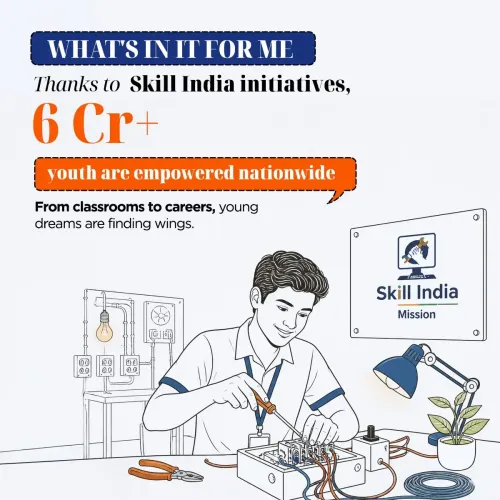
India's Skill India Mission , launched in 2015 , targets vocational training across manufacturing, services, and the informal sector.
The Road Transport and Highways Ministry has linked skilling to infrastructure project execution, including construction, logistics, and green mobility courses.
Policy watchers are tracking developments around PMKVY 4.0 and potential new skill-infrastructure tie-ups in the 2026-27 Union Budget .
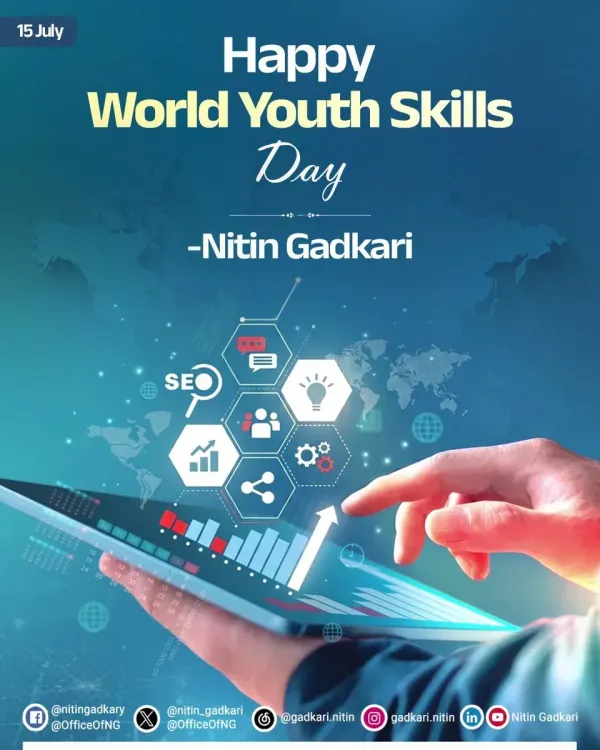
Union Road Transport and Highways Minister Nitin Gadkari on Wednesday, 15 July 2026 marked World Youth Skills Day by calling on the nation to reaffirm its commitment to equipping young people with the knowledge, skills, and opportunities needed to build a brighter future.
Context
World Youth Skills Day is observed every year on 15 July, a date established by the United Nations General Assembly in 2014 to spotlight the importance of skilling youth for employment and entrepreneurship. Gadkari's post described skilled youth as 'the driving force behind innovation, inclusive growth, and nation-building,' and extended wishes to 'all young achievers' on their journey of learning and excellence.
The minister's message aligns with a broader national consensus that India's demographic dividend — the large share of working-age population — can only be converted into economic growth if young people are equipped with market-relevant skills.
Policy Backdrop
India's flagship Skill India Mission, launched in July 2015 under the Ministry of Skill Development and Entrepreneurship, was designed to provide vocational training aligned with industry needs across manufacturing, services, and the informal sector. The accompanying National Policy on Skill Development and Entrepreneurship (2015) set an ambitious target of skilling 400 million people by 2022 through short-term and long-term courses.
Infrastructure ministries, including Road Transport and Highways, have increasingly tied skilling initiatives to project execution — developing sector-specific courses in construction, logistics, and green mobility. These efforts run parallel to broader national priorities such as Make in India and Atmanirbhar Bharat, as well as global Sustainable Development Goals on quality education and decent work.
Successive governments have integrated vocational modules into school and higher education curricula, treating skilling as central to reducing youth unemployment and supporting industrial growth.
Stakeholders and Impact
The primary beneficiaries of India's skilling ecosystem are the country's millions of young job-seekers, particularly those entering the workforce from rural and semi-urban backgrounds where formal higher education access remains limited. Vocational training providers, industry partners, and state governments are key actors in delivering and absorbing the skilled workforce.
For the road and highways sector specifically, large-scale infrastructure expansion — including expressways, tunnels, and green corridor projects — has generated sustained demand for trained workers in civil construction, equipment operation, and project management. Skilling pipelines tied to these projects offer direct employment pathways for youth in the regions where construction is active.
What's Next
Attention in the months ahead will focus on parliamentary and budgetary developments around the redesign of PMKVY 4.0 (Pradhan Mantri Kaushal Vikas Yojana) and any new industry memoranda of understanding for highway and electric-vehicle-related skill courses in the 2026-27 Union Budget cycle. Gadkari's public reaffirmation on a UN-designated observance day keeps the political spotlight on skilling as a cross-ministerial priority, potentially signalling future convergence between infrastructure and skilling budgets.
Point of View
But it carries weight given his ministry's growing role in tying large-scale infrastructure contracts to on-site skilling pipelines. The post fits a pattern where senior BJP leaders use UN calendar moments to reinforce the government's demographic-dividend narrative ahead of budget deliberations. With PMKVY 4.0's future design under discussion, such high-profile reaffirmations from cabinet ministers can influence inter-ministerial budget negotiations and public framing of skilling as a cross-sector priority. The convergence of infrastructure spend and skilling policy is increasingly central to the government's employment story.
NationPress
15 Jul 2026
Frequently Asked Questions
What is World Youth Skills Day and why is it observed on 15 July?
World Youth Skills Day is an annual United Nations observance held on 15 July , established by the UN General Assembly in 2014 to highlight the importance of equipping young people with skills for employment, decent work, and entrepreneurship.
What did Nitin Gadkari say on World Youth Skills Day 2026?
Nitin Gadkari called for reaffirming the national commitment to empowering youth with knowledge, skills, and opportunities, describing skilled youth as 'the driving force behind innovation, inclusive growth, and nation-building.'
What is the Skill India Mission?
The Skill India Mission is a flagship programme launched in July 2015 under the Ministry of Skill Development and Entrepreneurship , designed to provide vocational training aligned with industry needs and targeting the skilling of 400 million people across formal and informal sectors.
How is the Road Transport Ministry involved in youth skilling?
The Ministry of Road Transport and Highways has developed sector-specific skill courses in construction, logistics, and green mobility, tying skilling initiatives directly to large infrastructure projects such as expressways and green corridors.
What is PMKVY and what changes are expected?
PMKVY (Pradhan Mantri Kaushal Vikas Yojana) is India's primary short-term skilling scheme; its fourth iteration, PMKVY 4.0 , is under review, with potential redesign and new industry tie-ups expected to feature in discussions around the 2026-27 Union Budget .