CM Dhami Plants Trees in Pauri Garhwal on Harela 2026
Synopsis
Chief Minister Pushkar Singh Dhami travelled to Malagram in Yamkeshwar block, Pauri Garhwal, on Harela 2026 to personally lead an intensive tree plantation programme, reinforcing Uttarakhand's decades-long tradition of linking the monsoon festival to large-scale afforestation in ecologically fragile Himalayan terrain.
Key Takeaways
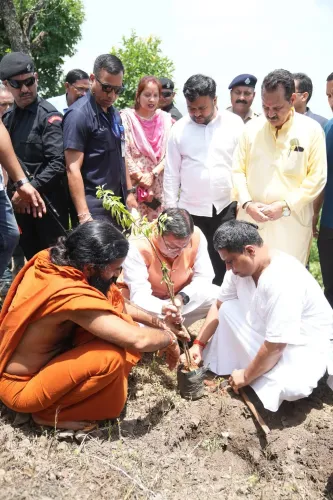
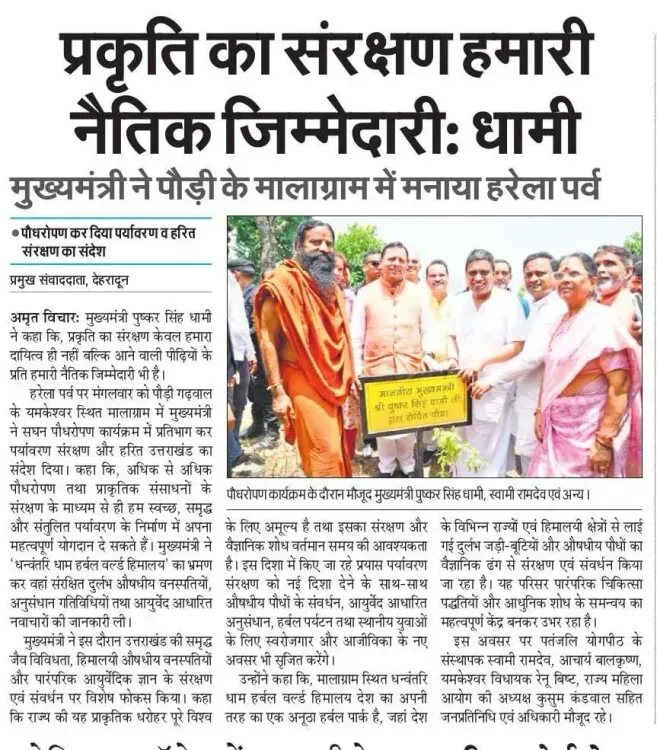
CM Pushkar Singh Dhami personally participated in the Harela tree plantation drive at Malagram, Yamkeshwar block, Pauri Garhwal on 16 July 2026 .
Harela is a traditional Uttarakhand monsoon festival observed annually with widespread tree planting to mark the rainy season.
Uttarakhand governments have organised Harela-linked afforestation drives for several decades to expand forest cover in the Himalayas.
The state forest department and local hill communities are the primary stakeholders in these seasonal plantation campaigns.
High-level political participation is used to mobilise public involvement beyond what administrative directives alone can achieve.
Survival rates of saplings and new forestry targets for the 2026 drive are yet to be officially announced.
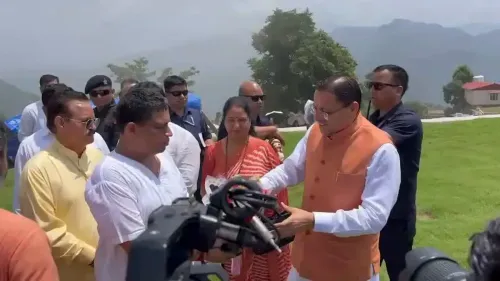
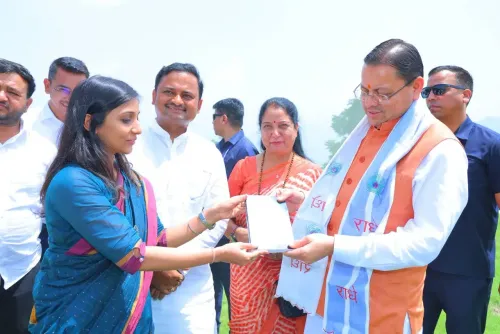
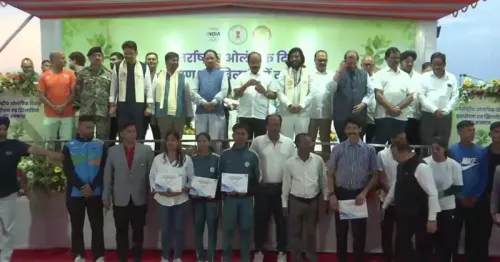
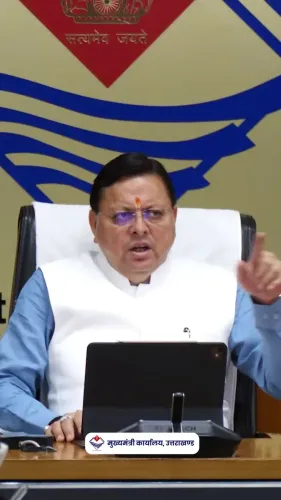
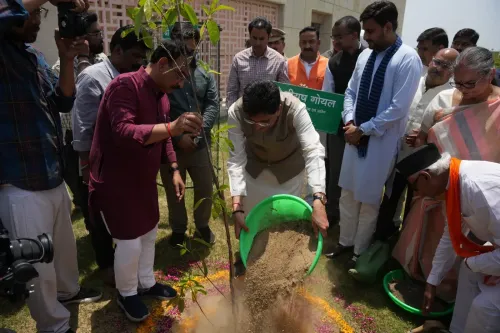
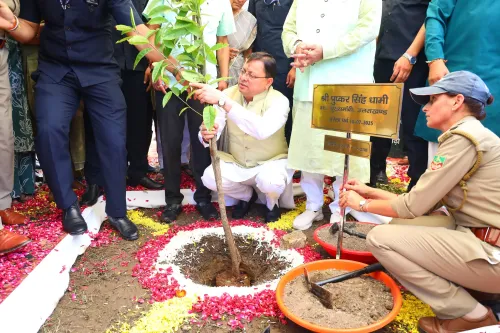
The Chief Minister's Office of Uttarakhand announced on Wednesday, 16 July 2026 that Chief Minister Pushkar Singh Dhami visited Malagram in Yamkeshwar block, Pauri Garhwal district, to participate in an intensive tree plantation drive organised in observance of the Harela festival.
Context
The Chief Minister's Office posted that Dhami attended the sangan paudharopan karyakram (intensive tree plantation programme) at Malagram, marking his personal participation in the state's Harela-linked afforestation campaign. Harela, a traditional monsoon festival of Uttarakhand, is observed each year with widespread tree planting to welcome the rainy season and celebrate greenery as a cultural value.
The choice of Yamkeshwar block in the hilly terrain of Pauri Garhwal reflects the state's focus on ecologically vulnerable Himalayan zones, where forest cover directly influences soil stability, water retention, and local livelihoods.
Policy Backdrop
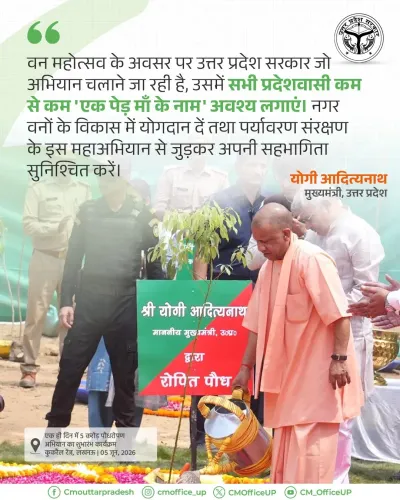
Uttarakhand administrations have organised tree plantation drives during Harela for several decades, treating the festival as a natural mobilisation moment for afforestation. The practice aligns with national forest policy frameworks that seek to expand green cover in ecologically fragile hill regions.
High-level political participation — including by sitting chief ministers — has been a deliberate strategy to encourage public involvement and signal governmental commitment to environmental goals. Dhami, who has served as Chief Minister since 2021, has made such ceremonial-cum-policy appearances a recurring feature of his tenure's environmental outreach.
Stakeholders and Impact
The primary beneficiaries of sustained afforestation in districts such as Pauri Garhwal are local hill communities who depend on forest ecosystems for water, fodder, and protection from landslides — a recurring hazard in the Himalayan belt during the monsoon season. The state forest department is the principal implementing agency for such drives.
Linking plantation campaigns to culturally resonant occasions like Harela has historically generated broader community participation beyond what administrative mandates alone achieve, making the festival a key annual inflection point in the state's green-cover strategy.
What's Next
Observers will watch for official figures on the number of saplings planted across the state during this year's Harela drive, as well as any new forestry targets or survival-rate benchmarks the government may announce ahead of the next monsoon cycle. The scale and follow-through of such campaigns are increasingly scrutinised as Uttarakhand faces mounting climate pressures, including erratic rainfall and accelerated glacial retreat in its upper Himalayan zones.
Point of View
The Uttarakhand government attempts to shift public perception of tree planting from bureaucratic obligation to civic identity. The approach also pre-empts criticism of tokenism: a chief minister planting saplings in a remote hill block carries more symbolic weight than a departmental press release. Whether that symbolism translates into measurable, sustained forest cover gains will depend on post-plantation monitoring — a metric that has historically been the weakest link in India's seasonal plantation drives.
NationPress
15 Jul 2026
Frequently Asked Questions
What is Harela festival in Uttarakhand?
Harela is a traditional monsoon festival celebrated in Uttarakhand, during which people plant trees and saplings to welcome the rainy season and honour nature as a cultural value. It falls typically in mid-July each year.
Why did CM Dhami visit Malagram in Pauri Garhwal?
Chief Minister Pushkar Singh Dhami visited Malagram in Yamkeshwar block, Pauri Garhwal, to participate in an intensive tree plantation programme organised as part of the state's Harela festival celebrations on 16 July 2026.
What is the significance of tree plantation on Harela in Uttarakhand?
Tree plantation on Harela carries both cultural and ecological significance in Uttarakhand. The festival links a centuries-old agrarian tradition to modern afforestation goals, helping the state expand forest cover in ecologically fragile Himalayan zones that are vulnerable to landslides and climate change.
Who is Pushkar Singh Dhami and when did he become Chief Minister?
Pushkar Singh Dhami is the Chief Minister of Uttarakhand. He has held the post since 2021 and has regularly participated in state environmental and cultural programmes throughout his tenure.
How does Uttarakhand use Harela for environmental goals?
Uttarakhand governments have for several decades organised large-scale tree plantation drives during Harela, using the festival's cultural resonance to mobilise community participation and align public sentiment with the state's afforestation and climate-resilience objectives.