CM Dhami Plants Saplings at Malagram on Harela Festival
Synopsis
Uttarakhand CM Pushkar Singh Dhami planted saplings at Malagram in Pauri Garhwal's Yamkeshwar block on Harela festival day, calling nature conservation a moral duty to future generations and reinforcing the state's Green Uttarakhand campaign.
Key Takeaways
CM Pushkar Singh Dhami participated in a tree-plantation drive at Malagram, Yamkeshwar, Pauri Garhwal on 14 July 2026 .
The event was held on the occasion of Harela , an annual monsoon festival in Uttarakhand traditionally linked to community tree planting.
Dhami described nature conservation as 'not merely a responsibility but a moral duty towards future generations.' The drive aligns with Uttarakhand's long-standing tradition of community-led forest protection, rooted in the Chipko movement of 1973 .
State afforestation campaigns also support India's commitments under the international Bonn Challenge for restoring degraded forest landscapes.
Plantation survival rates and future budget allocations will determine the long-term impact of the Harela 2026 drive.
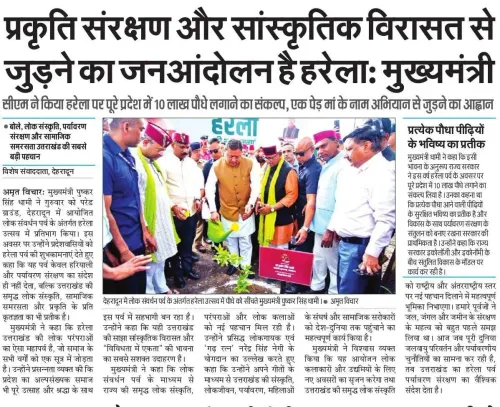
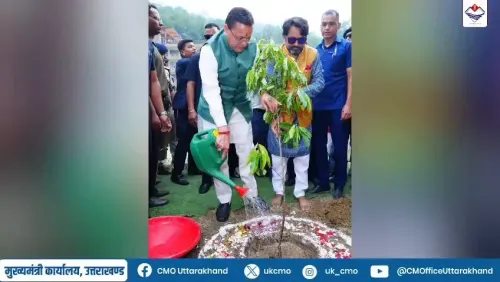
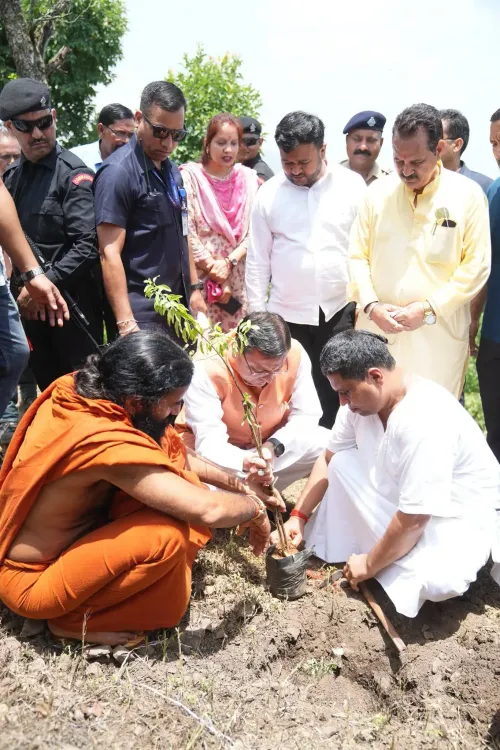
Uttarakhand Chief Minister Pushkar Singh Dhami participated in a tree-plantation drive at Malagram in Yamkeshwar, Pauri Garhwal, on the occasion of the Harela festival on 14 July 2026, carrying forward the state's message of environmental conservation and a 'Green Uttarakhand.'
Context
Harela is an annual monsoon festival observed across Uttarakhand's Garhwal and Kumaon divisions, traditionally marked by community tree planting as a symbol of prosperity and ecological renewal. CM Dhami used the occasion to personally plant saplings at Malagram, a village in the Yamkeshwar development block of Pauri Garhwal district, underlining the government's push for afforestation in the Himalayan state.
Posting on X, the Chief Minister wrote: 'Harela parv ke pavan avsar par... paudhropan kar paryavaran sanrakshan evam harit Uttarakhand ka sandesh diya' — 'On the auspicious occasion of the Harela festival, the message of environmental conservation and Green Uttarakhand was conveyed by planting saplings.' He added that protecting nature is 'not merely our responsibility but also our moral duty towards future generations.'
Policy Backdrop
Uttarakhand's association with grassroots forest conservation runs deep. The landmark Chipko movement of 1973, which originated in the hills of present-day Uttarakhand, established community-led forest protection as a defining regional priority long before the state was carved out in 2000. The state's formation itself carried a constitutional emphasis on maintaining forest cover and ecological balance in the Himalayan region.
Successive Uttarakhand governments have routinely linked cultural festivals such as Harela to afforestation campaigns to counter deforestation, landslides, and climate-related impacts in the fragile Himalayan ecosystem. Such state-level drives also support India's national commitments under international frameworks like the Bonn Challenge, which calls for restoring degraded forest landscapes. CM Dhami echoed this intergenerational framing, stating that 'through maximum tree plantation and conservation of natural resources, we can make our important contribution to building a clean, prosperous and balanced environment.'
Stakeholders and Impact
The drive directly involves hill communities and local villagers of Pauri Garhwal, a district with hilly terrain and a long history of ecological activism. Afforestation in the region carries practical stakes: denser tree cover helps stabilise slopes, recharge water sources, and reduce the frequency and severity of landslides — hazards that recur across Uttarakhand's districts each monsoon season.
By anchoring the event to Harela, the state government also taps into a culturally resonant tradition, making conservation messaging more likely to translate into community participation beyond the ceremonial planting. Local villagers and self-help groups in rural Garhwal have historically been active participants in such seasonal drives.
What's Next
Attention will now turn to the state government's reported plantation numbers and, crucially, the survival rates of saplings planted during the current Harela 2026 season — a metric that determines whether symbolic drives translate into lasting green cover. Any budget allocations for forest expansion in the next legislative session will also signal how seriously the administration intends to scale these efforts. With climate pressures on the Himalayas intensifying, the gap between ceremonial planting and sustained forest management will remain a key benchmark for accountability.
Point of View
CM Dhami is doing more than marking a cultural calendar date — he is reinforcing a BJP-led state government narrative that frames environmental stewardship as both a civilisational value and a governance priority. The choice of Yamkeshwar, a rural Garhwal block, rather than a high-visibility urban location, signals an attempt to ground the messaging in community-level participation. However, the credibility of such annual drives ultimately rests on verifiable data: sapling survival rates and sustained budget commitments to forest expansion, not ceremonial optics. With the Himalayas facing accelerating climate stress, the distance between symbolic action and measurable green cover will define whether Uttarakhand's 'Green' branding translates into lasting ecological outcomes.
NationPress
13 Oct 2026
Frequently Asked Questions
What is Harela festival and why is it celebrated in Uttarakhand?
Harela is an annual monsoon festival celebrated in Uttarakhand's Garhwal and Kumaon regions, traditionally marked by community tree planting as a symbol of prosperity, nature worship, and ecological renewal. It typically falls in the month of Shravan according to the Hindu calendar.
Where did CM Dhami plant saplings on Harela 2026?
CM Pushkar Singh Dhami planted saplings at Malagram village in the Yamkeshwar development block of Pauri Garhwal district on 14 July 2026 as part of the Harela festival celebrations.
What is the Green Uttarakhand campaign?
Green Uttarakhand is a state-level environmental messaging initiative promoted by the Uttarakhand government that encourages afforestation, conservation of natural resources, and community participation in maintaining the Himalayan state's forest cover.
What is the Chipko movement and how does it relate to Uttarakhand?
The Chipko movement, which began in 1973 in the hills of present-day Uttarakhand, was a landmark grassroots protest where villagers — largely women — hugged trees to prevent logging, establishing community-led forest protection as a defining tradition of the region.
How does Uttarakhand's tree plantation connect to India's international commitments?
State-level afforestation drives in Uttarakhand contribute to India's national targets for increasing forest and tree cover, including commitments under the Bonn Challenge, an international effort to restore degraded and deforested landscapes globally.