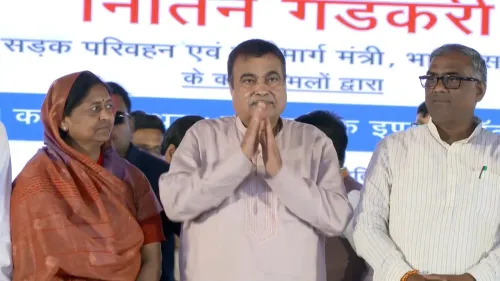
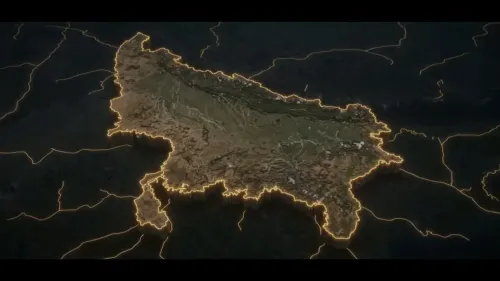
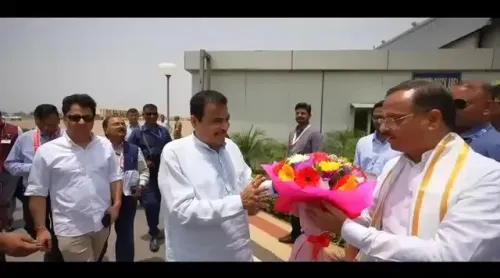
Gadkari flags UP road push: Jaunpur bypass, Sai bridge, Raebareli widening
Synopsis
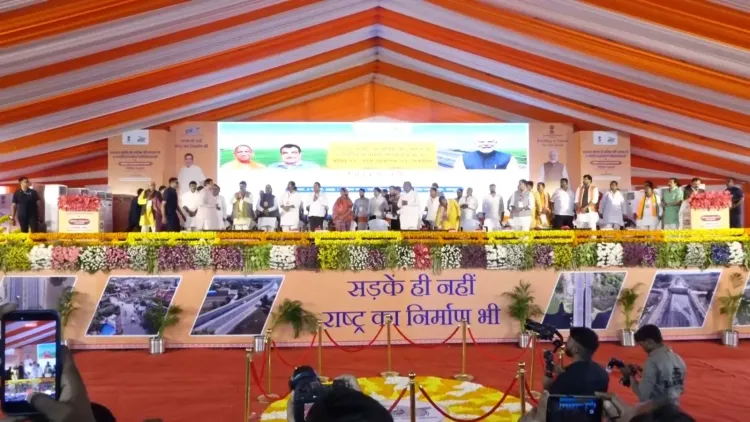
Union Minister Nitin Gadkari announces three road infrastructure projects in Uttar Pradesh — a four-lane bypass with a Sai River bridge, Jaunpur city widening, and the Raebareli-Prayagraj corridor expansion — aimed at decongesting towns and improving connectivity across eastern UP.
Key Takeaways
A four-lane bypass through Jagatpur, Babuganj, Unchahar and Alapur will establish direct connectivity between communities on both banks of the Sai River .
A new bridge over the Sai River will ease access to education, health and commercial facilities for residents in the area.
Road widening from Lata Mangeshkar Tiraha to Prasad Institute in Jaunpur city will reduce urban traffic pressure and support trade and tourism.
The Raebareli–Prayagraj corridor widening will enable uninterrupted traffic flow and divert heavy vehicles away from towns and markets.
The projects fall within the framework of Bharatmala Pariyojana (launched 2015 ) and the PM Gati Shakti National Master Plan (announced 2021 ).
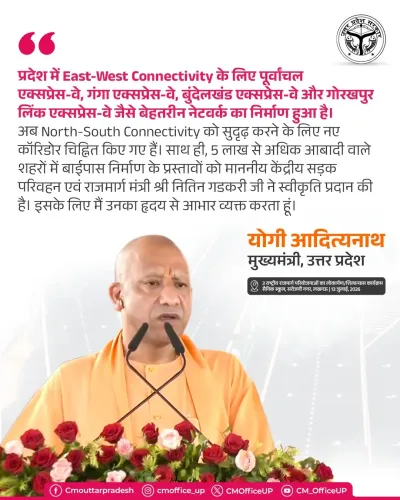
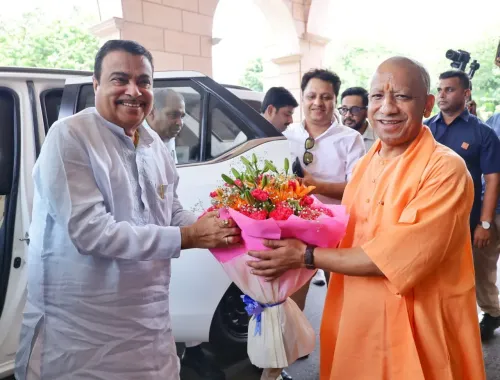
Gadkari credited PM Narendra Modi and CM Yogi Adityanath with driving Uttar Pradesh 's continued infrastructure push.
Three highway projects across eastern Uttar Pradesh — a four-lane bypass linking Jagatpur, Babuganj, Unchahar and Alapur, a bridge over the Sai River, and a road-widening stretch in Jaunpur city — are set to redraw connectivity for communities that have long been hemmed in by congested routes and a river boundary. Union Road Transport and Highways Minister Nitin Gadkari outlined the projects on 5 November 2026, underlining their expected impact on trade, healthcare access, and local employment across the region.
A river divided communities — the Sai bridge changes that
The proposed bridge over the Sai River, paired with the four-lane bypass through Jagatpur, Babuganj, Unchahar and Alapur, addresses one of the starkest gaps in eastern UP's road grid. Communities settled on opposite banks of the Sai have historically had to detour significant distances for routine access to schools and hospitals.
Gadkari stated that the project will establish 'direct connectivity between areas on both banks of the Sai River, making access to education, health and commercial facilities easier.' For thousands of residents in these towns and adjoining villages, that is not an incremental upgrade — it is a structural change in daily life.
Lata Mangeshkar Chauraha to Prasad Institute: Jaunpur's congestion fix
Inside Jaunpur city, the widening of the stretch from Lata Mangeshkar Tiraha to Prasad Institute targets one of the district town's most choked arterial corridors. The minister noted the work will 'reduce traffic pressure in Jaunpur city while also boosting trade, industry and tourism.'
Jaunpur, a historic city in eastern Uttar Pradesh known for its Sharqi-era architecture, has seen growing commercial and educational activity — but its road network has not kept pace. The widening is designed to give that growth room to breathe.
Raebareli–Prayagraj corridor: heavy vehicles off city roads
The Raebareli–Prayagraj widening rounds out the trio of announcements. Gadkari described it as a measure to 'ensure better and uninterrupted traffic in the area,' with an explicit emphasis on routing heavy vehicles around towns and market areas rather than through them.
That routing logic is central to the broader highway expansion philosophy: bypass the bottleneck, free the arterial road, and let commerce move. The Bharatmala Pariyojana, launched in 2015, and the PM Gati Shakti National Master Plan for multimodal connectivity, announced in 2021, together form the policy backbone under which projects like these are cleared and funded.
UP's highway decade — and what these projects add to it
Gadkari credited the projects to the guidance of Prime Minister Narendra Modi and the leadership of Uttar Pradesh Chief Minister Yogi Adityanath, framing them within a larger arc of infrastructure-led development across the state. 'Uttar Pradesh nirantar aage badh raha hai' ('Uttar Pradesh is continuously moving forward') was the note he ended on, under the hashtags #PragatiKaHighway and #GatiShakti.
Uttar Pradesh has been among the highest-priority states for central highway investment since 2014, with successive phases of Bharatmala funding directed especially at its eastern and central districts. These three projects — a bypass, a river bridge, and two corridor widenings — extend that pattern into towns that had largely been waiting at the edge of it.
Tender progress, land acquisition timelines, and completion targets for the Jaunpur and Raebareli–Prayagraj stretches will be the next concrete markers of whether the announcements translate to asphalt on the ground.
Point of View
Bridge the natural barrier, widen the arterial — applied to districts in eastern Uttar Pradesh that have historically lagged western UP in highway density. The timing, with state-level politics always simmering in UP, reinforces how the central government uses infrastructure visibility to consolidate its development narrative in electorally significant regions. The explicit invocation of both PM Modi and CM Yogi Adityanath signals coordinated credit-sharing between Delhi and Lucknow. The real test will come at the tender and land-acquisition stage, where eastern UP projects have historically faced delays that blunt the political dividend.
NationPress
5 Nov 2026
Frequently Asked Questions
What are the road projects announced by Nitin Gadkari for Jaunpur?
Gadkari announced a four-lane bypass connecting Jagatpur, Babuganj, Unchahar and Alapur, a bridge over the Sai River, and a widening of the road from Lata Mangeshkar Tiraha to Prasad Institute within Jaunpur city.
What is the Sai River bridge project in Uttar Pradesh?
The proposed bridge over the Sai River is part of a four-lane bypass project in eastern Uttar Pradesh designed to link communities on both banks of the river and improve access to education, health and commercial services.
What is the Raebareli–Prayagraj highway widening project?
The Raebareli–Prayagraj corridor widening aims to ensure smoother, uninterrupted traffic flow and provide a route for heavy vehicles to bypass towns and market areas in the region.
How does PM Gati Shakti relate to these UP highway projects?
PM Gati Shakti, the National Master Plan for multimodal connectivity launched in 2021, provides the planning and coordination framework under which road, rail and infrastructure projects like these Uttar Pradesh highway works are aligned and tracked.
What is Bharatmala Pariyojana and how does it apply to Uttar Pradesh?
Bharatmala Pariyojana is a central government scheme launched in 2015 to expand national highways, bypasses and economic corridors across India. Uttar Pradesh, particularly its eastern and central districts, has received substantial funding under successive phases of the programme.