Gadkari extends greetings for Dnyaneshwar Palkhi departure
Synopsis
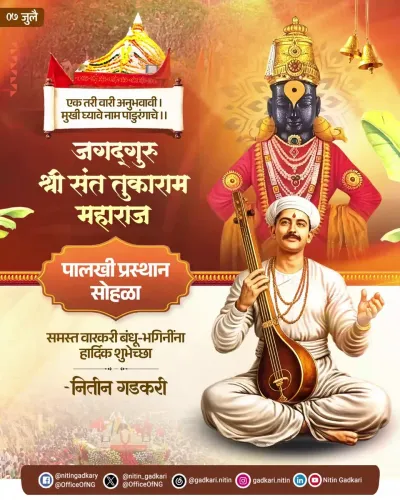
Union Minister Nitin Gadkari on 8 July 2026 extended Marathi-language greetings to Warkari pilgrims marking the ceremonial departure of Sant Dnyaneshwar Maharaj's palanquin from Alandi, the start of the annual Wari pilgrimage to Pandharpur ahead of Ashadhi Ekadashi.
Key Takeaways
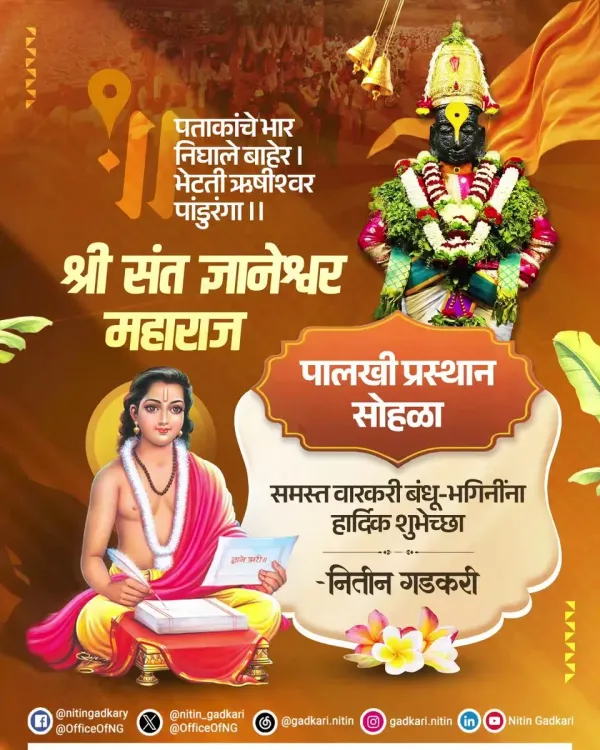
Union Minister Nitin Gadkari posted greetings on 8 July 2026 for the Sant Dnyaneshwar Maharaj Palkhi Prasthana Sohala .
The Palkhi departs from Alandi and travels on foot to Pandharpur , culminating on Ashadhi Ekadashi .
Sant Dnyaneshwar Maharaj was a 13th-century saint-poet whose Dnyaneshwari is the spiritual bedrock of the Warkari tradition.
The annual Wari draws hundreds of thousands of pilgrims from across Maharashtra, making it one of India's largest foot pilgrimages.
Gadkari's message was posted in Marathi and invoked a traditional verse from the Warkari devotional canon.
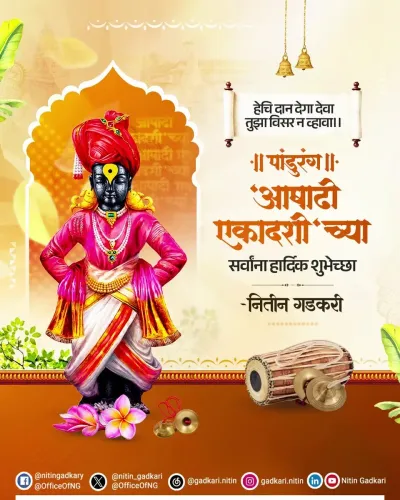
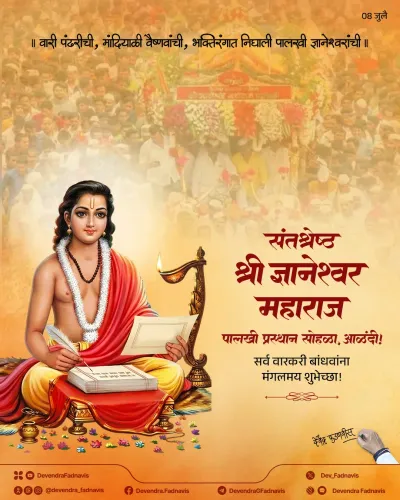
Union Road Transport and Highways Minister Nitin Gadkari on Wednesday, 8 July 2026 extended warm wishes to Warkari pilgrims across Maharashtra on the occasion of the Shri Sant Dnyaneshwar Maharaj Palkhi Prasthana Sohala — the ceremonial departure of the palanquin from Alandi that marks the start of the annual Wari pilgrimage to Pandharpur.
Context
Gadkari shared the traditional Marathi verse 'Patakanche bhar nighale baher, bheti rushishwar Panduranga' ('The procession of flags has set forth; the divine Panduranga awaits the meeting of sages'), invoking the spirit of the Warkari tradition. He addressed all Warkari brothers and sisters with heartfelt greetings, accompanying the message with devotional hashtags honouring Sant Dnyaneshwar Maharaj and the Palkhi departure ceremony.
The post, shared in Marathi, reflects the deep cultural resonance the Wari pilgrimage holds in Maharashtra, where lakhs of devotees undertake a weeks-long foot march singing devotional abhangs composed by medieval saint-poets.
Policy Backdrop
Sant Dnyaneshwar Maharaj, a 13th-century Marathi saint-poet, authored the Dnyaneshwari — a celebrated Marathi commentary on the Bhagavad Gita — and remains the spiritual cornerstone of the Warkari devotional movement. Every year, his paduka (sacred footwear) are carried in a palanquin from Alandi, near Pune, to Pandharpur in Solapur district, culminating on Ashadhi Ekadashi.
State authorities typically provide extensive administrative and logistical support for the pilgrimage, including road management, medical facilities, and security arrangements along the route — areas that intersect with the Union Road Transport Ministry's broader mandate on highway infrastructure in Maharashtra.
Stakeholders and Impact
The Wari draws hundreds of thousands of pilgrims from across Maharashtra and beyond each year, making it one of the largest annual foot pilgrimages in India. For the Warkari community, the Palkhi Prasthana Sohala is not merely a religious event but a living cultural institution that has continued uninterrupted for centuries.
Senior political figures from Maharashtra routinely issue greetings for the occasion, reflecting the pilgrimage's significance as both a spiritual and social phenomenon that cuts across caste and regional lines within the state.
What's Next
The Palkhi will travel on foot through several districts of Maharashtra before reaching Pandharpur for the culmination of the Wari on Ashadhi Ekadashi. State and local administrations are expected to announce crowd-management and pilgrim-facility measures as the procession progresses along its traditional route. The annual convergence at Pandharpur's Vitthal temple remains one of Maharashtra's most significant religious gatherings of the year.
Point of View
Which spans millions of households across caste lines. The Palkhi occasion offers political figures a non-partisan platform to signal solidarity with a centuries-old living tradition without wading into policy debate. For a BJP leader from Nagpur, such gestures also reinforce the party's sustained effort to embed itself within Maharashtra's bhakti cultural mainstream. The message carries no policy weight but is significant as a barometer of how religious-cultural calendars shape the public communication rhythms of elected officials.
NationPress
6 Oct 2026
Frequently Asked Questions
What is the Sant Dnyaneshwar Maharaj Palkhi Prasthana Sohala?
It is the ceremonial departure of the palanquin carrying Sant Dnyaneshwar Maharaj's sacred footwear from Alandi, marking the beginning of the annual Wari pilgrimage to Pandharpur that culminates on Ashadhi Ekadashi.
Who is Sant Dnyaneshwar Maharaj?
Sant Dnyaneshwar Maharaj was a 13th-century Marathi saint-poet who authored the Dnyaneshwari, a celebrated Marathi commentary on the Bhagavad Gita, and is the foundational figure of the Warkari devotional tradition in Maharashtra.
Where does the Palkhi go and when does it arrive?
The Palkhi travels on foot from Alandi, near Pune, to Pandharpur in Solapur district, arriving for the culmination of the Wari on Ashadhi Ekadashi, which falls in the Hindu month of Ashadha (June-July).
Why did Nitin Gadkari post greetings for the Palkhi?
Gadkari extended greetings to the Warkari community on the occasion of the Palkhi Prasthana Sohala on 8 July 2026, a common practice among Maharashtra's senior political figures given the pilgrimage's deep cultural and social significance in the state.
What is the Warkari tradition?
The Warkari tradition is a centuries-old Maharashtrian devotional movement whose followers undertake an annual foot pilgrimage to the Vitthal temple in Pandharpur, singing abhang poetry composed by saints such as Dnyaneshwar, Tukaram, and Namdev.