Gadkari joins Fadnavis at Nagpur 'Save Democracy' padyatra
Synopsis
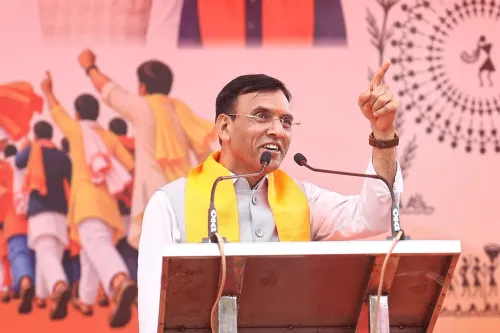
Union Minister Nitin Gadkari joined Chief Minister Devendra Fadnavis at Nagpur's 'Save Democracy, Remove Anarchy' padyatra on 5 November 2026, delivering a sharp NDA show-of-strength in the BJP's Maharashtra heartland.
Key Takeaways
Union Minister Nitin Gadkari addressed the 'Loktantra Bachao, Anarchata Hatao' padyatra in Nagpur on 5 November 2026 .
Chief Minister Devendra Fadnavis and other NDA leaders co-led the march, projecting alliance unity.
The event was held in Nagpur , the BJP's organisational stronghold and RSS headquarters city in Maharashtra.
The rally hashtag #SaveDemocracyRemoveAnarchy was used to amplify the message nationally via social media.
Gadkari tagged PM Narendra Modi and @BJP4India , linking the local event to the national party structure.
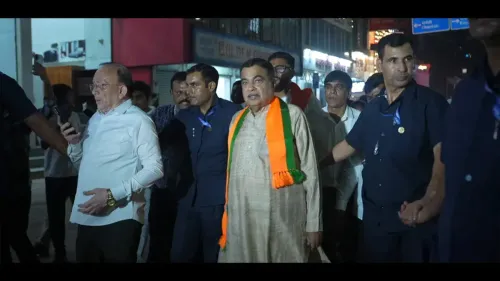
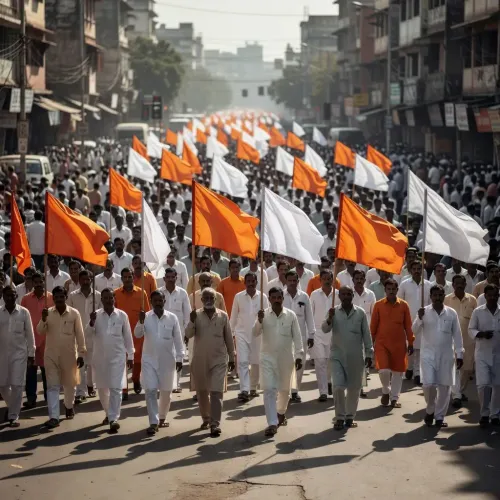
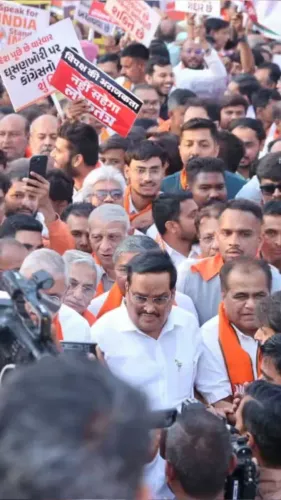
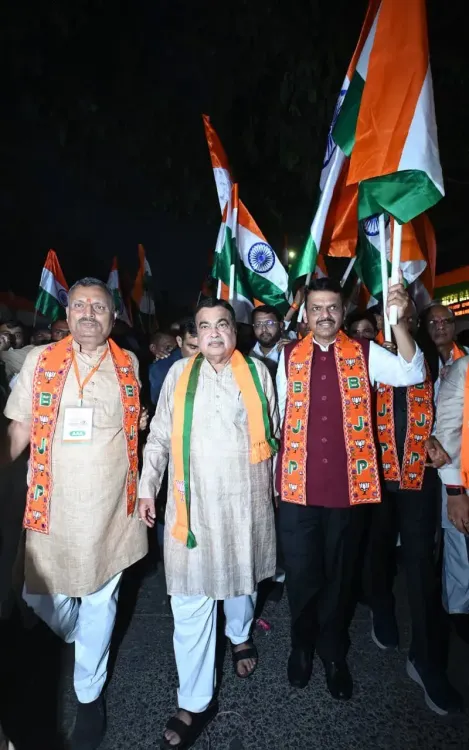
In the heart of Nagpur — the BJP's traditional stronghold in eastern Maharashtra — Union Road Transport and Highways Minister Nitin Gadkari joined a mass foot-march on Thursday, 5 November 2026, standing shoulder-to-shoulder with Chief Minister Devendra Fadnavis to deliver a sharp political message to the state.
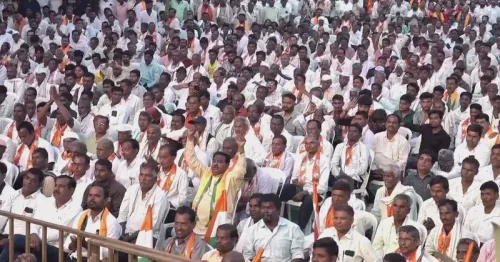
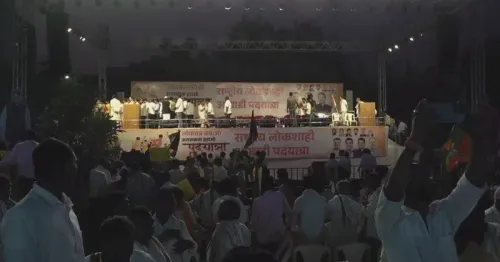
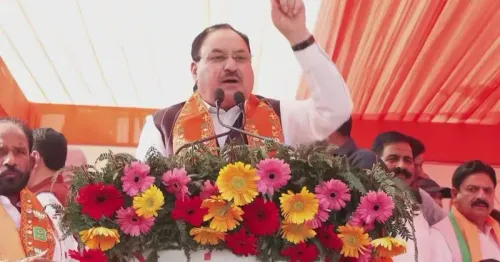
The rally was billed as the 'Loktantra Bachao, Anarchata Hatao' padyatra — or 'Save Democracy, Remove Anarchy' march — a carefully chosen frame that positions the NDA alliance as a bulwark of constitutional order against what it characterises as political instability. Gadkari addressed the gathering alongside NDA leaders, lending heavyweight national credibility to what was, at its core, a Maharashtra-specific mobilisation exercise.
Nagpur as BJP's political nerve centre
The choice of Nagpur is never accidental. The city is the RSS headquarters and a seat of deep organisational muscle for the BJP — holding an event here is as much a show of strength to the cadre as it is a message to opponents. For Gadkari, Nagpur is home turf; his political identity is inseparable from the city, and his presence amplifies any rally's symbolic weight considerably.
Fadnavis, as Chief Minister, anchored the state-level dimension of the march. The slogan — 'Save Democracy' — signals that the NDA is framing the current political moment in Maharashtra as one where democratic norms themselves are under contest, a narrative device that BJP-led coalitions have deployed in several states to sharpen voter and cadre mobilisation.
The padyatra as political instrument
Foot-marches have a long, cross-party lineage in Indian politics — from Gandhi's Salt March to contemporary yatras by virtually every major party. The BJP has used padyatras with particular effect in Maharashtra, where street-level presence signals organisational depth in a state whose politics remain fiercely competitive between the NDA combine and rival formations.
By tagging Prime Minister Narendra Modi and @BJP4India in his post, Gadkari explicitly connected the Nagpur event to the national party apparatus — projecting unity from the ground up to the top of the alliance. The hashtag #SaveDemocracyRemoveAnarchy doubles as a coordinated messaging tool, designed to travel beyond the march itself across social media.
Maharashtra has seen relentless political churn over recent election cycles, and Nagpur — with its mix of urban middle-class voters and deep RSS roots — remains a critical proving ground. When two of the NDA's most senior Maharashtra faces share a stage here, the signal to both allies and opponents is unmistakable: the alliance is unified, mobilised, and in fighting shape.
The opposition's response to the 'Save Democracy' framing — and whether the NDA rolls out similar marches across other Maharashtra districts — will be the story to watch next.
Point of View
Anarchata Hatao' padyatra in Nagpur fits a well-worn BJP playbook: use a high-decibel street event in a symbolic city to consolidate cadre energy and dominate the news cycle with a narrative frame — here, 'democracy under threat' — that forces opponents onto the defensive. Gadkari's presence alongside Fadnavis underscores that the NDA's Maharashtra unit is presenting a unified front, an important signal in a state where coalition arithmetic has historically been fragile. The deliberate tagging of PM Modi and the national party handle transforms a local march into a coordinated national message. Whether this padyatra is a standalone mobilisation or the opening move in a larger Maharashtra campaign will determine its lasting significance.
NationPress
6 Nov 2026
Frequently Asked Questions
What is the 'Loktantra Bachao, Anarchata Hatao' padyatra?
It is a foot-march organised in Nagpur by NDA leaders on 5 November 2026, translating to 'Save Democracy, Remove Anarchy', aimed at political mobilisation and projecting the NDA as a defender of constitutional order in Maharashtra.
Why did Nitin Gadkari attend the Nagpur padyatra?
Gadkari attended and addressed the march as a senior BJP leader and Union Minister for whom Nagpur is home turf, lending national-level weight to the Maharashtra-focused event alongside Chief Minister Devendra Fadnavis.
Who is Devendra Fadnavis?
Devendra Fadnavis is the Chief Minister of Maharashtra and a prominent BJP leader who co-led the 'Save Democracy, Remove Anarchy' padyatra in Nagpur.
What is the political significance of holding the rally in Nagpur?
Nagpur is the RSS headquarters and the BJP's deepest organisational base in Maharashtra, making it a high-visibility venue that amplifies any political event's symbolic and cadre-mobilisation value.
What hashtag did the NDA use for the Nagpur padyatra?
The NDA used #SaveDemocracyRemoveAnarchy to promote the event on social media, connecting the Nagpur march to a broader national political messaging campaign.