Gadkari clears ₹991 cr plan to 6-lane NH-41 Gujarat port link
Synopsis
Union Minister Nitin Gadkari has approved a ₹991.19 crore project to 6-lane the 57.80 km NH-41 Gandhinagar–Mundra section in Gujarat, boosting port connectivity for North India's trade with a projected 20% travel-time reduction.
Key Takeaways
₹991.19 crore sanctioned to upgrade the 57.80 km Gandhinagar (Kandla)–Mundra Port section of NH-41 to 6 lanes.
Corridor handles over 55,000 PCU daily , dominated by heavy port-bound freight vehicles.
Entire widening to be done within existing Right of Way — no fresh land acquisition required.
Project includes a new flyover , vehicular underpasses, bridge reconstruction and black-spot safety fixes.
Expected to cut travel time by approximately 20% and reduce logistics costs between ports and North Indian hinterlands.
Aligns with Bharatmala Pariyojana , PM Gati Shakti and Sagarmala port-connectivity frameworks.
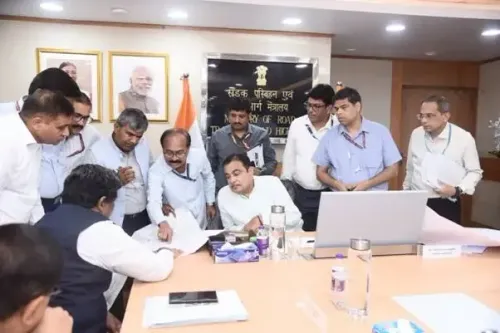
Two of India's busiest ports — Deendayal (Kandla) Port and Mundra Port — are about to get a dramatically faster road connection. Union Road Transport and Highways Minister Nitin Gadkari on Thursday, 15 October 2026, announced approval of a ₹991.19 crore project to upgrade the 57.80 km Gandhinagar (Kandla)–Mundra Port section of National Highway 41 in Gujarat from its existing configuration to a full 6-lane corridor.
The corridor that moves North India's cargo
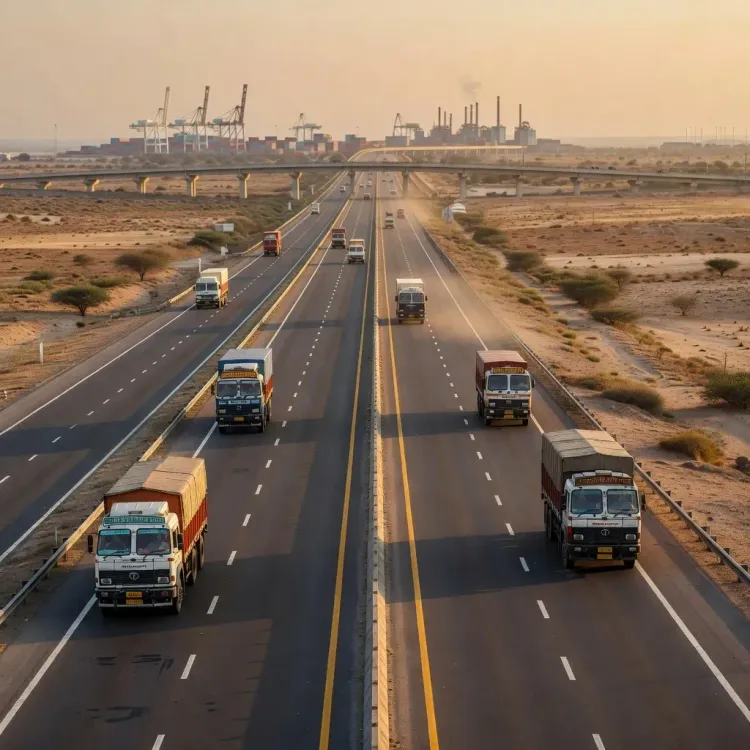
This stretch of NH-41 is no ordinary highway. It shoulders the freight burden for virtually all of North India's port-bound trade routed through Kutch — handling more than 55,000 Passenger Car Units (PCU) every single day, with heavy port-bound trucks forming the dominant traffic stream. Deendayal Port, a major government port at Kandla, and Mundra Port, India's largest private port operated by Adani Ports, together funnel containers and bulk cargo to and from states as far as Rajasthan, Haryana, Punjab and Uttar Pradesh. A road that connects them is, in effect, the arterial vein of India's western trade gateway.
What ₹991 crore buys: flyovers, underpasses and black-spot fixes
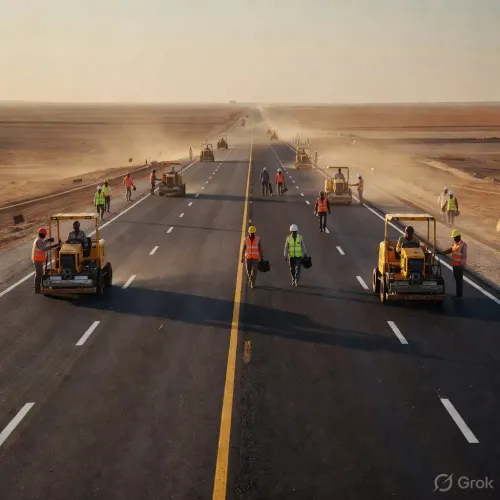
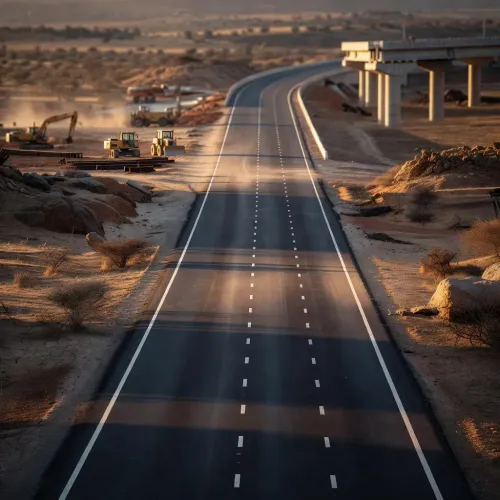
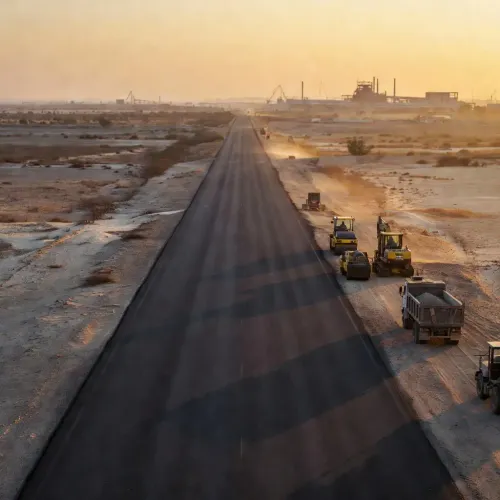
The approved project is not a simple widening exercise. According to Gadkari's announcement, the entire expansion will be executed within the existing 'Right of Way' — meaning no new land acquisition. That removes one of the most contentious bottlenecks in Indian highway projects. The scope includes construction of a new flyover, fresh vehicular underpasses, reconstruction of both major and minor bridges, and dedicated safety interventions at identified accident black spots along the corridor.
The result, the Ministry projects, will be a roughly 20% reduction in travel time along the stretch, alongside lower logistics costs for shippers and a sharper throughput between the ports and industrial and agricultural hinterlands of North India.
Gujarat's port-road push under Gati Shakti and Bharatmala
The sanction fits squarely into two flagship frameworks. Bharatmala Pariyojana, launched in 2015, earmarked the development of 34,800 km of national highways with a specific focus on port-connectivity corridors. PM Gati Shakti, announced in 2021, layered a national digital master plan over those ambitions — coordinating road, rail and port investments on a single platform to eliminate the silo planning that had historically delayed multimodal projects. The Sagarmala project, also from 2015, specifically targeted hinterland road and rail links to reduce logistics costs and power port-led economic development. This NH-41 upgrade is a direct output of that layered policy architecture.
Gujarat's ports have drawn sustained central attention because of their disproportionate share of India's container and bulk cargo volumes. Strengthening the land-side road infrastructure is seen as the fastest lever to unlock additional port capacity already built — or being built — offshore.
Kutch jobs, export gains and the Viksit Bharat goal
Gadkari's post explicitly links the upgrade to three downstream outcomes: trade, industry and employment growth in Kutch; a stronger role for Gujarat as India's maritime gateway; and a step toward the 'Viksit Bharat' (Developed India) goal of a world-class logistics network. The logistics cost reduction angle is significant — India's logistics costs as a share of GDP have historically run higher than comparable economies, and port-connectivity corridors are consistently cited as a primary drag. Faster freight movement between Mundra and Kandla and the industrial clusters of North India directly compresses that cost.
With no land acquisition required, the project skips what is typically the most time-consuming pre-construction phase. That makes its tendering and construction timeline considerably shorter than comparable greenfield expansions — which is exactly the kind of execution detail that determines whether an approval becomes an asset or a file.
Point of View
Port-adjacent, no land acquisition, and timed to extract latent value from port capacity already in place. It reinforces the Ministry's pattern of targeting corridors where road bottlenecks — rather than port infrastructure — are the binding constraint on export competitiveness. For Gadkari, it also deepens the BJP's political investment in Gujarat's industrial and trade identity ahead of ongoing state-level economic messaging. The broader signal is that India's logistics-cost reduction agenda is increasingly being prosecuted stretch by stretch on high-freight roads rather than through sweeping policy announcements alone.
NationPress
15 Oct 2026
Frequently Asked Questions
What is the NH-41 Kandla–Mundra 6-lane project?
It is a ₹991.19 crore approved project to widen the 57.80 km section of National Highway 41 between Gandhinagar (Kandla) and Mundra Port in Gujarat from its existing width to a 6-lane highway, improving freight flow between two major ports and North India.
How much will travel time reduce after the NH-41 upgrade?
The Ministry projects approximately a 20% reduction in travel time on the corridor after the 6-laning is complete, along with lower logistics costs for cargo moving to and from the ports.
Will land be acquired for the NH-41 widening in Gujarat?
No. The entire widening will be carried out within the existing Right of Way , meaning no fresh land acquisition is required — a key factor that can speed up construction timelines significantly.
Why is the Kandla–Mundra highway important for North India?
Deendayal (Kandla) Port and Mundra Port together serve as the primary maritime gateways for trade from states including Rajasthan, Punjab, Haryana and Uttar Pradesh. NH-41 is the main road artery linking those ports to the national highway network.
Which central schemes does this NH-41 project fall under?
The project aligns with Bharatmala Pariyojana (2015), which focuses on port-connectivity corridors, PM Gati Shakti (2021), the national multimodal infrastructure master plan, and the Sagarmala port-led development initiative.