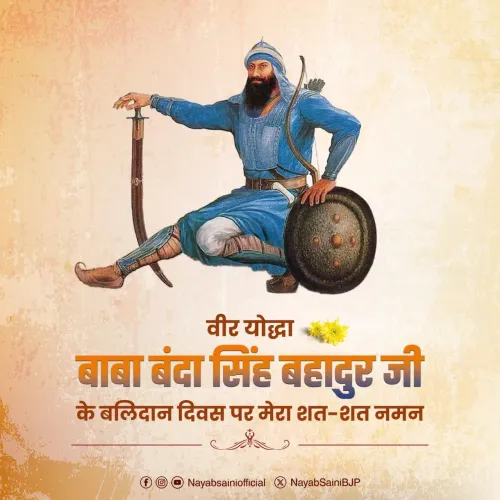
Gadkari pays tribute to Baba Banda Singh Bahadur on Martyrdom Day
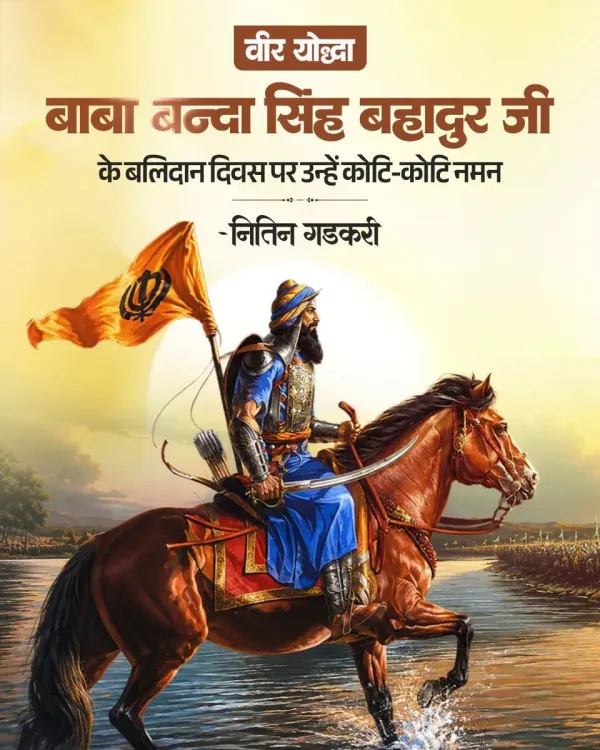
Synopsis
Union Minister Nitin Gadkari on 25 June 2026 marked the martyrdom day of early 18th-century Sikh commander Baba Banda Singh Bahadur, saluting his sacrifice for the motherland and his historic role in championing the rights and protection of farmers against Mughal oppression.
Key Takeaways
Nitin Gadkari posted a tribute on 25 June 2026 marking the martyrdom anniversary of Baba Banda Singh Bahadur .
Baba Banda Singh Bahadur was a Sikh military commander executed by Mughal authorities in Delhi in 1716 .
He is historically credited with redistributing land to peasants, dismantling feudal zamindari structures in territories he controlled.
Gadkari's tribute specifically highlighted Baba Banda Singh Bahadur's role in fighting for farmers' interests and freeing them from fear.
Such tributes by senior BJP leaders on Sikh historical anniversaries reflect a broader pattern of integrating Sikh martial heritage into national remembrance.
Union Road Transport and Highways Minister Nitin Gadkari on Thursday, 25 June 2026, paid tribute to early 18th-century Sikh warrior Baba Banda Singh Bahadur on his martyrdom anniversary, honouring his legacy of armed resistance against Mughal rule and his efforts to protect the rights of farmers and peasants.
Context
In his post, Gadkari wrote: 'मातृभूमि की रक्षा के लिए अपने प्राण न्योछावर करने वाले वीर योद्धा बाबा बन्दा सिंह बहादुर जी के शहीदी दिवस पर उन्हें कोटिशः नमन' — 'Countless salutations to the brave warrior Baba Banda Singh Bahadur, who sacrificed his life for the protection of the motherland, on his martyrdom day.' He also noted that Baba Banda Singh Bahadur 'fought for the interests and protection of farmers and freed them from fear through his valour and bravery,' adding that 'he who always walked the path of dharma and culture will be remembered for ages.'
The tribute was posted on the morning of 25 June, the date widely observed as the martyrdom anniversary of the Sikh commander who was executed in Delhi in 1716 by Mughal authorities.
Policy Backdrop
Baba Banda Singh Bahadur was a military general and disciple of Guru Gobind Singh Ji, the tenth Sikh Guru, who led a successful uprising against Mughal rule in Punjab in the early 1700s. He is historically credited with dismantling the feudal zamindari system in the territories he controlled, distributing land directly to the peasants who tilled it — an act regarded as among the earliest agrarian reform efforts in the subcontinent.
His forces captured Sirhind in 1710, avenging the martyrdom of the younger sons of Guru Gobind Singh Ji. After years of resistance, he was captured by Mughal forces and executed in Delhi in June 1716 along with hundreds of his followers, refusing to renounce his faith.
Stakeholders and Impact
Martyrdom day observances for Baba Banda Singh Bahadur hold deep significance for the Sikh community across India and the diaspora, particularly in Punjab. Senior political leaders across parties routinely mark such anniversaries through public statements that link themes of sacrifice, agrarian protection and cultural continuity to contemporary national identity.
Gadkari's specific emphasis on Baba Banda Singh Bahadur's role as a champion of farmers' rights resonates with the ongoing political salience of agrarian issues in Punjab and across northern India. By invoking the warrior's legacy of freeing peasants from fear, the tribute draws a line connecting historical sacrifice to present-day concerns about rural welfare.
What's Next
State and central government events in Punjab and Delhi around Sikh historical anniversaries often accompany such tributes, with cultural ministry programmes and parliamentary references periodically highlighting this period of Sikh history. The martyrdom day is likely to see similar observances from political leaders and Sikh institutions across the country. Continued governmental acknowledgement of such anniversaries reflects a broader pattern of integrating pre-independence Sikh martial heritage into mainstream national remembrance.
Point of View
Particularly those associated with agrarian protection — a theme with enduring political resonance in Punjab and across the Hindi heartland. By foregrounding the warrior's role as a defender of farmers rather than limiting the tribute to religious or military valour, Gadkari subtly aligns the party with rural welfare narratives that remain electorally significant. The timing and framing suggest this is as much a statement of cultural solidarity with the Sikh community as it is a routine commemorative gesture. Such tributes cumulatively shape the BJP's positioning on Sikh heritage and agrarian identity ahead of any state or national electoral cycle.
NationPress
25 Jun 2026
Frequently Asked Questions
Who was Baba Banda Singh Bahadur?
Baba Banda Singh Bahadur was an early 18th-century Sikh military commander and disciple of Guru Gobind Singh Ji who led a major uprising against Mughal rule in Punjab, captured Sirhind in 1710, and implemented land reforms that redistributed agricultural land to peasants before being executed in Delhi in 1716.
When is Baba Banda Singh Bahadur's martyrdom day observed?
Baba Banda Singh Bahadur's martyrdom day, known as 'Shahidi Diwas,' is observed on 9 June according to some traditions, though commemorations occur throughout June, marking his execution by Mughal authorities in 1716.
Why did Nitin Gadkari pay tribute to Baba Banda Singh Bahadur?
Union Minister Nitin Gadkari posted a tribute on 25 June 2026 to mark the martyrdom anniversary of Baba Banda Singh Bahadur, honouring his sacrifice for the motherland, his role in protecting farmers, and his commitment to dharma and culture.
What were Baba Banda Singh Bahadur's contributions to farmers?
Baba Banda Singh Bahadur dismantled the feudal zamindari system in territories under his control and redistributed land directly to the peasants who tilled it, making him one of the earliest champions of agrarian reform in the subcontinent.
Why do BJP leaders pay tribute to Sikh warriors like Banda Singh Bahadur?
Senior BJP leaders routinely mark anniversaries of pre-independence Sikh warriors and martyrs to affirm cultural solidarity with the Sikh community, connect themes of historical sacrifice to contemporary national identity, and highlight agrarian and dharmic values that resonate politically across Punjab and northern India.