PM Modi to Lay Foundation Stone of Jaipur Metro Phase-2 on July 4
Synopsis
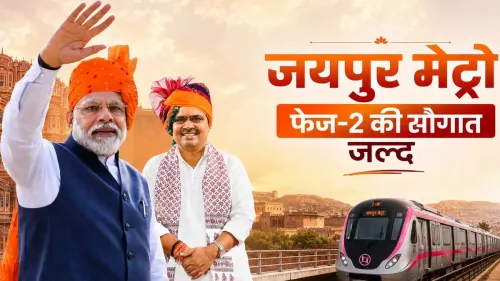
Prime Minister Narendra Modi will lay the foundation stone of Jaipur Metro Phase-2 on July 4, 2026, as announced by the Rajasthan Chief Minister's Office. The project extends the city's metro network beyond the Phase-1 corridor operational since 2015, following the joint central-state Metro Rail Policy 2017 framework.
Key Takeaways
PM Narendra Modi will lay the foundation stone of Jaipur Metro Phase-2 on July 4, 2026 .
The announcement was made by the Chief Minister's Office of Rajasthan on June 25, 2026 , tagging CM Bhajan Lal Sharma .
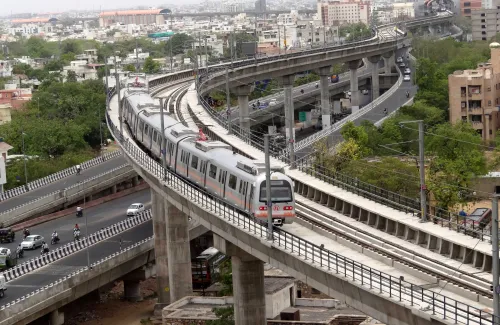
Jaipur Metro Phase-1 (Mansarovar to Chandpole) has been operational since 2015 .
The project is governed by the Metro Rail Policy 2017 , enabling joint central-state funding.
Detailed project cost, alignment, and timeline are expected to be released after the foundation-stone ceremony.
The expansion is aimed at easing urban congestion and improving public transport for Jaipur commuters.
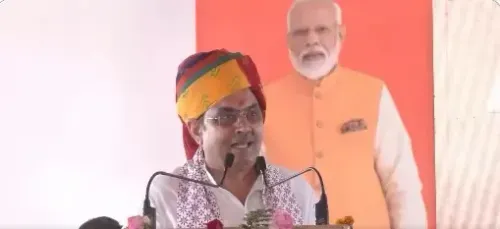
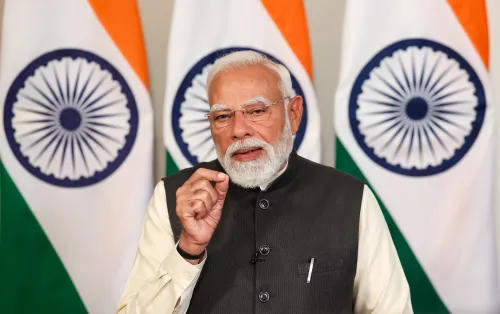
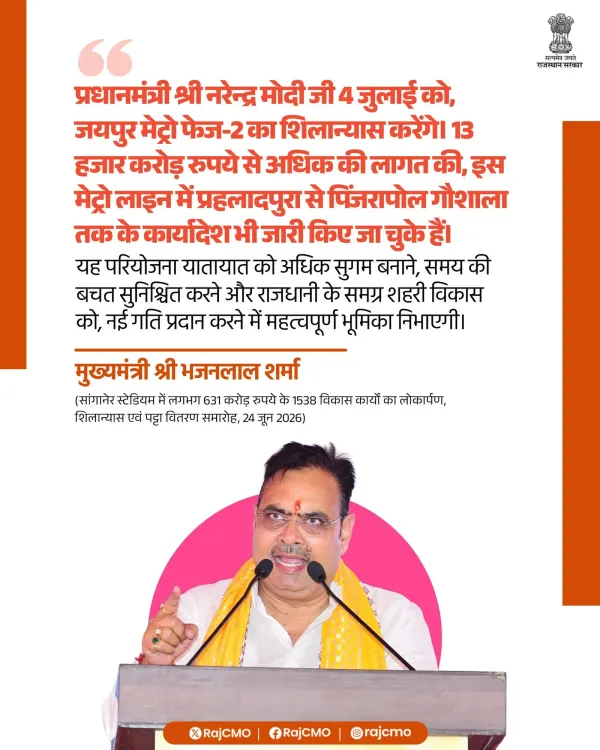
The Chief Minister's Office of Rajasthan announced on Thursday, June 25, 2026, that Prime Minister Narendra Modi will lay the foundation stone of Jaipur Metro Phase-2 on July 4, marking a significant milestone for urban mobility in the state capital.
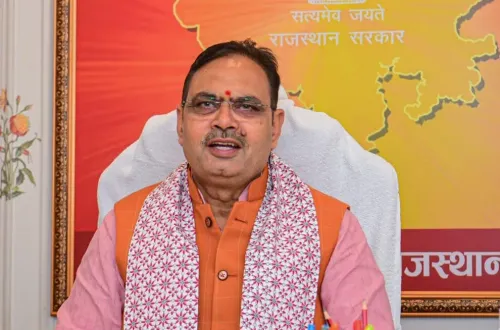
The post, shared by the official Rajasthan CMO handle and tagging Chief Minister Bhajan Lal Sharma (@BhajanlalBjp), stated in Hindi: 'प्रधानमंत्री श्री नरेन्द्र मोदी जी 4 जुलाई को जयपुर मेट्रो फेज-2 का शिलान्यास करेंगे' — 'Prime Minister Shri Narendra Modi will lay the foundation stone of Jaipur Metro Phase-2 on July 4.'
Context
Jaipur, the capital of Rajasthan, has been expanding its metro rail network to address growing urban congestion. Jaipur Metro Phase-1, connecting Mansarovar to Chandpole, became operational in 2015 and laid the groundwork for further expansion of the city's rapid transit system.
The announcement of Phase-2 signals the next stage of that expansion, with the Prime Minister's direct involvement lending the event national prominence. The foundation-stone ceremony on July 4 is expected to formally initiate the construction process.
Policy Backdrop
The project falls under the framework of the Metro Rail Policy 2017, which the Government of India introduced to guide central funding and implementation of metro projects in tier-2 cities, including Jaipur. The policy enables joint central-state funding models that have been applied in cities such as Ahmedabad, Lucknow, and Indore.
Prime Minister Modi has presided over metro inaugurations and foundation-stone ceremonies in multiple states, making urban rail connectivity a visible pillar of the central government's infrastructure agenda. The Rajasthan government under Chief Minister Bhajan Lal Sharma, in office since December 2023, has positioned urban infrastructure as a priority under its development blueprint.
Stakeholders and Impact
The primary beneficiaries of Jaipur Metro Phase-2 will be daily commuters in Jaipur, who currently rely on buses and private vehicles amid rising traffic volumes. An expanded metro network is expected to ease congestion, improve air quality, and provide affordable public transport to a broader section of the city's population.
Rajasthan's urban development authorities and the Jaipur Metro Rail Corporation are the key implementing agencies. The project also carries economic implications for real estate, local businesses, and employment along the new corridor.
What's Next
Following the July 4 foundation-stone ceremony, the focus will shift to the release of the detailed project cost, alignment map, and implementation timeline by the Rajasthan government or the Jaipur Metro Rail Corporation. These details will determine the corridor's reach, the number of stations, and the projected completion schedule.
The event is also likely to set the political tone ahead of upcoming urban development announcements in Rajasthan, with both the state and central governments expected to highlight the project as a joint infrastructure achievement.
Point of View
Who took office in December 2023, the event offers an early high-profile infrastructure milestone to anchor his administration's public narrative. The move fits a broader pattern of the Modi government using metro rail ceremonies in state capitals to reinforce its urban mobility credentials ahead of electoral cycles. The real test, however, will be the project's alignment, cost, and execution timeline — details that remain to be disclosed after July 4.
NationPress
25 Jun 2026
Frequently Asked Questions
When will PM Modi lay the foundation stone of Jaipur Metro Phase-2?
PM Narendra Modi will lay the foundation stone of Jaipur Metro Phase-2 on July 4, 2026, as announced by the Rajasthan Chief Minister's Office.
What is Jaipur Metro Phase-2?
Jaipur Metro Phase-2 is the planned extension of Jaipur's metro rail network beyond the existing Phase-1 corridor, which runs from Mansarovar to Chandpole and has been operational since 2015.
Who is the Chief Minister of Rajasthan in 2026?
Bhajan Lal Sharma of the BJP is the Chief Minister of Rajasthan, having assumed office in December 2023.
How is Jaipur Metro Phase-2 funded?
The project is expected to follow the Metro Rail Policy 2017 framework, which provides for joint central and state government funding for metro projects in cities like Jaipur.
What was Jaipur Metro Phase-1?
Jaipur Metro Phase-1 connected Mansarovar to Chandpole and became operational in 2015, making it Rajasthan's first metro rail corridor.