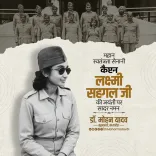
Gadkari pays tribute to Captain Lakshmi Sahgal on her birth anniversary
Synopsis
Union Minister Nitin Gadkari honoured Captain Lakshmi Sahgal on her birth anniversary, saluting the first captain of the Azad Hind Fauj's Rani of Jhansi Regiment and Padma Vibhushan awardee who blended armed resistance with a lifetime of medical service.
Key Takeaways
Nitin Gadkari paid tribute to Captain Lakshmi Sahgal on her birth anniversary on 24 October 2026 .
Captain Sahgal was the first captain of the Rani of Jhansi Regiment , the all-women combat unit of the Azad Hind Fauj (INA) .
She was awarded the Padma Vibhushan , India's second-highest civilian honour, for her lifetime of service.
A trained physician, she continued practising medicine in Kanpur long after independence.
The Azad Hind Fauj was formed during World War II under Subhas Chandra Bose to fight British colonial rule.
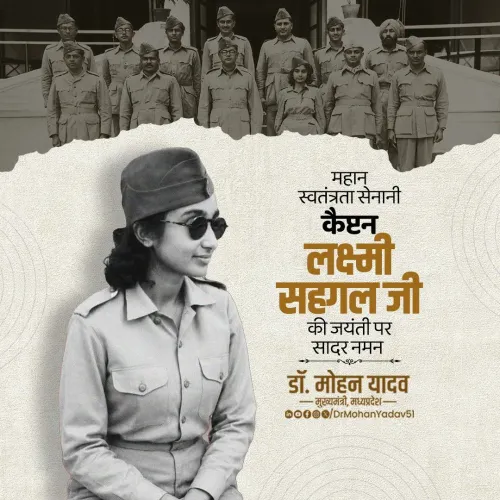
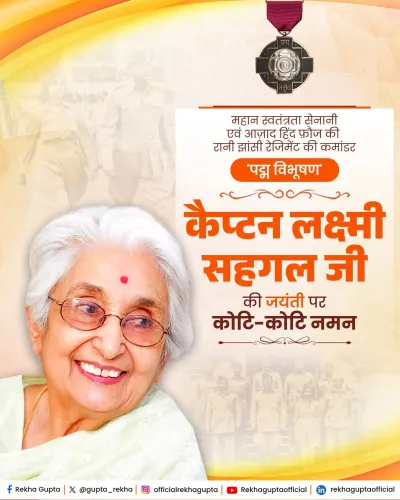
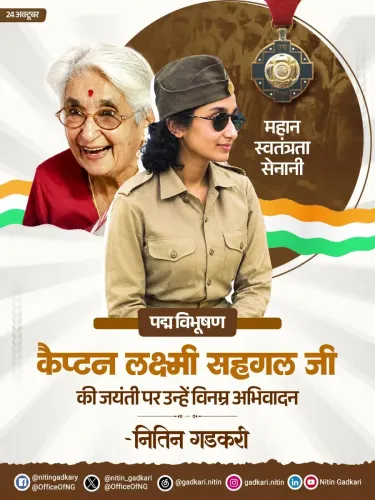
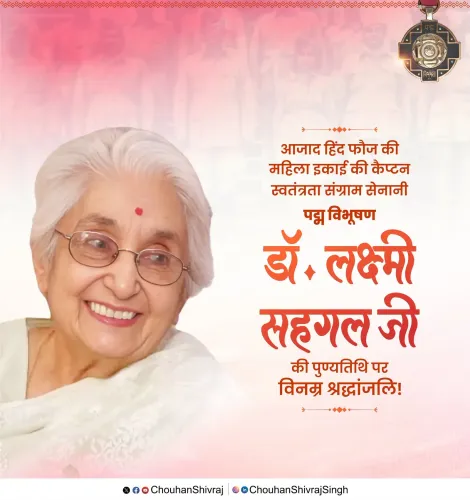
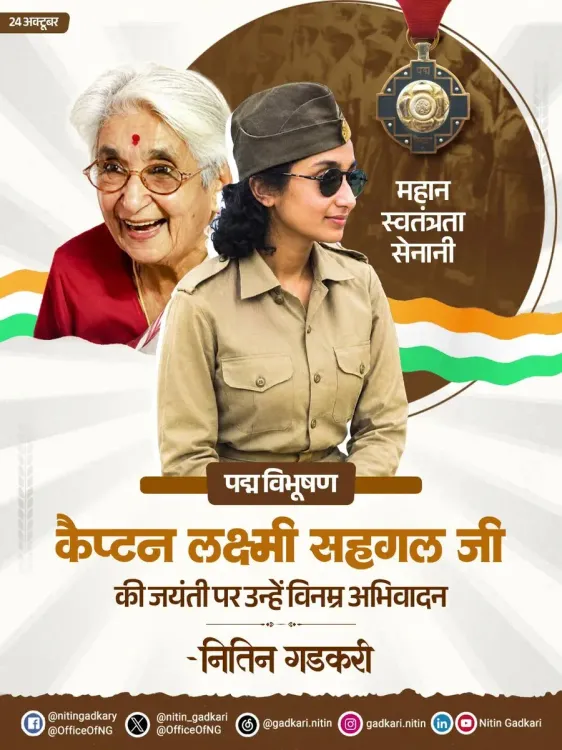
She led women into battle against an empire — and never stopped fighting for her country long after the guns fell silent. Union Road Transport and Highways Minister Nitin Gadkari on Saturday, 24 October 2026, paid tribute to Captain Lakshmi Sahgal, the first captain of the women's regiment of the Azad Hind Fauj, on her birth anniversary.
Gadkari's post, in Hindi, offered 'vinm abhivadan' — a humble salute — to Captain Sahgal, honouring her as a 'great freedom fighter' and Padma Vibhushan awardee. It was a brief tribute with deep roots.
The soldier-doctor who joined the INA
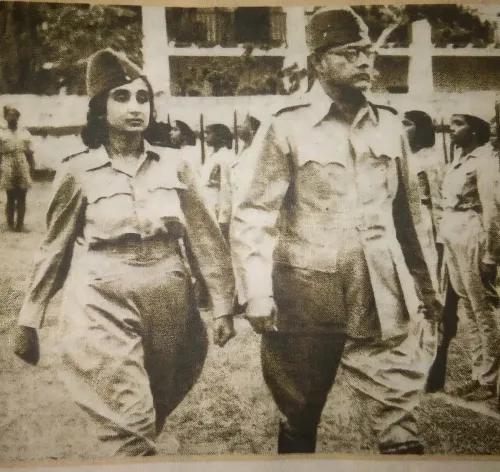
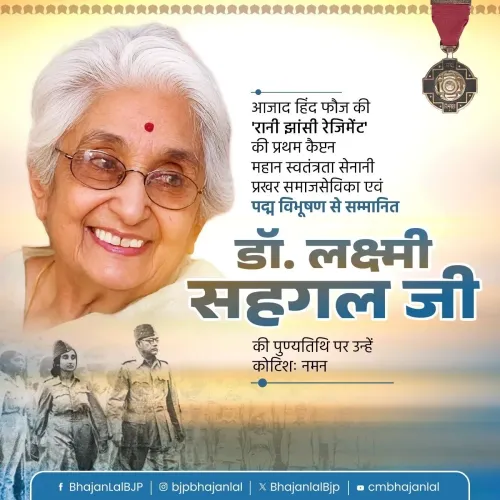
Captain Lakshmi Sahgal was not a typical recruit to armed resistance. A trained physician, she joined the Indian National Army (INA) — the Azad Hind Fauj — during World War II, drawn by Netaji Subhas Chandra Bose's call for total liberation from British rule. She was appointed the first captain of the Rani of Jhansi Regiment, the INA's all-women combat unit — a remarkable appointment at a time when women's roles in armed movements were almost universally confined to support functions.
Her contributions were not forgotten in independent India. She was awarded the Padma Vibhushan, the country's second-highest civilian honour, in recognition of a lifetime of service — first to the freedom struggle, then to medicine and social causes in Kanpur, where she continued practising as a doctor well into old age.
Why the INA's women's regiment still resonates
The Rani of Jhansi Regiment remains a landmark in India's independence history — one of the earliest instances of women being formally inducted into an armed fighting force on the subcontinent. Captain Sahgal's command of that unit placed her at the intersection of anti-colonial resistance and the early assertion of women's agency in public and military life.
Indian political leaders across parties regularly mark the birth and death anniversaries of INA figures, reflecting a bipartisan consensus on the army's symbolic importance in the national memory. Gadkari's tribute fits that pattern — but Captain Sahgal's legacy, spanning battlefield command, medicine, and civic activism, gives such commemorations a substance that outlasts any single social media post.
A doctor who became a captain, a freedom fighter who became a healer — Captain Lakshmi Sahgal's life is a reminder that the independence movement was built on people who refused to be one thing.
Point of View
Reflecting a shared national narrative around armed anti-colonial resistance. Captain Lakshmi Sahgal's profile — a woman commanding a combat regiment in the 1940s — adds a dimension of gender history that makes her anniversary particularly significant in contemporary political discourse. For the BJP, honouring INA figures also aligns with a broader effort to reclaim and celebrate diverse strands of the independence movement beyond the Congress-led mainstream. Gadkari's post is ceremonial in form but taps into a living debate about whose contributions to freedom are remembered and how.
NationPress
24 Oct 2026
Frequently Asked Questions
Who was Captain Lakshmi Sahgal?
Captain Lakshmi Sahgal was a doctor and freedom fighter who served as the first captain of the Rani of Jhansi Regiment, the women's unit of the Azad Hind Fauj (Indian National Army), during World War II. She was later awarded the Padma Vibhushan.
What was the Rani of Jhansi Regiment?
The Rani of Jhansi Regiment was the all-women combat unit of the Azad Hind Fauj, the Indian National Army led by Subhas Chandra Bose. It was one of the first formal armed women's units in the Indian independence movement.
What is the Azad Hind Fauj?
The Azad Hind Fauj, also known as the Indian National Army (INA), was a military force formed during World War II under Subhas Chandra Bose with the aim of overthrowing British colonial rule in India.
What award did Captain Lakshmi Sahgal receive?
Captain Lakshmi Sahgal was awarded the Padma Vibhushan, India's second-highest civilian honour, in recognition of her contributions to the freedom struggle and her lifetime of medical and social service.
Why did Nitin Gadkari pay tribute to Captain Lakshmi Sahgal?
Union Minister Nitin Gadkari posted a tribute on 24 October 2026 to mark the birth anniversary of Captain Lakshmi Sahgal, honouring her as a great freedom fighter and the first captain of the Azad Hind Fauj's women's regiment.