CM Rekha Gupta pays tribute to Dr. Lakshmi Sahgal on her birth anniversary
Synopsis
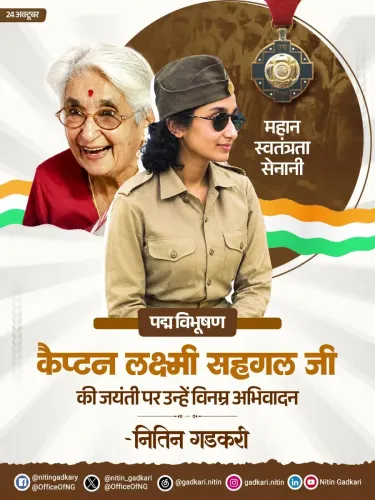
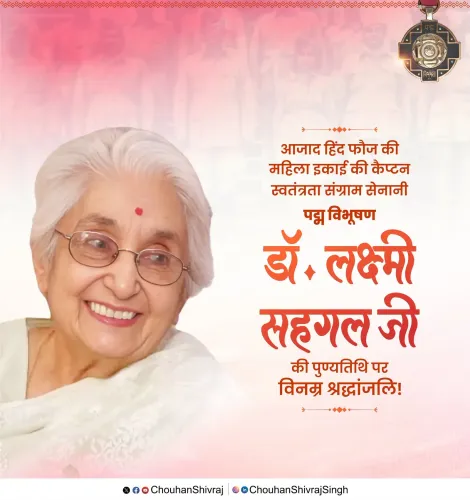
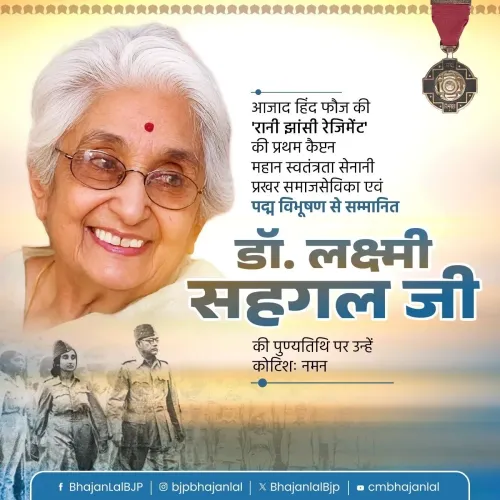
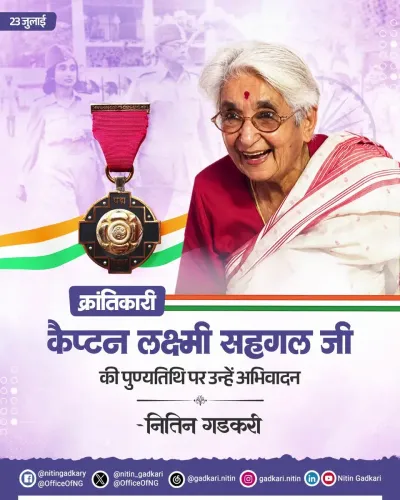
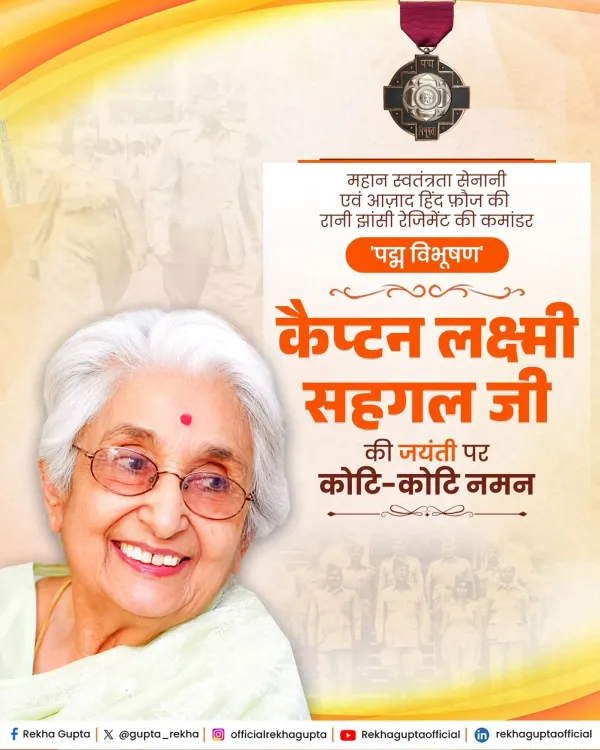
Delhi Chief Minister Rekha Gupta honoured Dr. Lakshmi Sahgal on her birth anniversary, saluting the Rani of Jhansi Regiment commander and Padma Vibhushan recipient as an eternal symbol of women's power, patriotism, and selfless service in India's freedom struggle.
Key Takeaways
Delhi CM Rekha Gupta paid tribute to Dr.
Lakshmi Sahgal on her birth anniversary on 24 October 2026 .
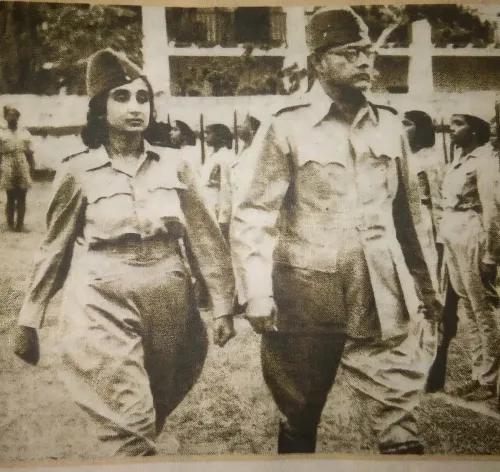
Sahgal commanded the Rani of Jhansi Regiment , the all-women unit of the Azad Hind Fauj led by Subhas Chandra Bose .
She was awarded the Padma Vibhushan in 1998 for her role in the independence movement.
After independence, Dr.
Sahgal spent decades running a free medical clinic in Kanpur , serving the poor until her death in 2012 at age 97 .
CM Gupta described her life as 'an unparalleled example of women's power, patriotism, and selfless public service.'
A soldier who led women into battle against the British Empire, Dr. Lakshmi Sahgal commanded the Rani of Jhansi Regiment of the Azad Hind Fauj — and on her birth anniversary, Delhi Chief Minister Rekha Gupta offered a heartfelt homage to the freedom fighter on Saturday, 24 October 2026.
Posting in Hindi, CM Gupta wrote: 'Koti-koti naman' (a million salutes) to Dr. Sahgal, honouring her as a commander of the Rani of Jhansi Regiment, a great freedom fighter, and a recipient of the Padma Vibhushan. She described Dr. Sahgal's 'indomitable courage, sacrifice, and unwavering dedication to national service' as an eternal source of inspiration, calling her life 'an unparalleled example of women's power, patriotism, and selfless public service.'
The woman who armed India's daughters for freedom
Dr. Lakshmi Sahgal was born on 24 October 1914 in Madras. A trained physician, she joined Subhas Chandra Bose's Azad Hind Fauj — the Indian National Army — in Singapore during World War II, driven by a single conviction: that India's freedom was worth every sacrifice.
Bose personally appointed her to command the Rani of Jhansi Regiment, the first organised all-women military unit in modern Indian history. The regiment drew its name from Rani Lakshmibai of Jhansi, the 19th-century warrior queen — a deliberate invocation of feminine martial courage. Dr. Sahgal drilled, trained, and led these women soldiers through some of the most difficult terrain of the Burma campaign, blending her medical expertise with frontline leadership.
A life after the front lines — and a Padma Vibhushan
After independence, Dr. Sahgal returned to medicine and spent decades serving the poor in Kanpur, running a free clinic that became legendary in the city. Her post-war life was, in many ways, as remarkable as her wartime one — quiet, consistent, and entirely devoted to others.
The Government of India recognised her contributions with the Padma Vibhushan in 1998, the country's second-highest civilian honour. She passed away in 2012, aged 97, widely mourned as one of the last living bridges to the Bose-era independence movement.
Why the INA tradition endures in political memory
Tributes to Azad Hind Fauj figures have long held a distinctive place in Indian political messaging. The INA represents a strand of the freedom struggle defined by armed resistance and sacrifice — one that BJP leaders, including CM Gupta, have consistently foregrounded to underscore nationalist history and the contribution of women to India's independence.
Dr. Sahgal's story, in particular, threads together several powerful threads: military courage, medical service, women's leadership, and grassroots public work — making her a figure almost all political traditions can honour without contest.
A century after she first picked up a stethoscope and a cause, Dr. Lakshmi Sahgal's life remains the sharpest possible rebuke to anyone who underestimates what a woman with purpose can do.
Point of View
And sometimes in deliberate contrast with, the Congress-dominated Gandhian narrative of independence. By foregrounding Dr. Sahgal's identity as a woman commander, Gupta also aligns the tribute with a recurring BJP messaging thread on 'Nari Shakti' (women's power). The choice of Dr. Sahgal — a figure respected across party lines — makes this a politically low-friction tribute that nonetheless reinforces a specific historical framing. Over time, these consistent commemorations gradually shape which strands of the freedom struggle remain most vivid in public memory.
NationPress
24 Oct 2026
Frequently Asked Questions
Who was Dr. Lakshmi Sahgal?
Dr. Lakshmi Sahgal was a prominent Indian freedom fighter born on 24 October 1914 in Madras. She commanded the Rani of Jhansi Regiment of the Azad Hind Fauj under Subhas Chandra Bose and was later awarded the Padma Vibhushan in 1998 . She passed away in 2012 aged 97.
What was the Rani of Jhansi Regiment?
The Rani of Jhansi Regiment was the all-women military unit of the Indian National Army (Azad Hind Fauj) , formed during World War II to fight British colonial rule. Named after the 19th-century warrior queen Rani Lakshmibai, it was commanded by Dr. Lakshmi Sahgal.
Why did Delhi CM Rekha Gupta pay tribute to Dr. Lakshmi Sahgal?
24 October marks the birth anniversary of Dr. Lakshmi Sahgal . Delhi CM Rekha Gupta posted a tribute on the occasion, honouring her as a symbol of women's power, patriotism, and selfless service.
What award did Dr. Lakshmi Sahgal receive from the Indian government?
Dr. Lakshmi Sahgal was awarded the Padma Vibhushan — India's second-highest civilian honour — in 1998 , recognising her extraordinary contribution to the freedom struggle.
What did Dr. Lakshmi Sahgal do after Indian independence?
After independence, Dr. Sahgal returned to medicine and dedicated decades to serving the poor in Kanpur , running a free clinic. She continued her public service work until late in her life, passing away in 2012 at the age of 97 .