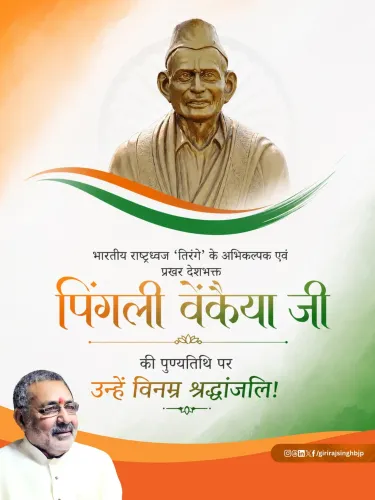
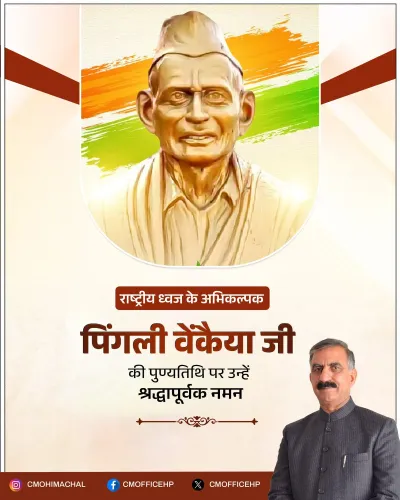
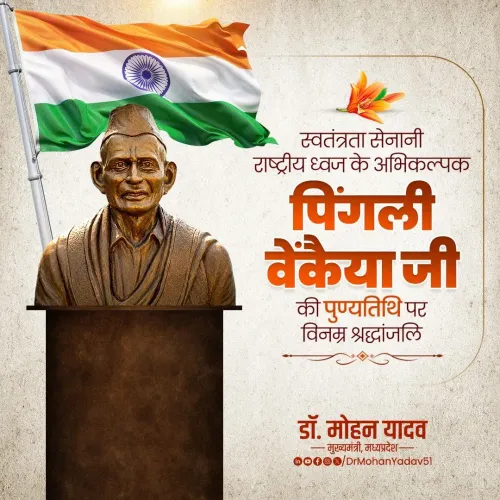
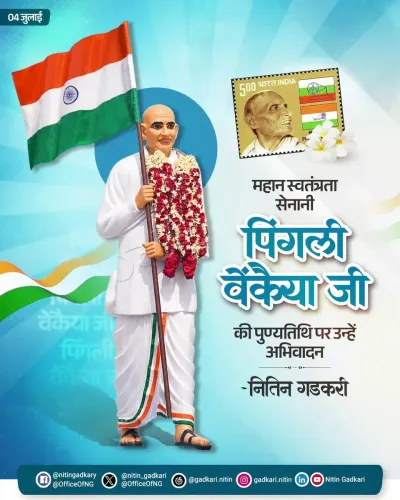
Gadkari pays tribute to Pingali Venkayya on birth anniversary
Synopsis
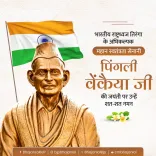
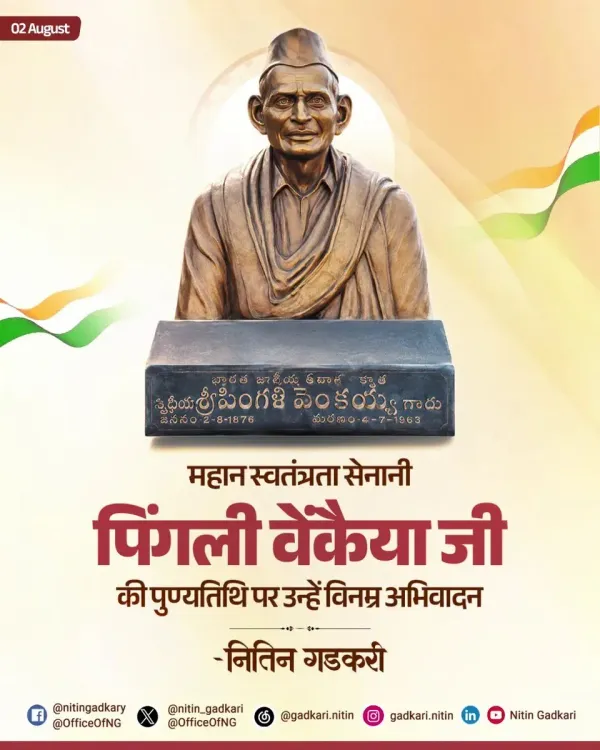
Union Minister Nitin Gadkari honoured Pingali Venkayya on his birth anniversary, paying tribute to the freedom fighter who designed India's national flag, the Tricolour, first presented to Mahatma Gandhi in 1921.
Key Takeaways
Nitin Gadkari posted a tribute to Pingali Venkayya on his birth anniversary on 2 August .
Venkayya is credited with designing the national flag presented to Mahatma Gandhi in 1921 .
The tribute was posted in Hindi with the hashtags #PingaliVenkayya and #पिंगली_वेंकैया .
Venkayya's design forms the foundational basis of India's present Tricolour .
The tribute comes in the weeks ahead of Independence Day on 15 August , when the flag holds peak national significance.
The man who gave India its flag deserves to be remembered — and on his birth anniversary, Union Road Transport and Highways Minister Nitin Gadkari did exactly that, offering a respectful salute to Pingali Venkayya, the freedom fighter credited with designing the Tricolour.
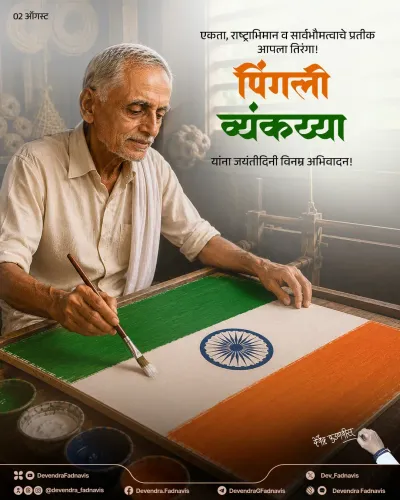
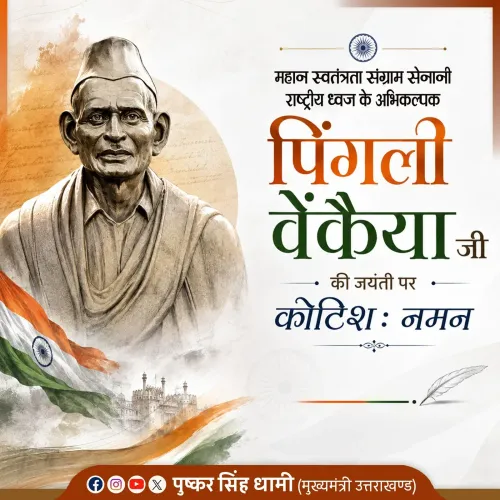
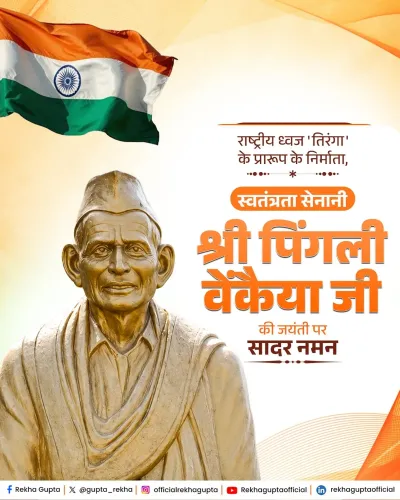
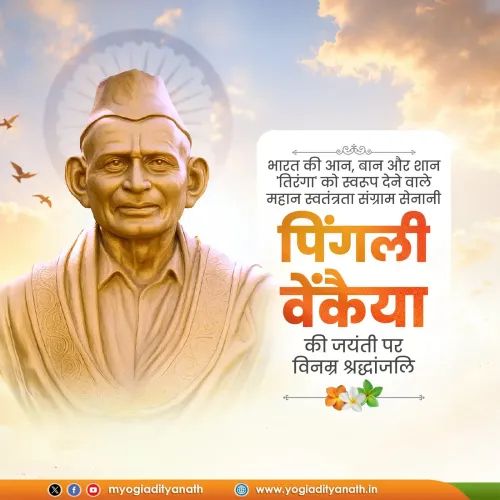
Gadkari posted his tribute on Sunday, 2 August, writing in Hindi: 'Bharat ke rashtriya dhwaj Tirangle ko praroop dene wale mahan swatantrata senani Pingali Venkayya ji ki jayanti par unhe vinamra abhivadan' — 'Humble greetings to the great freedom fighter Pingali Venkayya, who gave form to India's national flag, the Tricolour, on his birth anniversary.'
The man behind the Tricolour
Pingali Venkayya was an Indian freedom fighter who designed the national flag that was presented to Mahatma Gandhi in 1921 — the foundational design from which India's present Tricolour evolved. A polymath, agriculturist, and passionate nationalist from Andhra Pradesh, Venkayya devoted years to the idea that a unified India needed a flag of its own, one that could stir the soul of a people fighting for independence.
His contribution, long underrecognised in mainstream history, has received renewed attention in recent years as successive governments have sought to foreground the symbols and makers of India's independence movement.
Tributes and the Tricolour's enduring weight
Marking birth anniversaries of freedom fighters through official social media posts has become a steady rhythm of Indian political life — particularly in the weeks surrounding Independence Day on 15 August, when the Tricolour moves to the centre of national consciousness. Gadkari's tribute fits that pattern, yet it carries a specific resonance: as a senior leader of a government that has repeatedly invoked the flag — through campaigns like 'Har Ghar Tiranga' — honouring its designer is both symbolic and pointed.
Venkayya's legacy is the Tricolour itself — the saffron, white, and green that flies above every government building, every school, every home hoisted in pride. The man who sketched its first form deserves at least a moment of national memory.
Point of View
Sustained effort by the current political establishment to reclaim and spotlight lesser-celebrated figures from India's independence movement. Honouring the Tricolour's designer carries added weight for a government that has made the flag a centrepiece of mass-participation campaigns like 'Har Ghar Tiranga'. Such tributes, while ceremonial in form, serve a dual function: they reinforce national-symbol politics and position the ruling party as custodian of India's foundational heritage. The timing — days before Independence Day — amplifies that signal considerably.
NationPress
2 Aug 2026
Frequently Asked Questions
Who was Pingali Venkayya?
Pingali Venkayya was an Indian freedom fighter from Andhra Pradesh credited with designing the national flag that was presented to Mahatma Gandhi in 1921, which became the basis of India's Tricolour.
When is Pingali Venkayya's birth anniversary?
Pingali Venkayya's birth anniversary falls in early August and is marked annually by political leaders and citizens as a moment to honour his contribution to India's national identity.
Who designed India's national flag?
Pingali Venkayya designed the flag presented to Mahatma Gandhi in 1921. The current Indian Tricolour evolved from that original design.
Why did Nitin Gadkari post about Pingali Venkayya?
Gadkari posted a tribute on Venkayya's birth anniversary to honour the freedom fighter's role in designing the Tricolour, in keeping with the tradition of Indian leaders marking such anniversaries on social media.
What is the significance of the Tricolour in Indian politics today?
The Tricolour holds deep national and political significance. The current government has run campaigns such as 'Har Ghar Tiranga' to promote mass flag-hoisting, making the flag a central symbol of civic participation and national pride.