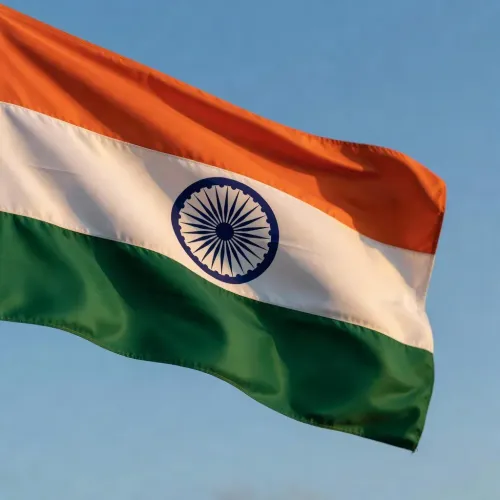
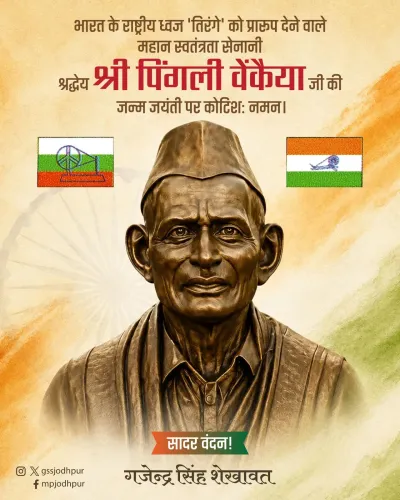
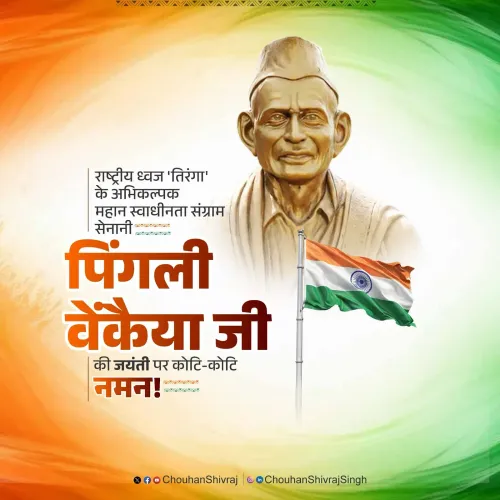
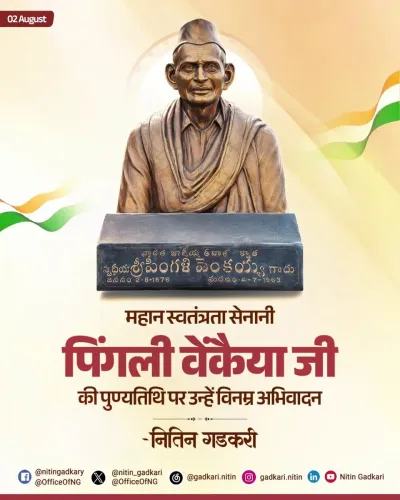
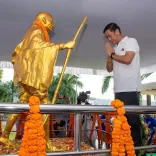
Gadkari pays tribute to Tiranga designer Pingali Venkayya
Synopsis
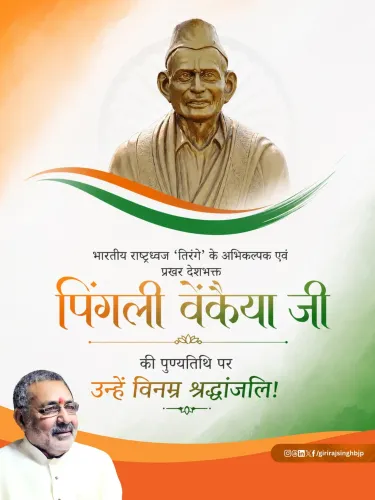
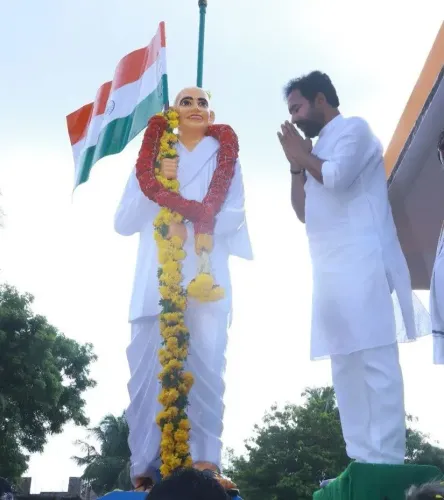
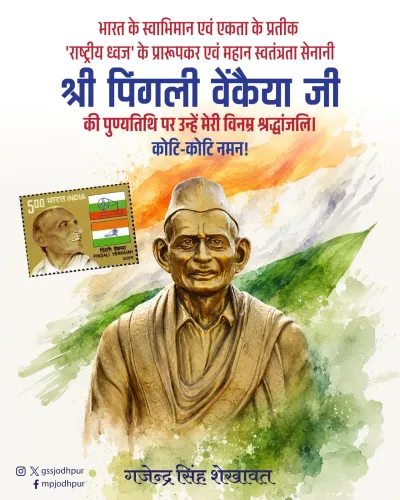
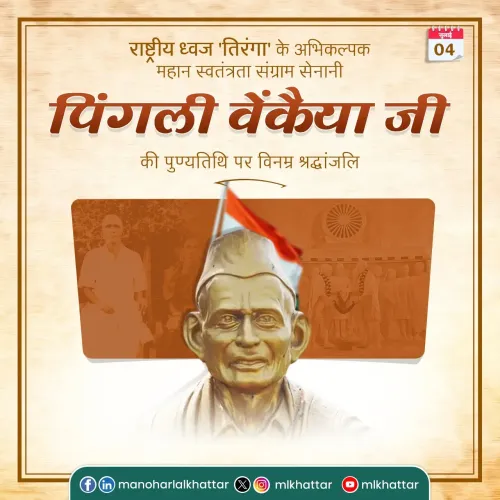
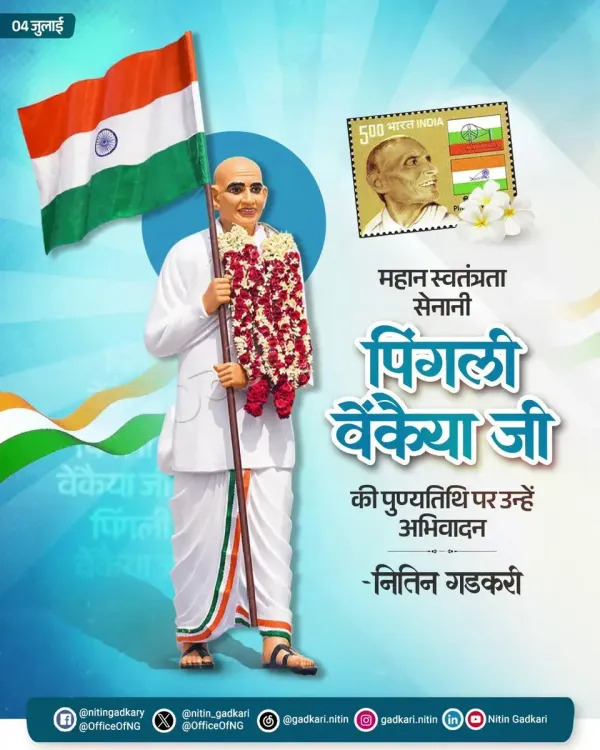
Union Minister Nitin Gadkari on 4 July 2026 paid homage to Pingali Venkayya, who designed the prototype of India's Tiranga in 1921, on his death anniversary, calling him a symbol of national integrity and unity.
Key Takeaways
Nitin Gadkari posted a tribute to Pingali Venkayya on his death anniversary, 4 July 2026 .
Pingali Venkayya designed the prototype of India's national flag and presented it to Mahatma Gandhi in 1921 .
The Constituent Assembly formally adopted the tricolour on 22 July 1947 , with the Ashoka Chakra replacing the spinning wheel.
Gadkari described the Tiranga as a symbol of India's integrity ( अखंडता ) and self-respect ( स्वाभिमान ).
The Flag Code of India, 2002 codified rules for the respectful display of the national flag.
The tribute comes weeks ahead of Independence Day on 15 August , when flag-related commemorations peak.
Union Road Transport and Highways Minister Nitin Gadkari on Saturday, 4 July 2026, paid homage to Pingali Venkayya, the freedom fighter who designed the prototype of India's national flag, on the occasion of his death anniversary. Gadkari described Venkayya as a symbol of the nation's integrity and self-respect, and honoured him for binding the country together through the Tiranga.
Context
In his post, Gadkari wrote — 'भारत की अखंडता और स्वाभिमान के प्रतीक राष्ट्रीय ध्वज तिरंगे को प्रारूप देने वाले पिंगली वेंकैया जी ने राष्ट्र को एकता के सूत्र में जोड़ने का कार्य किया' — meaning: 'Pingali Venkayya, who gave form to the Tiranga — the national flag that symbolises India's integrity and self-respect — worked to unite the nation in a thread of unity.' The minister offered his 'humble salutations' to the 'great freedom fighter' on his death anniversary.
Pingali Venkayya passed away on 4 July 1963, a date observed each year by political leaders and citizens as a moment to recall his singular contribution to India's national identity.
Policy Backdrop
Pingali Venkayya, a polymath freedom fighter and educationist from Andhra Pradesh, first presented a flag design to Mahatma Gandhi in 1921 during the Indian National Congress session. His design — featuring a spinning wheel at its centre — became the forerunner of the tricolour adopted after independence.
The Constituent Assembly formally adopted the national flag on 22 July 1947, replacing earlier Congress flags. The final design retained the horizontal saffron, white, and green bands but substituted the spinning wheel with the Ashoka Chakra. In 2002, the government codified detailed rules on the respectful display of the Tiranga under the Flag Code of India, reinforcing the flag's constitutional sanctity.
Stakeholders and Impact
Tributes to Venkayya resonate across the political spectrum, as the Tiranga is a shared national symbol that transcends party lines. Heritage educators, school curricula, and civil society organisations regularly invoke his legacy to promote civic pride and awareness of India's anti-colonial struggle.
Indian political leaders across parties routinely mark the death anniversaries of independence-era figures to reinforce narratives of national unity. Gadkari's tribute follows this established pattern, using the occasion to highlight the flag's role as an enduring instrument of national cohesion.
What's Next
With Independence Day on 15 August approaching, tributes to figures like Venkayya typically intensify in the weeks leading up to the national celebration. Flag-hoisting ceremonies, school events, and parliamentary references to flag heritage are expected to gain prominence over the coming weeks.
Any legislative or executive initiative to further honour Venkayya's legacy — such as enhanced recognition in school textbooks or official commemorations — would be consistent with the broader government push to celebrate unsung heroes of the independence movement.
Point of View
' the minister reinforces the government's sustained effort to popularise flag-centric patriotism — a campaign that gained particular momentum with the 'Har Ghar Tiranga' initiative in 2022. The timing, weeks before Independence Day, amplifies the symbolic weight of the tribute. Across the political spectrum, such anniversaries serve as low-cost, high-visibility opportunities to claim the moral legacy of the freedom movement.
NationPress
2 Oct 2026
Frequently Asked Questions
Who was Pingali Venkayya and what did he do?
Pingali Venkayya was an Indian freedom fighter and educationist from Andhra Pradesh who designed the prototype of India's national flag in 1921 and presented it to Mahatma Gandhi during the Indian National Congress session.
When did Pingali Venkayya die?
Pingali Venkayya died on 4 July 1963. His death anniversary is observed annually by political leaders, citizens, and heritage organisations across India.
When was India's national flag officially adopted?
The Constituent Assembly officially adopted the Indian national flag, the Tiranga, on 22 July 1947, days before independence. The final design replaced the spinning wheel with the Ashoka Chakra.
What did Nitin Gadkari say about Pingali Venkayya?
Gadkari described Venkayya as the person who gave form to the Tiranga — a symbol of India's integrity and self-respect — and credited him with uniting the nation. He offered humble salutations on Venkayya's death anniversary.
What is the Flag Code of India?
The Flag Code of India, issued in 2002, is a set of rules and guidelines governing the respectful display and use of the national flag. It consolidated earlier laws and instructions into a single comprehensive code.