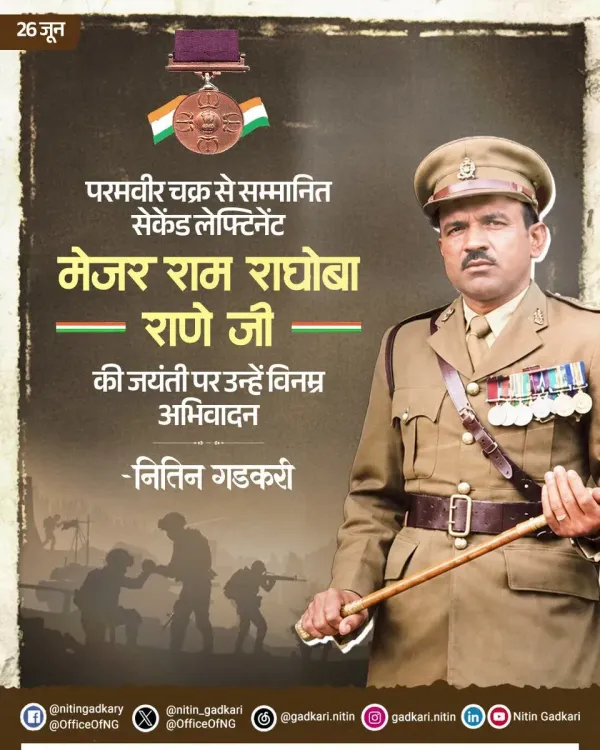
Gadkari pays tribute to PVC hero Major Rama Raghoba Rane
Synopsis
Union Minister Nitin Gadkari on 26 June 2026 paid tribute to Major Rama Raghoba Rane, a Param Vir Chakra recipient honoured for clearing minefields under fire in the 1947–48 Naushera operations, on his birth anniversary. Gadkari called him a 'brave son of Mother India.'
Key Takeaways
Nitin Gadkari , Union Road Transport and Highways Minister, posted a birth-anniversary tribute to Major Rama Raghoba Rane on 26 June 2026 .
Major Rane served in the Bombay Engineer Group and was commissioned as a Second Lieutenant before later rising to the rank of Major.
He received the Param Vir Chakra — India's highest wartime gallantry award — for clearing minefields under enemy fire in the Naushera sector during the 1947–48 Indo-Pakistani War .
The Param Vir Chakra was instituted by the Government of India in 1950 and Rane was among its earliest recipients.
Gadkari's post in Hindi described Rane as a 'veer sapoot' (brave son) of 'Maa Bharati' (Mother India).
Cabinet ministers regularly issue social media tributes to Param Vir Chakra recipients on birth and death anniversaries as part of official commemoration of India's military heritage.
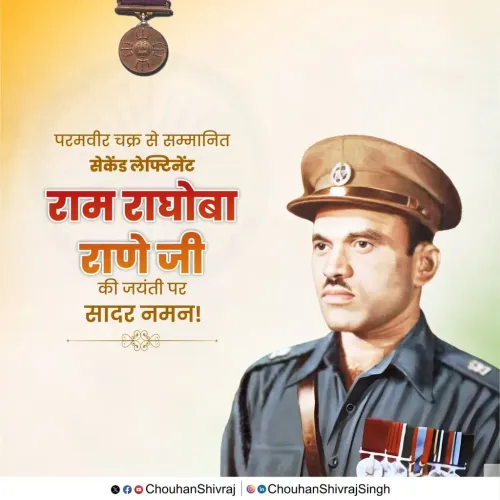
Union Road Transport and Highways Minister Nitin Gadkari on Friday, 26 June 2026, paid tribute to Second Lieutenant (later Major) Rama Raghoba Rane, a recipient of the Param Vir Chakra — India's highest wartime gallantry award — on the occasion of the soldier's birth anniversary.
Posting on X in Hindi, Gadkari described Rane as a 'veer sapoot' (brave son) of 'Maa Bharati' (Mother India) and offered his 'vinamra abhivadan' — humble salutations — to the decorated war hero. The post was accompanied by a video and carried the hashtags #MajorRamaRaghobaRane and #मेजर_राम_राघोबा_राणे.
Context
Major Rama Raghoba Rane served in the Bombay Engineer Group of the Indian Army and was commissioned as a Second Lieutenant. He was awarded the Param Vir Chakra for extraordinary acts of bravery during the 1947–48 Indo-Pakistani War, specifically in operations in the Naushera sector. His citation recognised his role in clearing minefields under direct enemy fire, enabling the advance of Indian troops at great personal risk.
The Param Vir Chakra, instituted by the Government of India in 1950, remains the nation's supreme military decoration for valour displayed in the face of the enemy. Rane was among the earliest recipients of this honour.
Policy Backdrop
Commemorating Param Vir Chakra recipients on their birth and death anniversaries has become a consistent practice among Union Cabinet ministers, cutting across administrations. These tributes serve as public acknowledgements of the 1947–48 war's legacy and reinforce institutional memory around India's military gallantry tradition.
Gadkari, a senior BJP leader and former national president of the party, regularly uses his social media presence to mark such occasions, reflecting a broader government emphasis on honouring armed forces veterans and their families.
Stakeholders and Impact
Tributes of this nature carry symbolic weight for armed forces veterans, military families, and the wider defence community, who view public recognition by senior ministers as an affirmation of the state's commitment to preserving the legacy of gallantry awardees. The Bombay Engineer Group's regimental community, in particular, regards Major Rane as one of its most celebrated figures.
Such commemorations also reach a broad civilian audience through social media, keeping the histories of early post-Independence military operations visible to younger generations unfamiliar with the 1947–48 conflict.
What's Next
Birth and death anniversaries of other Param Vir Chakra recipients are expected to prompt similar tributes from ministers and officials through the remainder of 2026. Any defence ministry-level commemorative events centred on the 1947–48 war or gallantry award ceremonies scheduled later in the year would likely draw renewed public attention to this cohort of early awardees.
The consistent pattern of high-profile social media remembrances suggests that institutional commemoration of India's military heritage will remain a visible feature of government communication in the months ahead.
Point of View
Senior ministers extend the reach of such commemorations well beyond formal defence circles. The practice signals a deliberate political choice to associate the ruling dispensation with the armed forces legacy. Over time, this pattern of consistent, cross-party commemoration has helped institutionalise social media tributes as a standard tool of statecraft around military anniversaries.
NationPress
26 Jun 2026
Frequently Asked Questions
Who is Major Rama Raghoba Rane?
Major Rama Raghoba Rane was an officer in the Bombay Engineer Group of the Indian Army who received the Param Vir Chakra — India's highest wartime gallantry award — for clearing minefields under enemy fire during the 1947–48 operations in the Naushera sector.
Why did Nitin Gadkari post about Major Rane?
Nitin Gadkari posted on X on 26 June 2026 to mark the birth anniversary of Major Rama Raghoba Rane, paying tribute to the Param Vir Chakra recipient and calling him a brave son of Mother India.
What is the Param Vir Chakra?
The Param Vir Chakra is India's highest military decoration for valour displayed in the presence of the enemy. It was instituted by the Government of India in 1950 and Major Rane was among its earliest recipients.
What did Major Rane do to receive the Param Vir Chakra?
Major Rane was awarded the Param Vir Chakra for his extraordinary bravery in clearing minefields under direct enemy fire during the 1947–48 Indo-Pakistani War in the Naushera sector, enabling the advance of Indian troops.
Which regiment did Major Rama Raghoba Rane belong to?
Major Rama Raghoba Rane served in the Bombay Engineer Group of the Indian Army, one of the premier engineer regiments of the Indian armed forces.