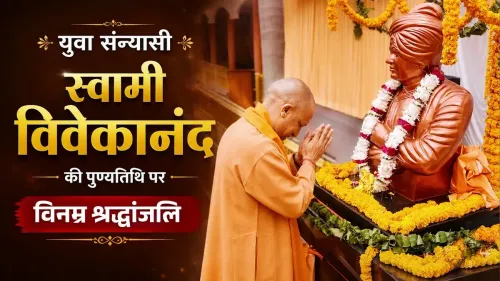
Gadkari Pays Tribute to Swami Vivekananda on Death Anniversary
Synopsis
Union Minister Nitin Gadkari on 4 July 2026 honoured Swami Vivekananda on his death anniversary, saluting the 19th-century monk's role in spreading Indian culture globally and inspiring nationalist thought. The tribute follows a long-standing BJP tradition of invoking Vivekananda's legacy on commemorative occasions.
Key Takeaways
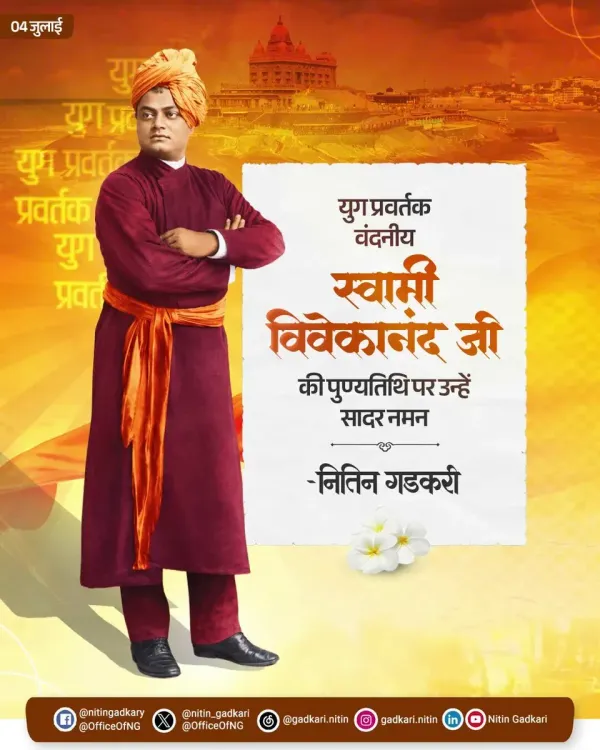
Nitin Gadkari posted a Hindi tribute to Swami Vivekananda on his death anniversary on 4 July 2026 .
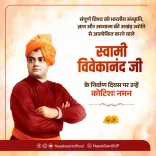
Gadkari credited Vivekananda with leaving a global mark of Indian culture and tradition through his speeches and writings.
The minister described Vivekananda as a key contributor to strengthening nationalism in India and a perennial source of inspiration for the youth.
Swami Vivekananda (1863–1902) famously addressed the 1893 World Parliament of Religions in Chicago , introducing Vedanta and Yoga to the West.
The Government of India declared 12 January — Vivekananda's birth anniversary — as National Youth Day in 1984 .
Senior BJP leaders routinely invoke Vivekananda on commemorative dates as part of a broader cultural-nationalist narrative.
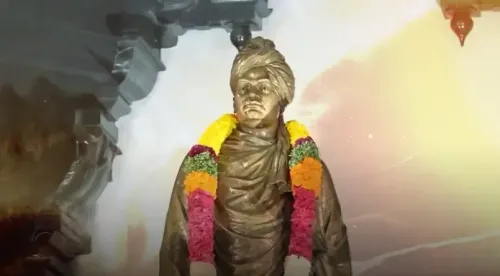
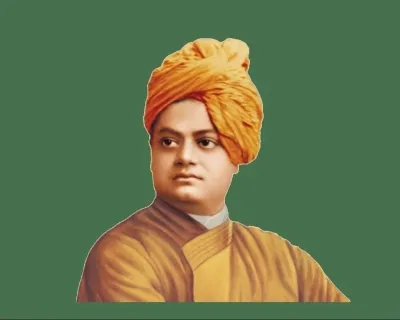
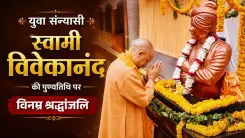
Union Road Transport and Highways Minister Nitin Gadkari on Saturday, 4 July 2026 paid tribute to Swami Vivekananda on the monk's death anniversary, honouring him as a towering figure who carried Indian culture to the world stage and inspired generations of young citizens.
Context
Posting on X in Hindi, Gadkari wrote: 'अपने विचार और प्रभावी भाषण से स्वामी विवेकानंद जी ने पूरे विश्व में भारतीय संस्कृति और परंपरा की छाप छोड़ी' — 'Through his thoughts and powerful speeches, Swami Vivekananda left an indelible mark of Indian culture and tradition across the entire world.' The minister added that Vivekananda's contribution to strengthening the spirit of nationalism in India was immense and that he became a source of inspiration for the youth through his ideas and deeds. Gadkari concluded with a respectful salutation — 'सादर नमन' — on the occasion of the death anniversary of 'this great servant of the nation.'
Policy Backdrop
Swami Vivekananda (1863–1902) was a Hindu monk and philosopher whose address at the 1893 World Parliament of Religions in Chicago introduced Vedanta and Yoga to a global audience and is widely credited with elevating India's spiritual standing internationally. His writings and speeches, which wove together self-reliance, service, and cultural pride, became foundational texts for later nationalist thinkers and reformers. The Government of India officially declared 12 January — Vivekananda's birth anniversary — as National Youth Day in 1984, institutionalising his ideals as a benchmark for youth development.
Stakeholders and Impact
BJP leaders and successive governments have consistently invoked Vivekananda on both his birth and death anniversaries as part of a broader narrative of cultural self-assertion and disciplined nationalism. Such tributes serve to connect contemporary governance philosophy with a pre-independence legacy of spiritual and reformist thought. Cultural organisations, student bodies, and youth-focused institutions across India typically observe the death anniversary with lectures, seminars, and community service programmes.
What's Next
Commemorative programmes around National Youth Day 2027 — marking Vivekananda's birth anniversary on 12 January — are expected to draw fresh political attention to his legacy. Any references to his philosophy in forthcoming guidelines under the National Education Policy or in youth-focused government schemes could further cement the institutional resonance of such tributes. For now, Gadkari's post reflects a well-established pattern of senior leaders publicly anchoring national identity in Vivekananda's enduring message of cultural confidence and service.
Point of View
The post subtly frames the party's governance philosophy as a continuation of that civilisational mission. The consistent frequency of such tributes — across birth and death anniversaries — signals that Vivekananda has been consciously institutionalised as a shared political and cultural touchstone. Over time, this pattern shapes public discourse around youth, education, and national identity in ways that extend well beyond ceremonial social-media posts.
NationPress
4 Jul 2026
Frequently Asked Questions
Why did Nitin Gadkari post about Swami Vivekananda on 4 July 2026?
4 July marks the death anniversary of Swami Vivekananda , who passed away on 4 July 1902. Gadkari posted a Hindi tribute saluting the monk's contribution to spreading Indian culture globally and inspiring nationalist sentiment.
When did Swami Vivekananda die?
Swami Vivekananda died on 4 July 1902 at Belur Math , near Calcutta, at the age of 39.
What is National Youth Day and why is it linked to Vivekananda?
National Youth Day is observed on 12 January every year — Vivekananda's birth anniversary. The Government of India declared this day in 1984 to promote his ideals of self-reliance, service, and cultural pride among young citizens.
What was Swami Vivekananda's most famous international appearance?
Vivekananda's address at the 1893 World Parliament of Religions in Chicago is his most celebrated international moment, where he introduced Vedanta and Yoga to a Western audience and drew global attention to Indian spiritual traditions.
Why do BJP leaders frequently pay tribute to Swami Vivekananda?
BJP leaders consistently invoke Vivekananda on commemorative dates because his emphasis on cultural self-assertion, nationalism, and disciplined service aligns closely with the party's broader narrative of rooting contemporary Indian governance in a pre-independence spiritual and reformist heritage.