Gadkari spotlights UER-II as Delhi's next congestion cure
Synopsis
Union Minister Nitin Gadkari has spotlighted Urban Extension Road II (UER-II), a peripheral expressway aimed at decongesting Delhi, framing it as a key corridor under the PM Gati Shakti framework and the broader Bharatmala highway buildout.
Key Takeaways
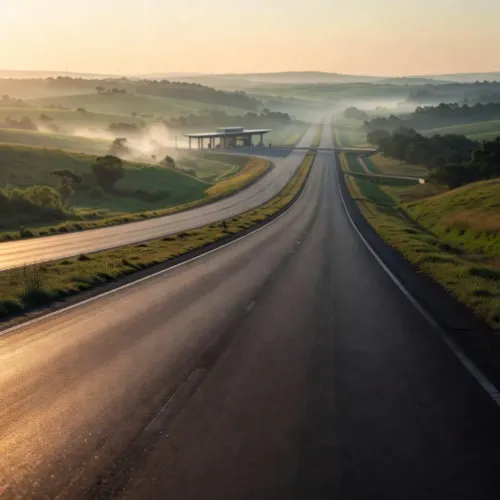
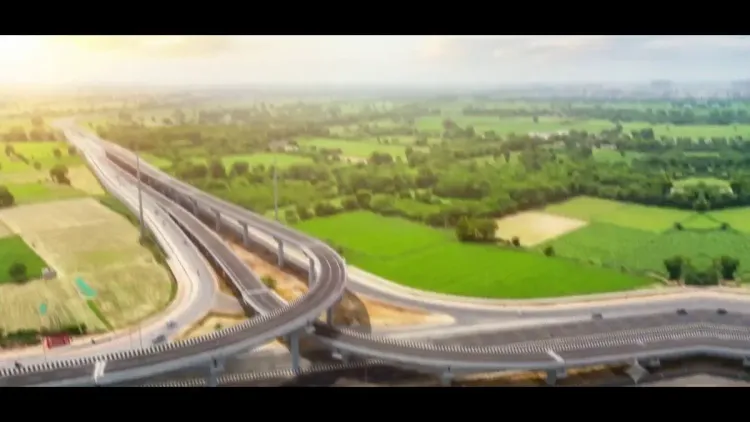
Nitin Gadkari on 19 October 2026 highlighted UER-II (Urban Extension Road II) as a project set to give Delhi's traffic 'a new direction.' UER-II is a peripheral expressway designed to provide bypass routes around Delhi for commuters and freight, easing congestion on the capital's internal roads.
The project is aligned with the PM Gati Shakti National Master Plan , launched in 2021 to integrate multimodal infrastructure planning.
It connects to the Bharatmala Pariyojana , India's national highway programme approved in 2015 targeting 34,800 km of highway construction.
Key watchpoints include land acquisition progress, construction milestones, and integration with the Delhi-Mumbai Expressway corridor.
Delhi's gridlock has long been one of the capital's most stubborn civic wounds — and Union Road Transport and Highways Minister Nitin Gadkari is pointing to the Urban Extension Road II (UER-II) as the corridor that could finally give the city's traffic a new direction. On Monday, 19 October 2026, Gadkari shared a video on X highlighting the peripheral expressway project, calling it a route that will give 'a new direction to the pace of the national capital Delhi.'
What UER-II is and why Delhi needs it
Urban Extension Road II is a peripheral expressway conceived specifically to decongest Delhi by offering alternative bypass routes around the capital for both commuters and freight traffic. Delhi-NCR is among India's most congested urban regions, and its existing ring road network has long been overwhelmed by population growth and the surge in goods movement feeding the broader national economy.
The project is framed under the government's flagship PM Gati Shakti National Master Plan, launched in 2021, which aims to integrate road, rail and logistics planning across central ministries into a single coordinated grid. UER-II is intended to link to national expressway corridors — including arteries developed under the Bharatmala Pariyojana, the highway construction programme approved in 2015 targeting 34,800 km of new and upgraded highways across India.
Gati Shakti's peripheral-corridor push
The Road Transport Ministry has consistently used peripheral ring roads and expressways as its primary tool for urban decongestion — a logic that runs from the Eastern and Western Peripheral Expressways around Delhi to newer corridors now feeding into the Delhi-Mumbai Expressway spine. UER-II fits squarely into that playbook: a bypass that pulls long-distance and freight traffic off Delhi's internal arteries before it ever enters the city core.
For Delhi-NCR commuters and logistics operators, the promise is reduced travel time and lower freight costs — the twin metrics the ministry routinely cites when defending the economic case for expressway investment. The Gati Shakti framework is designed to ensure that road projects of this scale are planned in tandem with rail heads, multimodal logistics hubs and industrial corridors, rather than in isolation.
Land, timelines and what comes next
The critical watchpoints for UER-II are land acquisition progress, construction milestones, and how cleanly the corridor integrates with the broader expressway network. These are the variables that have historically determined whether peripheral road projects deliver on schedule — or slip. Parliamentary oversight and updates from the National Highways Authority of India (NHAI) will be the clearest signals of where the project actually stands.
For a minister who has overseen the expansion of India's national highway network since 2014, UER-II is one more data point in a relentless infrastructure buildout — but for the millions who sit in Delhi's daily jams, it is a promise with a very specific address.
Point of View
The ministry signals that the project is not a standalone road but part of an integrated multimodal logic — connecting freight, commuters and industrial corridors in one grid. The political calculus is straightforward: Delhi-NCR is among India's most electorally significant urban regions, and visible infrastructure progress in and around the capital carries real symbolic weight. The harder test, as always, will be land acquisition and delivery timelines — the variables that have historically separated India's expressway ambitions from their ground reality.
NationPress
19 Oct 2026
Frequently Asked Questions
What is UER-II (Urban Extension Road 2) in Delhi?
UER-II, or Urban Extension Road 2, is a peripheral expressway project designed to decongest Delhi by providing alternative bypass routes around the capital for both daily commuters and freight traffic, reducing pressure on the city's internal road network.
How does UER-II connect to PM Gati Shakti?
UER-II is framed under the PM Gati Shakti National Master Plan, launched in 2021, which integrates road, rail and logistics infrastructure planning across central ministries to ensure coordinated, multimodal connectivity rather than isolated project development.
What is the Bharatmala Pariyojana and what is its link to Delhi highways?
Bharatmala Pariyojana is a national highway construction programme approved in 2015 with a target of building 34,800 km of highways, including expressways. UER-II is part of the broader corridor network built under this programme to link peripheral roads around Delhi to national expressway arteries.
When did Nitin Gadkari post about UER-II?
Union Minister Nitin Gadkari posted about UER-II on Monday, 19 October 2026, sharing a video on X and describing the expressway as giving 'a new direction to the pace of the national capital Delhi.'
Who benefits from the UER-II expressway project?
Delhi-NCR commuters who face daily gridlock and logistics operators moving freight through or around the capital are the primary beneficiaries, with the project promising reduced travel time and lower freight costs once operational.