Gadkari's trust signs MoU to set up diagnostic centre in Amravati
Synopsis
The Late Bhanutatai Gadkari Rural Development Institute and Shri Shivaji Education Society signed an MoU to build a modern diagnostic centre — covering digital X-ray, sonography, mammography and pathology — on the Amravati campus, with the institute funding construction and operations.
Key Takeaways
An MoU was signed on 18 October 2026 between the Late Bhanutatai Gadkari Rural Development Institute, Nagpur and Shri Shivaji Education Society, Amravati .
The Rural Development Institute will construct two new floors on the existing building's terrace entirely at its own cost and risk.
A modern diagnostic centre offering digital X-ray, sonography, mammography, and pathology services will be set up and managed by the institute.
Shri Shivaji Education Society will provide land, lease rights, permissions, and infrastructure support , and will not impede the centre's operations.
Services will be offered to patients at affordable rates , targeting diagnostic access in Amravati and the broader Vidarbha region.
The agreement avoids fresh land acquisition by using surplus institutional terrace space — a model common in Maharashtra's healthcare expansion efforts.
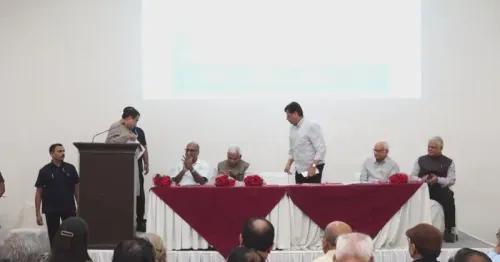
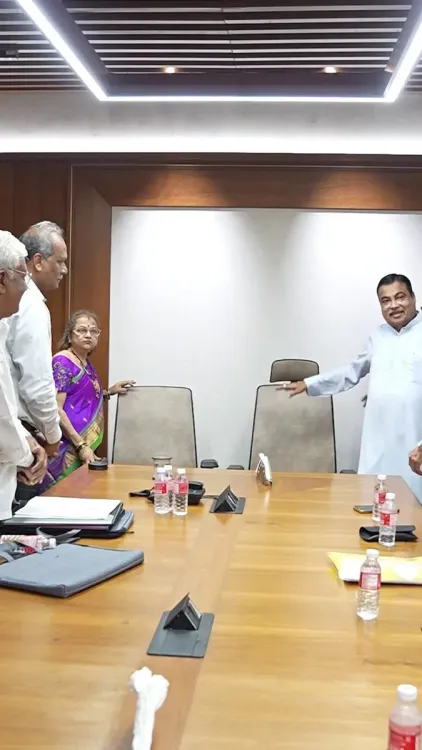
A memorandum of understanding signed in Nagpur on 18 October 2026 will bring digital X-ray, sonography, mammography, and pathology services to an educational campus in Amravati — without a single square foot of fresh land acquisition. The agreement, announced by Union Road Transport and Highways Minister Nitin Gadkari, links two Maharashtra institutions in a terrace-expansion model that is quietly becoming a template for affordable rural healthcare delivery.
What the two institutions agreed to build
The MoU was executed between the Late Bhanutatai Gadkari Rural Development Institute, Nagpur — a development trust named after Gadkari's late mother — and the Shri Shivaji Education Society, Amravati. Under the terms, the Rural Development Institute will construct the first and second floors on the terrace of Shri Shivaji's existing building entirely at its own cost and risk. It will then establish and operate the Bhanutatai Gadkari Rural Development Institute Diagnostic Centre on that proposed space, bearing the full financial burden of equipping and maintaining the facility.
The diagnostic suite will include digital X-ray, sonography, mammography, pathology, and other essential services — all to be made available to patients at 'appropriate rates', as the MoU specifies. The institute will handle complete centre management, from day-to-day operations to long-term upkeep.
What Shri Shivaji Education Society brings to the table
The Amravati-based education society's obligations are equally specific. It will provide the land and lease rights for the construction, assist with statutory permissions and documentation, supply basic infrastructure, cooperate throughout the construction phase, and — critically — ensure that the diagnostic centre's operations face no disruption from the society's own activities. Existing property on the campus will be protected and its integrity maintained under the agreement's terms.
The arrangement avoids the cost and complexity of acquiring a standalone plot in a smaller Maharashtra city, a common friction point for healthcare expansion outside Mumbai and Pune. Educational trusts with surplus terrace space effectively become silent infrastructure partners, while development organisations deploy capital into equipment and services. It is a lean model — but one that reaches patients who would otherwise travel to a district hospital.
Amravati's diagnostic gap and what comes next
Amravati, a city of roughly 700,000 people in Vidarbha's western reaches, sits in a region where diagnostic access outside major government hospitals has historically been thin. A centre offering mammography alongside routine pathology addresses a specific gap — breast-cancer screening infrastructure is particularly scarce in Tier-2 and Tier-3 Maharashtra cities. The Rural Development Institute's commitment to full financial outlay signals that the project is not contingent on government grants, reducing execution risk.
The next concrete milestone will be the breaking of ground on the two additional floors. Once the structure is ready, equipping and commissioning the diagnostic suite — with imaging hardware and qualified technicians — will determine how quickly patients can actually access the services promised in today's MoU.
Point of View
The model sidesteps Maharashtra's chronic land-cost barrier for healthcare expansion. For Gadkari, whose political base is anchored in Nagpur and the wider Vidarbha belt, a self-funded diagnostic centre carrying his mother's name in Amravati reinforces a pattern of constituency-level welfare projects that parallel his ministerial profile. The inclusion of mammography — a service with very low penetration in Tier-2 Maharashtra cities — suggests the centre is designed for visible social impact rather than routine primary care.
NationPress
18 Oct 2026
Frequently Asked Questions
What is the Bhanutatai Gadkari Rural Development Institute?
It is a rural development organisation based in Nagpur, named after the late Bhanutatai Gadkari, the mother of Union Minister Nitin Gadkari. The institute works on development and welfare initiatives in Maharashtra.
What services will the new diagnostic centre in Amravati offer?
The proposed Bhanutatai Gadkari Rural Development Institute Diagnostic Centre will offer digital X-ray, sonography, mammography, pathology, and other essential diagnostic services at affordable rates for patients.
Where exactly will the diagnostic centre be built?
The centre will be built on the terrace of the existing building of Shri Shivaji Education Society in Amravati, with the Rural Development Institute constructing two additional floors at its own expense.
Who will fund and manage the new diagnostic centre in Amravati?
The Late Bhanutatai Gadkari Rural Development Institute, Nagpur, will bear the full construction cost, equip the facility, and manage daily operations. Shri Shivaji Education Society will provide land, lease rights, and logistical support.
Why is this MoU significant for the Amravati region?
Amravati and the broader Vidarbha region have limited access to advanced diagnostic services such as mammography outside major government hospitals. This centre, funded and operated independently of government grants, aims to address that gap.