Gadkari's Vision: Farmers as Future Energy Suppliers in MP
Synopsis
Union Minister Nitin Gadkari unveils a transformative vision for agriculture during the Unnat Krishi Mahotsav 2026 in Raisen, emphasizing technology, infrastructure, and sustainable practices. This initiative aims to empower farmers as energy providers, enhancing their income streams and fostering rural development.
Key Takeaways
Nitin Gadkari envisions farmers as future energy providers.
Integration of modern technology is essential for agricultural transformation.
Water conservation strategies are vital for sustainable farming.
Farmers are encouraged to adopt innovations for increased productivity.
A comprehensive seed to market strategy is being developed for regional agriculture.
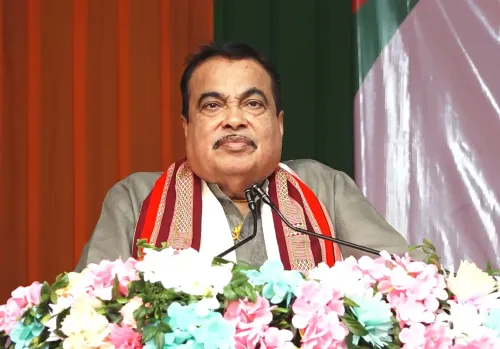
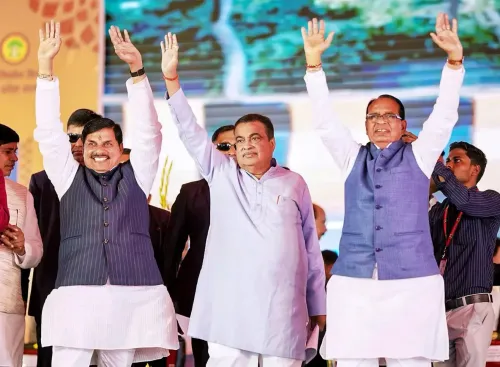
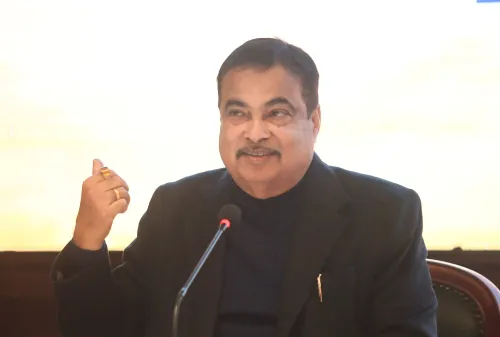
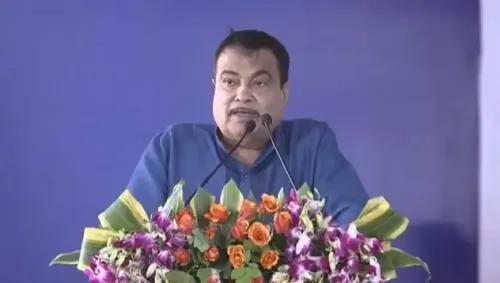
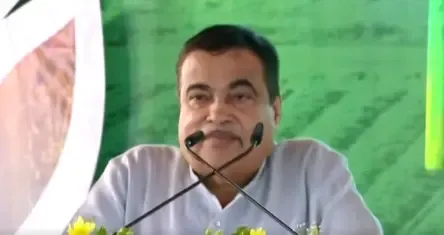
Bhopal/Raisen, April 13 (NationPress) Union Minister for Road Transport and Highways Nitin Gadkari revealed a groundbreaking vision for revolutionizing Indian agriculture by incorporating modern technology, infrastructure enhancements, water conservation, and alternative energy sources during his address at the closing session of the Unnat Krishi Mahotsav 2026 in Raisen, Madhya Pradesh.
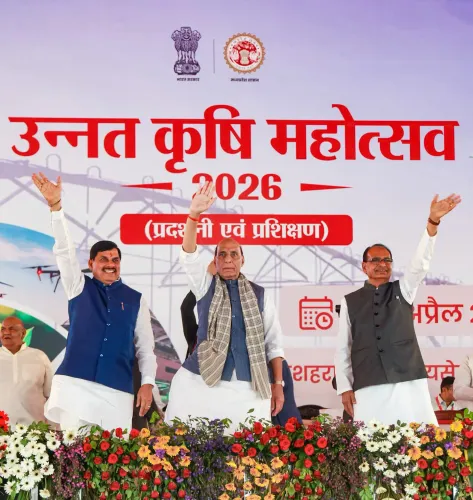
The three-day national agricultural festival, initiated by Union Agriculture Minister Shivraj Singh Chouhan, concluded with remarkable enthusiasm at Dussehra Maidan in Raisen.
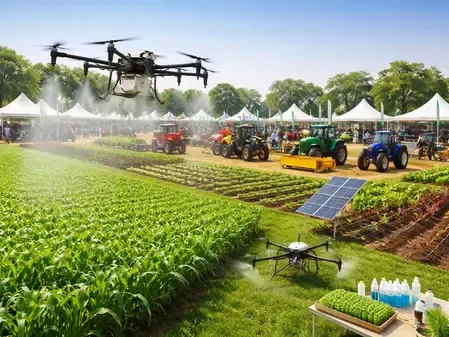
Thousands of farmers attended the event, which highlighted innovations, agricultural machinery, and effective solutions for contemporary farming.
Among the dignitaries present were Union Minister of State for Agriculture Ramnath Thakur and Madhya Pradesh Deputy Chief Minister Jagdish Devda.
In his speech, Nitin Gadkari introduced a new package of road development initiatives to address the requests made by Shivraj Singh Chouhan. He approved the acceleration of the proposal for the Raisen Ring Road and Eastern Bypass, which includes the preparation of a Detailed Project Report, swift land acquisition by the state government, and beautification of bridges.
He pledged comprehensive support for other pending road projects in the area. Gadkari stressed that the future of agriculture rests on advanced technologies such as Artificial Intelligence, automated weather stations, satellite data, drones, and Nano Urea.
“Farmers must advance with the times. Knowledge is the most powerful asset, and transforming that knowledge into wealth is the prime necessity of Indian agriculture today,” he remarked. He encouraged farmers to embrace innovation and technology to increase production while minimizing costs.
The minister envisioned a broader role for farmers beyond being mere ‘Annadata’ (food providers). He indicated that agricultural waste, crop stubble, and biomass could yield new income opportunities through ethanol, CNG, hydrogen, aviation fuel, and bitumen, thereby decreasing imports and bolstering the rural economy.
Emphasizing the need for water conservation, Gadkari imparted a strong message: “Slow down flowing water, halt moving water, and utilize stagnant water to rejuvenate the soil.” He advocated for the principle of “village water in villages, farm water on farms, and household water at home,” comparing groundwater recharge to depositing money in a bank.
He also highlighted the significance of dairy farming, fisheries, and the Blue Economy in enhancing farmers’ incomes. Gadkari pointed out that merely increasing production is insufficient; robust infrastructure, including processing units, cold storage facilities, pre-cooling units, and value-addition processes, is vital to ensure profitable prices for farmers.
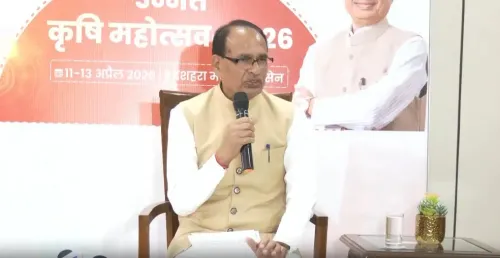
Shivraj Singh Chouhan characterized the Unnat Krishi Mahotsav as not merely an event, but the dawn of a new era in agricultural reform. He introduced a comprehensive “seed to market” strategy tailored to the region’s soil, climate, and resources.
This plan seeks to establish the area as a significant horticulture hub while enhancing pulse cultivation. A dedicated task force and a national steering committee will oversee its execution, with central and state teams collaborating.
Chouhan encouraged farmers to acquire a Farmer ID, which will facilitate streamlined access to various schemes and services in the future. He assured that the government remains dedicated to making farming profitable and enhancing the lives of farmers.
Point of View
It is evident that Union Minister Nitin Gadkari's vision for agriculture in Madhya Pradesh is both ambitious and forward-thinking. By integrating advanced technologies and alternative energy solutions, the initiative aims to significantly enhance farmers' livelihoods while promoting sustainability. The collaborative efforts between state and central teams could pave the way for a new era in agricultural practices.
NationPress
18 Sept 2026
Frequently Asked Questions
What is the main goal of Gadkari's vision for Indian agriculture?
The main goal is to integrate modern technology, improve infrastructure, promote water conservation, and utilize alternative energy sources, ultimately transforming farmers into energy providers and enhancing their incomes.
How does Gadkari propose to utilize agricultural waste?
Gadkari suggests that agricultural residues, crop stubble, and biomass can be converted into income-generating products like ethanol, CNG, hydrogen, aviation fuel, and bitumen.
What is the significance of the Farmer ID?
The Farmer ID will streamline farmers' access to various government schemes and services, facilitating better support for agricultural practices.
What role does water conservation play in Gadkari's vision?
Water conservation is crucial; Gadkari emphasizes slowing down and utilizing stagnant water for soil recharge to enhance agricultural productivity.
What infrastructure improvements are being proposed?
Proposed improvements include road development initiatives, processing units, cold storage facilities, and value addition to ensure farmers receive profitable prices.