Will PM Modi's Vision for India Succeed?
Synopsis
In a powerful address in Berlin, Rahul Gandhi critiques PM Modi's vision for India, arguing it is flawed and has led to the outsourcing of production to China. He emphasizes the need for robust manufacturing and policy reforms to revitalize India's economy and job market.
Key Takeaways
Rahul Gandhi believes PM Modi's vision for India is fundamentally flawed.
The manufacturing sector's contribution to GDP has dropped significantly.
Gandhi criticizes the outsourcing of production to China .
He advocates for reforms in Goods and Services Tax and industrial policy.
Manufacturing and agriculture are essential for job creation in India.
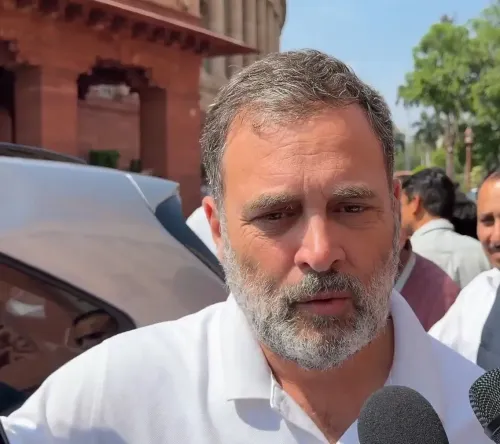
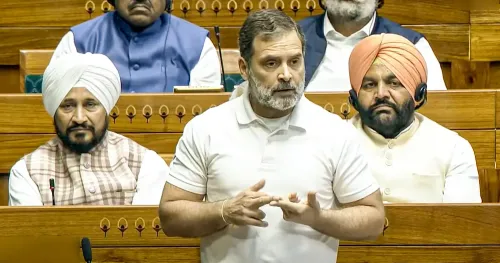
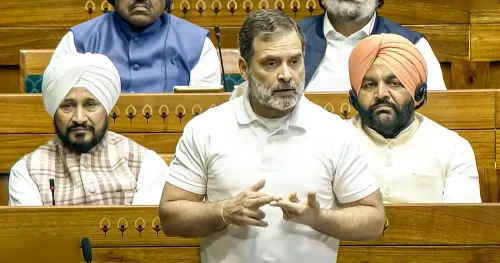
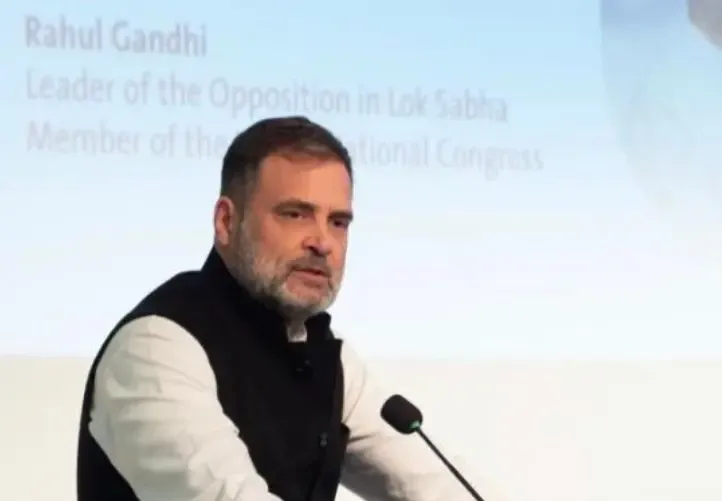
Berlin, Dec 23 (NationPress) The Leader of Opposition in the Lok Sabha, Rahul Gandhi, has voiced his belief that Prime Minister Narendra Modi's vision for India is fundamentally misguided and destined to fail, alleging that the country has essentially transferred its production base to China.
While addressing an audience at the Hertie School in Berlin, Germany, on the topic of 'Politics Is The Art Of Listening', Gandhi emphasized a profound ideological conflict regarding the very essence of India.
"Many of us do not share his ideology; we disagree with the vision of India he presents. We believe this vision will fail and is fraught with significant issues, inciting considerable tension among Indian citizens, which we will contest. This represents a clash between two divergent visions of India," Gandhi remarked during his speech.
He further asserted that the manufacturing sector in India has deteriorated significantly under the BJP-led government at the Centre, noting that the contribution of manufacturing to the GDP has plummeted from 17% to 12% during their governance.
Gandhi criticized what he described as the outsourcing of production to China, arguing that this trend has drastically hampered job creation and poses long-term threats to the democratic fabric of the nation.
"In many respects, India has relinquished production to the Chinese. Historically, in the 1940s and 1960s, it was the United States that led production, followed by Germany, Italy, Japan, and Korea. Today, however, China is the leader in production," he stated.
Expounding on the implications, Gandhi added, "This means it is increasingly challenging to provide substantial employment opportunities. Countries like India, the US, or even Germany cannot solely rely on services to employ their populations. We need manufacturing and production capabilities, which we have surrendered to China."
He also engaged in the global discourse surrounding democracy and production, saying, "In this transition, how can democracies maintain production? China has demonstrated that production can thrive in a non-democratic setting. We must show that production is feasible within a democratic framework."
Gandhi emphasized that manufacturing, along with micro, small, and medium enterprises, as well as agriculture, is crucial for generating widespread employment in India.
He called for reforms in the Goods and Services Tax framework and industrial policy to enhance domestic production.
Additionally, the Congress leader reiterated his critique of demonetisation, which he claimed severely impacted small businesses, linking this policy to the broader decline in manufacturing's role in the national GDP.
Point of View
It is essential to present balanced viewpoints. Rahul Gandhi's statements highlight significant concerns regarding India's production landscape and the implications of political ideologies. While his criticism of the current government's policies raises valid points about manufacturing and employment, it is crucial to consider the broader context of economic challenges faced globally. The discussion must remain focused on solutions that benefit all citizens and foster national growth.
NationPress
4 Oct 2026
Frequently Asked Questions
What did Rahul Gandhi say about PM Modi's vision for India?
Rahul Gandhi criticized PM Modi's vision for India as fundamentally flawed, asserting that it has led to the outsourcing of production to China and weakened India's manufacturing sector.
How has India's manufacturing sector been affected?
Gandhi claimed that under the BJP-led government, the share of manufacturing in GDP has decreased from 17% to 12%, indicating a significant decline in the sector.
What reforms did Gandhi suggest for improving India's economy?
He called for reforms in the Goods and Services Tax regime and industrial policy to strengthen domestic production and employment opportunities.
What impact did demonetisation have on small businesses?
Gandhi stated that demonetisation dealt a severe blow to small businesses, contributing to the decline in manufacturing's contribution to GDP.
How did Gandhi relate production to democracy?
He emphasized the need to demonstrate that production can thrive in a democratic environment, contrasting it with China's non-democratic model.