Rahul Gandhi in Balaghat: Children dying of malnutrition, tribal areas abandoned
Synopsis
Rahul Gandhi's visit to Balaghat’s Jagla village puts a disputed death toll — 32 officially, 40+ per Congress — at the centre of a widening political battle over tribal welfare in Madhya Pradesh. His allegations of MGNREGA failure, Forest Rights Act non-implementation, and Ladli Behna exclusions paint a picture of systemic neglect that the BJP has yet to formally rebut.
Key Takeaways
Rahul Gandhi visited Jagla village , Balaghat , on 1 October 2026 to meet Baiga tribal families who lost children to illness and malnutrition.
The administration acknowledges 32 deaths ; Congress leaders claim the toll exceeds 40 children .
Gandhi alleged that more than half of affected families had not received entitled compensation.
He accused the governments of failing to implement MGNREGA , the Forest Rights Act , and the Ladli Behna Yojana effectively for tribal communities.
Gandhi endorsed the term Adivasi over Vanvasi , framing it as a question of original inhabitant identity versus BJP-RSS terminology.
The BJP and the Madhya Pradesh government had not issued a formal response to the specific allegations at the time of reporting.
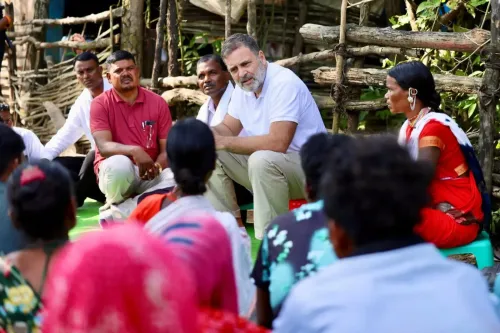
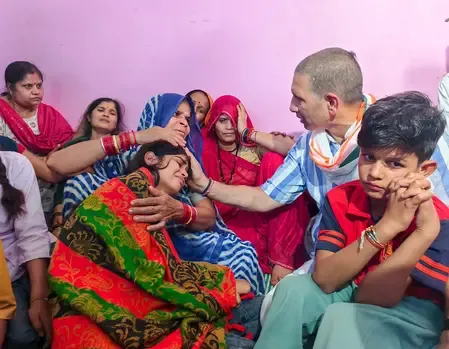
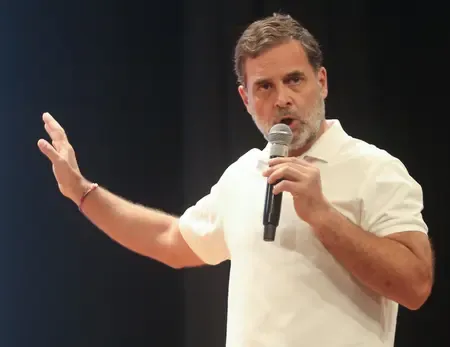
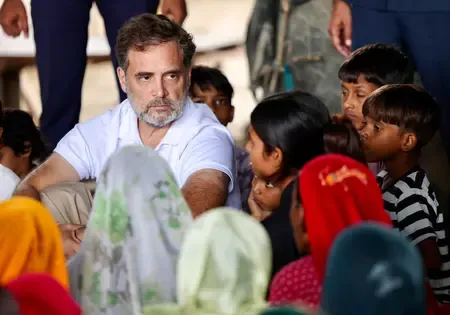
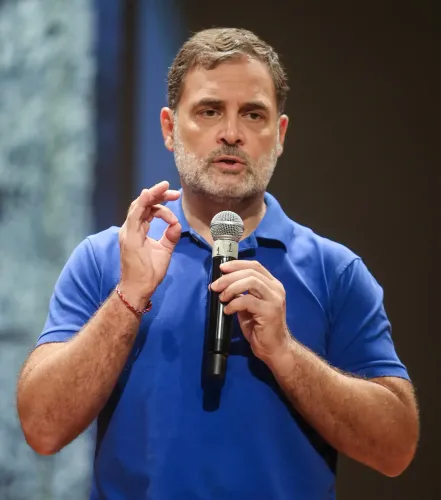
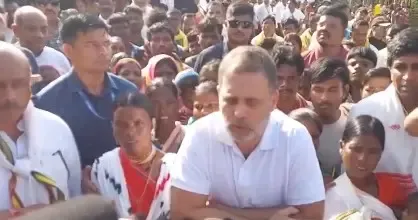
Leader of Opposition in the Lok Sabha Rahul Gandhi on 1 October 2026 launched a sharp attack on the Bharatiya Janata Party (BJP) governments at the Centre and in Madhya Pradesh, alleging that tribal communities in Balaghat had been left without healthcare, education, employment, or land rights — even as children died from illness and malnutrition. Gandhi made the remarks after visiting Jagla village in Birsa block, where he met Baiga tribal families who had lost their children.
What Gandhi Saw on the Ground
Gandhi travelled by road from Birsi Airport in Maharashtra to Jagla village, stopping en route at Mate Government Primary School, where he interacted with students for roughly 15 minutes and inquired about the mid-day meal programme. After meeting the bereaved tribal families, he addressed reporters, alleging a complete failure of state machinery in one of India's most vulnerable tribal belts.
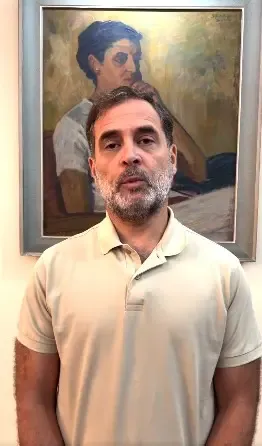
“Many children in the tribal areas of Balaghat have died due to illness and malnutrition, yet there is no support from the government in terms of healthcare, education or employment. It appears as if the tribal people have been abandoned in the middle of India, as if neither the Central government nor the Madhya Pradesh government exists for them,” Gandhi told reporters.
The Death Toll Dispute
The administration has officially acknowledged 32 deaths in the affected tribal areas, while Congress leaders have put the figure at more than 40 children. The competing tallies have become a central flashpoint in the political row. Gandhi further alleged that even after the deaths, more than half of the affected families had not received the compensation they were entitled to. “Many children have lost their lives to malnutrition and disease, but the affected families have not received full compensation. Half of them are still deprived of it,” he said.
Welfare Failures Alleged
Gandhi questioned the functioning of several central and state welfare programmes in the region. He alleged that MGNREGA was not operating effectively in Balaghat and criticised the government’s reported decision to rename the scheme, arguing the focus should be on actual employment delivery rather than rebranding. He also accused the administration of failing to implement the Forest Rights Act, with tribal families allegedly being denied land titles despite legal entitlements.
On the Ladli Behna Yojana, Gandhi alleged that tribal women were being denied the full benefit of the scheme if they were simultaneously receiving assistance under any other government programme. “If two schemes are in operation, tribal people should receive their full entitlement from both,” he said. He also alleged that corruption remained widespread despite the government’s development claims.
The Adivasi vs Vanvasi Framing
Gandhi reiterated the Congress party’s use of the term Adivasi for tribal communities, contrasting it with Vanvasi, a term he attributed to the BJP and the Rashtriya Swayamsevak Sangh (RSS). He stated that ‘Adivasi’ denotes the original inhabitants of India, framing the terminology debate as a question of identity and recognition rather than semantics. He pledged that a Congress government would guarantee tribal communities their full rights in education, healthcare, and employment.
Political Context and What Comes Next
This is not the first time that Balaghat’s tribal belt has emerged as a political battleground. The region’s Baiga community has historically faced acute vulnerabilities in nutrition and healthcare access. Gandhi’s visit follows a pattern of the Congress seeking to consolidate Adivasi support ahead of electoral cycles, particularly in states with significant tribal constituencies. The BJP has not yet issued a formal response to Gandhi’s specific allegations. Independent verification of the welfare delivery claims and the death figures remains pending. Whether the visit translates into sustained political pressure on the Madhya Pradesh government will depend on how both parties respond in the days ahead.
Point of View
But the disputed death toll — 32 versus 40-plus — is the most consequential figure in this story, and neither side has provided independently verified data. The broader allegation of overlapping scheme exclusions for tribal women, if substantiated, points to a structural design flaw rather than mere administrative neglect. Adivasi welfare has been a recurring political football in Madhya Pradesh for years, yet malnutrition indicators in Baiga communities remain stubbornly poor. Without credible third-party enumeration and a government counter-brief on the specific welfare delivery failures, this risks settling into a familiar pattern: high-visibility opposition visit, no accountability, no change.
NationPress
1 Oct 2026
Frequently Asked Questions
Why did Rahul Gandhi visit Balaghat on 1 October 2026?
Gandhi visited Jagla village in Balaghat’s Birsa block to meet Baiga tribal families who had lost children to illness and malnutrition. He used the visit to allege that both the Centre and the Madhya Pradesh government had failed to provide healthcare, compensation, or welfare entitlements to the affected communities.
How many children have died in Balaghat’s tribal areas?
The district administration has officially acknowledged 32 deaths in the affected tribal areas, while Congress leaders claim the figure exceeds 40 children. The two tallies have become a major point of political contention, and independent verification is pending.
What welfare failures did Gandhi allege in Balaghat?
Gandhi alleged that MGNREGA was not functioning properly, that tribal families were being denied land titles under the Forest Rights Act, and that tribal women were excluded from the full benefits of the Ladli Behna Yojana if they received any other government assistance. He also claimed that more than half of families who lost children had not received entitled compensation.
What is the difference between Adivasi and Vanvasi, and why does Gandhi raise it?
Gandhi stated that ‘Adivasi’ means the original inhabitants of India and is the term the Congress uses for tribal communities, while ‘Vanvasi’ — which he attributed to the BJP and RSS — translates broadly as forest dweller. He framed the terminology as a political and identity question, arguing that the Adivasi label affirms prior land and cultural rights.
Has the BJP or the Madhya Pradesh government responded to Gandhi’s allegations?
At the time of reporting, neither the BJP nor the Madhya Pradesh government had issued a formal response to Gandhi’s specific allegations about welfare delivery failures, the death toll, or the compensation shortfall.