Rahul Gandhi heads to Balaghat to meet tribal families who lost children
Synopsis
Congress leader Rahul Gandhi announced he is visiting Balaghat, MP, on October 1 to meet tribal families who lost children to illness, while also raising concerns over Ken-Betwa displacement and adivasi students' grievances in Indore, accusing the BJP government of systemic neglect.
Key Takeaways
Rahul Gandhi is travelling to Balaghat, Madhya Pradesh on October 1, 2026 to meet adivasi families who lost children to disease amid alleged government neglect.
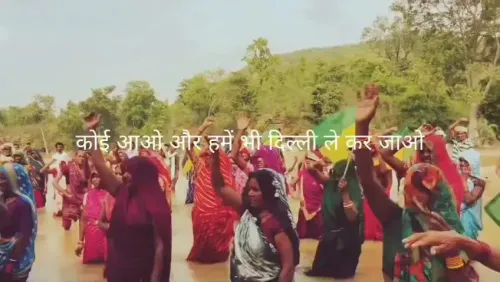
He accuses the BJP government of providing 'harassment, state repression and violence' — but no rehabilitation or compensation — to villages submerged by the Ken-Betwa river-linking project .
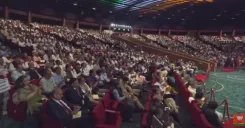
At an Indore student outreach event called 'Chhatro ki Goonj' , adivasi students reportedly described broken schools, poor hostels, exam fraud, and threats to their reservation rights.
Gandhi draws an ideological line, arguing the BJP-RSS views tribals as vanvasi (forest dwellers) rather than India's original owners — a contested framing in tribal-rights discourse.
He closes with a direct personal pledge to stand with adivasi communities 'in every struggle' and to 'make this deaf government hear' their voices.
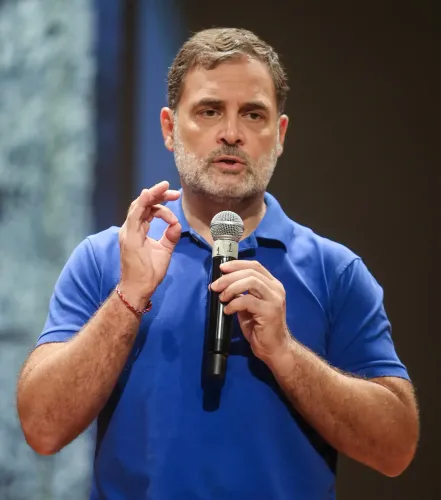
Tribal children dead from preventable disease, villages swallowed by a government dam project, and students crammed into hostels described as 'narak jaisa' — like hell. Congress leader Rahul Gandhi announced on Thursday, October 1 that he is travelling to Balaghat, Madhya Pradesh, to sit with the adivasi families at the centre of all three crises.
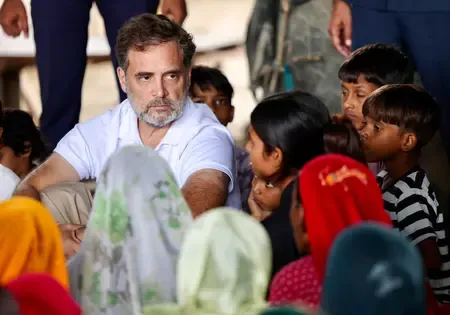
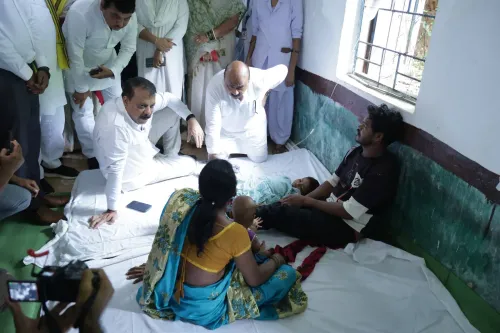
In the post, Gandhi wrote: 'I am coming to Balaghat today — to meet the tribal families who have lost their innocent children to illness and the neglect of the BJP government. By spending time with them, I want to tell them that they are not alone in this grief — I am with them.'
Three wounds Gandhi says the BJP government has left open
Gandhi's post stitches together three separate grievances into a single indictment of Madhya Pradesh's tribal policy. First: the deaths of children in Balaghat, which he attributes to disease compounded by government neglect. Second: the Ken-Betwa river-linking project, where he says displaced adivasi families have received 'neither rehabilitation nor compensation — only harassment, state repression and violence' as their villages go under water. Third: a session he held in Indore titled 'Chhatro ki Goonj' — 'Echo of Students' — where adivasi students reportedly described absent schools, dilapidated colleges, wretched hostels, examination irregularities, and what Gandhi called interference with their constitutional reservation rights.
Each of these is a distinct flashpoint, but Gandhi frames them as symptoms of a single ideology — one he identifies with the BJP-RSS. His sharpest line in the post draws a definitional battle: 'They do not see adivasis as the first owners of India — they see them as vanvasi [forest dwellers].' That distinction matters in Indian political vocabulary. The word vanvasi, favoured in some RSS-aligned discourse, implies a forest-based identity rather than the constitutional recognition of Scheduled Tribes as the land's original inhabitants — a framing that tribal rights activists have long contested.
Balaghat child deaths and the Ken-Betwa fault line
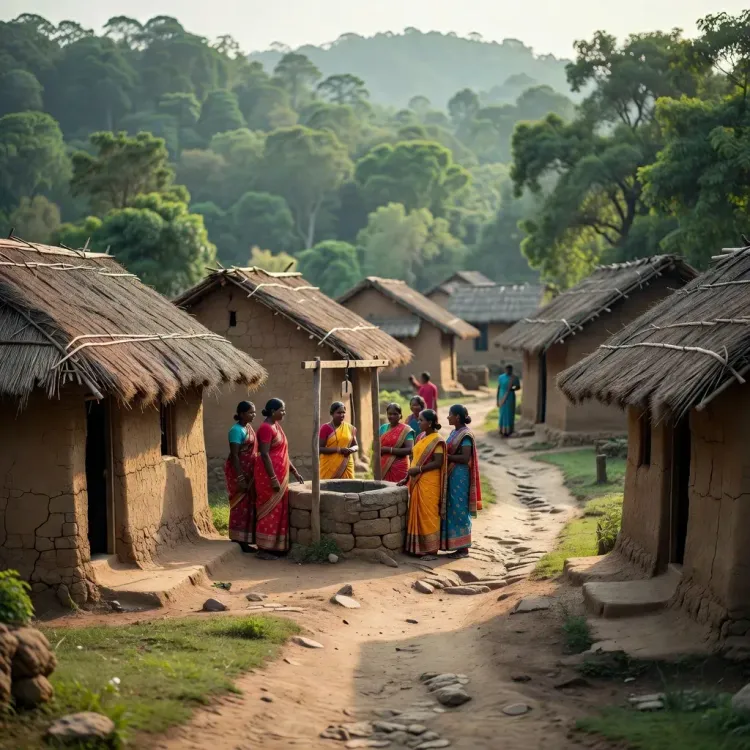
Balaghat is a heavily forested district in eastern Madhya Pradesh with a large Gond and Baiga tribal population, historically among the state's most underserved. Child mortality linked to malnutrition and treatable illness has been a recurring concern in such districts across central India.
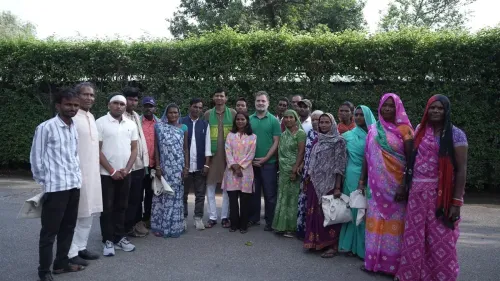
The Ken-Betwa Link Project — India's first inter-river linking scheme, cleared by the central government — involves diverting water from the Ken river in Madhya Pradesh to the Betwa. Environmental and tribal rights groups have long argued that submergence of villages in the Panna Tiger Reserve corridor and surrounding adivasi settlements has not been accompanied by adequate resettlement packages. Gandhi says he met affected tribal brothers and sisters from the movement 'a few days ago' and heard their accounts of displacement without compensation.
Gandhi's direct promise to tribal communities
The post closes as a personal pledge: 'I assure my tribal brothers and sisters that I stand with you in every struggle — amplifying your voice is my responsibility, and I will make this deaf government hear it with full force.' The combative closing — calling the ruling dispensation a 'bahari sarkar', a government that refuses to listen — signals that Gandhi intends to keep adivasi rights as a sustained campaign issue in Madhya Pradesh.
With opposition politics in the state increasingly centred on caste and tribal entitlements, this visit and the accompanying post mark Gandhi's most pointed engagement yet with the specific, layered grievances of Madhya Pradesh's adivasi belt — and a direct test of whether a personal presence in Balaghat can translate solidarity into political traction.
Point of View
The Ken-Betwa dam displacement, and student grievances into one narrative, he is attempting to reframe the tribal question from a welfare issue into a constitutional and civilisational one. The 'vanvasi versus adivasi' framing is particularly pointed — it directly challenges the cultural vocabulary that RSS-affiliated organisations use in tribal outreach programmes. Whether a single high-profile visit can shift the ground in a state where the BJP has deep organisational roots in tribal districts remains the central political question.
NationPress
1 Oct 2026
Frequently Asked Questions
Why is Rahul Gandhi visiting Balaghat?
Rahul Gandhi is visiting Balaghat on October 1, 2026, to meet adivasi families who lost children to illness, which he attributes to disease and alleged neglect by the BJP-led Madhya Pradesh government.
What is the Ken-Betwa project and why are tribals protesting it?
The Ken-Betwa Link Project is India's first inter-river water-linking scheme, involving diversion of the Ken river's waters to the Betwa. Tribal communities in affected areas allege their villages are being submerged without adequate rehabilitation or compensation, and that those who protest face government repression.
What did adivasi students tell Rahul Gandhi in Indore?
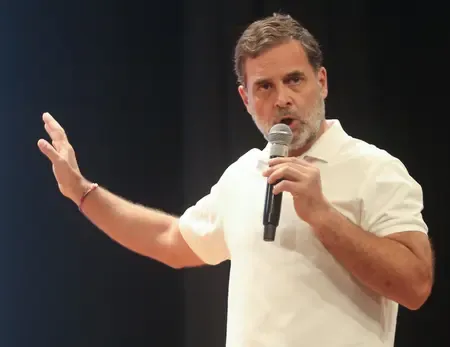
At an outreach event called 'Chhatro ki Goonj' in Indore, adivasi students reportedly told Gandhi that schools are absent, colleges are in poor condition, hostels and food are inadequate, exams are rigged, and their constitutional reservation rights are being undermined.
What is the difference between 'adivasi' and 'vanvasi'?
'Adivasi' means original inhabitant and asserts the constitutional recognition of Scheduled Tribes as the land's first owners. 'Vanvasi' means forest dweller and is preferred in some RSS-aligned discourse; tribal rights activists argue it reduces tribal identity to a forest-based label and weakens land-rights claims.
What is Rahul Gandhi's position on tribal rights in Madhya Pradesh?
Gandhi has pledged to stand with tribal communities 'in every struggle,' to amplify their voices, and has accused the BJP-RSS of seeking to strip adivasis of land, forests, water, education, employment, and dignity.