India GDP manipulation claims 'baseless', says ex-Finance Commission chief N.K. Singh
Synopsis
A top former economic policymaker has pushed back hard against allegations that India’s GDP figures are manipulated — and paired that defence with a striking data point: India has just regained an ‘A’ credit rating for the first time since 1991, alongside a 7.8% growth estimate under the new methodology. The convergence of both developments is being framed as external validation of India’s economic trajectory.
Key Takeaways
Singh , former Finance Commission chairman, called GDP manipulation allegations “completely baseless” on Thursday .
The remarks were in response to concerns raised by former Finance Secretary Subhash Chandra Garg over revised GDP calculations.
India’s revised GDP methodology shows the economy growing at 7.8 per cent .
India regained an ‘A’ sovereign credit rating in 2026 — its first since 1988 , after losing it in 1991 .
Singh described the simultaneous credit upgrade and strong GDP estimate as a ‘happy congruence’ reflecting economic resilience.
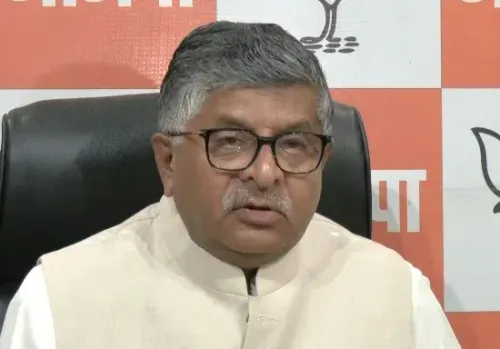
Former Finance Commission chairman and Institute of Economic Growth president N.K. Singh on Thursday firmly rejected allegations questioning the government's methodology for calculating India's Gross Domestic Product (GDP), describing such claims as “completely baseless.” The remarks came in response to concerns raised by former Finance Secretary Subhash Chandra Garg over the credibility of the revised GDP calculations.
Why the Methodology Change Is Standard Practice
Singh argued that periodically revising the base year and updating the GDP calculation framework is a routine exercise undertaken by economies worldwide. “Such revisions are intended to capture changes in the structure and performance of the economy more accurately,” he said. He emphasised that the latest changes should not be interpreted as any attempt to manipulate economic data, but rather as an effort to make GDP estimates more robust and comprehensive.
According to Singh, the revised methodology now captures a broader range of economic segments and incorporates more granular data, enabling a more effective reflection of real developments across the economy. Notably, base-year revisions are standard practice among major economies — India has undertaken several such exercises since independence, each aimed at keeping national accounts aligned with structural shifts in economic activity.
India’s GDP Growth and Credit Rating Upgrade
Singh also highlighted what he called a “happy congruence” between two significant developments: the latest GDP estimates showing the Indian economy growing at 7.8 per cent under the new methodology, and India regaining an ‘A’ credit rating after a gap of 38 years. India had held an ‘A’ rating in 1988 but lost it in 1991, and has now returned to that category in 2026 — a development he described as “a moment of celebration.”
He argued that the simultaneous improvement in the sovereign credit rating and the strong GDP growth estimate together reflect the underlying strength and resilience of the Indian economy, lending external validation to the revised figures.
The Garg Controversy and Broader Debate
The exchange follows public remarks by former Finance Secretary Subhash Chandra Garg, who had raised questions about the GDP calculation methodology, suggesting the numbers may not accurately represent economic ground realities. Critics of the revised methodology have argued that the base-year shift and new data sources could inflate headline growth figures, making it harder to compare performance across time periods.
Singh’s rebuttal positions the debate squarely within the technical domain, insisting that any concerns about manipulation are unfounded. However, the controversy reflects a broader tension in India between official macroeconomic data and on-the-ground economic indicators — a debate that has persisted since the last major GDP methodology revision.
What Comes Next
With India’s credit rating upgrade and the 7.8 per cent growth estimate now in the public domain, attention will turn to whether independent economists and international institutions corroborate the revised figures. The debate over GDP methodology is unlikely to be fully resolved without greater transparency in the underlying data sources and a detailed technical explanation from the government’s statistical authorities.
Point of View
Publicly accessible data that would allow independent economists to verify the revised figures. The credit rating upgrade is a genuine external signal, but ratings agencies work from government-supplied data too. What would settle the debate is not a defence from a former official, but a detailed technical note from the Ministry of Statistics and Programme Implementation (MoSPI) that maps the old and new series for public scrutiny.
NationPress
3 Sept 2026
Frequently Asked Questions
What are the GDP manipulation allegations that N.K. Singh rejected?
Former Finance Secretary Subhash Chandra Garg raised concerns that the government’s revised GDP calculation methodology may not accurately reflect economic ground realities, implying the figures could be inflated. N.K. Singh, former Finance Commission chairman, rejected these concerns as ‘completely baseless’ on Thursday.
Why did India change its GDP calculation methodology?
India revised its GDP methodology to update the base year and incorporate a broader range of economic data, capturing new forms of economic activity that had not been reflected in older frameworks. Such base-year revisions are a standard practice among major economies and are intended to improve accuracy, not alter outcomes.
What is India’s GDP growth rate under the new methodology?
Under the revised GDP calculation methodology, India’s economy is estimated to have grown at 7.8 per cent . This figure was highlighted by N.K. Singh alongside India’s credit rating upgrade as evidence of economic strength.
What is significant about India’s credit rating upgrade in 2026?
India regained an ‘A’ sovereign credit rating in 2026, the first time it has held that rating since 1988. The country lost the ‘A’ rating in 1991 and has waited 38 years to return to the category — a development N.K. Singh described as ‘a moment of celebration.’
Who is N.K. Singh and why does his view matter?
N.K. Singh is a former chairman of the Finance Commission of India and the president of the Institute of Economic Growth, one of India’s premier economic research institutions. His endorsement of the revised GDP methodology carries weight given his long tenure in senior economic policymaking roles.