India-US trade deal hinges on preferential tariff edge, says Piyush Goyal
Synopsis
India is not chasing a US trade deal deadline — it is chasing a benchmark. Commerce Minister Piyush Goyal has made clear the bilateral trade agreement with Washington will close only when Indian exporters get a tariff edge over competing nations. With exports already up $36–37 billion in just four months, New Delhi is negotiating from a position of growing strength.
Key Takeaways
Commerce Minister Piyush Goyal said on 3 September that the India-US bilateral trade agreement will be finalised only after Washington offers India a preferential tariff rate over competing countries.
India has successfully concluded nine FTAs to date, with sensitive sectors including pharmaceuticals, textiles, farmers , and MSMEs protected in each.
The India-UK FTA went live on 15 July ; agreements with Mauritius, Oman, UAE , and Australia are already operational.
EFTA, New Zealand , and the EU's 27 nations are set to come on stream in sequence.
India's exports for April–July reached approximately $317 billion , up $36–37 billion from the same period last year.
Goyal flagged Strait of Hormuz disruptions as a logistics risk for small exporters and called for alternative routing solutions.
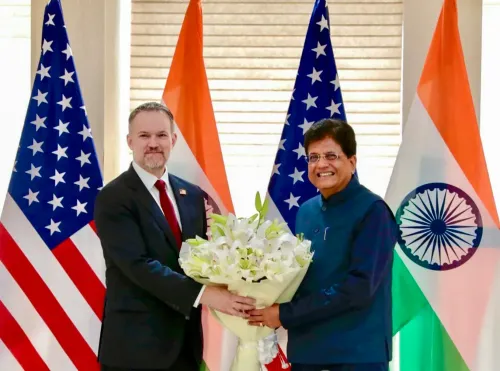
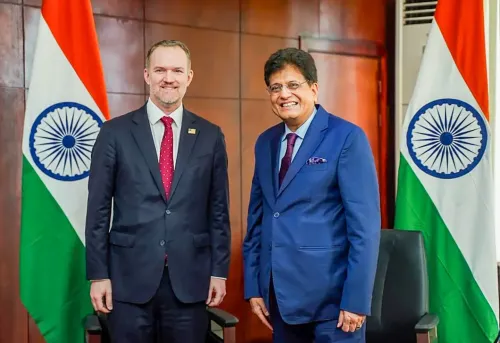
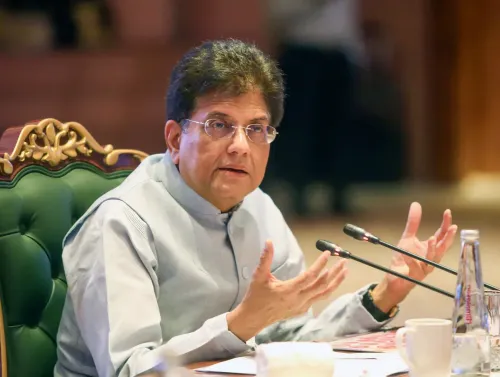
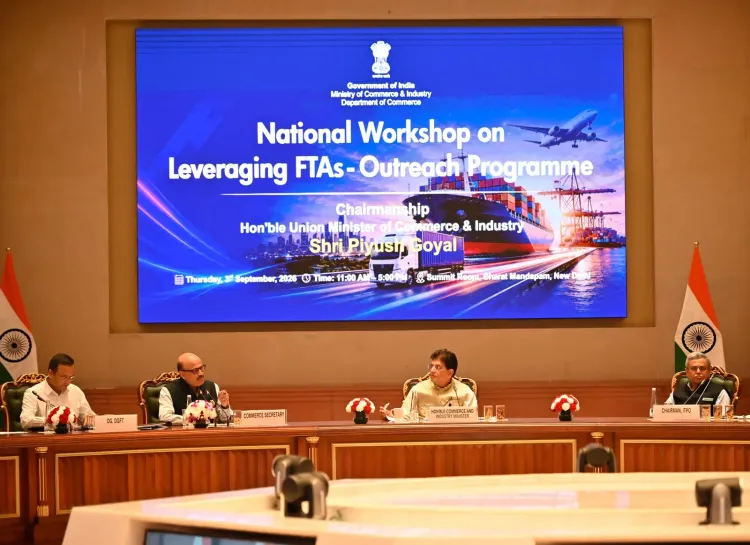
Commerce and Industry Minister Piyush Goyal on Thursday, 3 September said India will finalise the bilateral trade agreement (BTA) with the United States only after Washington extends a preferential tariff rate to Indian exporters — one that gives them a competitive edge over rival nations. The statement came at the National Workshop on 'Leveraging FTAs: An Outreach Programme' in New Delhi.
The US Trade Deal Condition
Goyal was unambiguous on the trigger for closing the deal: 'As soon as the United States was able to provide India a preferential rate in comparison with India's competition, the bilateral trade agreement would be finalised and the finer details announced.' The formulation signals that New Delhi is not chasing a deadline but a benchmark — a tariff advantage that materially improves Indian exporters' position relative to competitors such as Vietnam, Bangladesh, and Mexico.
This comes amid broader US tariff recalibrations under which several Asian exporters are jostling for preferential access. India's insistence on a comparative tariff edge, rather than merely reduced duties, reflects a more assertive negotiating posture than in earlier rounds.
Nine FTAs and a Track Record India Is Proud Of
Goyal said India had secured a strong outcome in all nine free trade agreements finalised to date, describing each as a 'win-win' for both parties. He specifically noted that sensitive sectors — including those affecting farmers, fishermen, MSMEs, and workers — as well as critical industries such as pharmaceuticals, textiles, processed agri-foods, and agricultural products — had been protected in every agreement.
On the operational front, the India-UK FTA, which went live on 15 July, joined agreements already active with Mauritius, Oman, the UAE, and Australia. The EFTA bloc — comprising four European nations — is set to go live soon, followed by New Zealand and eventually the European Union's 27-member bloc.
Export Numbers Signal Strong Momentum
Goyal cited early data to back the optimism. Exports during the first four months of the current financial year reached approximately $317 billion, compared with $280 billion in the same April–July period last year — a jump of $36–37 billion in just four months.
The minister noted that export volumes typically accelerate toward the Christmas season and peak in the January–March quarter, suggesting the full-year figure could be substantially higher. Preliminary August data also appeared to be on track, he added.
Expanding the Exporter Base
Beyond headline numbers, Goyal outlined a broader ambition: widening the exporter ecosystem so that opportunities reach 'every district and every sector.' India, he said, would expand its product basket, encourage new exporters, help small exporters scale up, and support large exporters across all dimensions.
He also flagged logistics as a pressure point, urging stakeholders to find alternative routes for small exporters whenever the Strait of Hormuz poses disruptions — a reference to ongoing freight-route volatility linked to geopolitical tensions in the region.
What Comes Next
With the EU, New Zealand, and the US BTA all in various stages of negotiation or activation, India's FTA calendar is among the most active it has been in two decades. The pace at which Washington moves on the preferential tariff question will likely determine whether the India-US BTA crosses the finish line in the near term or extends into the next negotiating cycle.
Point of View
Bangladesh, and Mexico get. That is a significantly higher bar, and Washington's willingness to grant it will depend on domestic US political calculations as much as trade economics. Meanwhile, the export surge to $317 billion in four months is real momentum, but it also raises the question of whether India needs the US BTA as urgently as the optics suggest — or whether the leverage now runs both ways.
NationPress
3 Sept 2026
Frequently Asked Questions
What is India's condition for finalising the trade deal with the US?
India will sign the bilateral trade agreement with the United States only after Washington agrees to give Indian exporters a preferential tariff rate that is lower than what competing countries receive. Commerce Minister Piyush Goyal stated this clearly on 3 September at a national FTA workshop in New Delhi.
How many FTAs has India finalised so far?
India has finalised nine free trade agreements to date. Active agreements include those with Mauritius, Oman, the UAE, Australia, and the UK, with the India-UK FTA going live on 15 July. EFTA, New Zealand, and the EU's 27 nations are set to follow.
How have India's exports performed recently?
India's exports for April–July of the current financial year reached approximately $317 billion, up from $280 billion in the same period last year — a rise of $36–37 billion. The minister noted that exports typically accelerate in the run-up to Christmas and peak in the January–March quarter.
Which sectors has India protected in its FTA negotiations?
India has safeguarded sensitive sectors including agriculture, fisheries, MSMEs, and labour-intensive industries in every FTA. Critical sectors such as pharmaceuticals, textiles, processed agri-foods, and agricultural products have also been given protective terms, according to Goyal.
What is the Strait of Hormuz concern raised by the minister?
Goyal flagged ongoing freight-route disruptions via the Strait of Hormuz as a logistics risk for small Indian exporters. He called on stakeholders to identify and develop alternative shipping routes to protect export continuity for smaller businesses.