India-US first bilateral trade deal to be signed very soon: Piyush Goyal
Synopsis
India and the US are closer than ever to signing their first Bilateral Trade Agreement, with Commerce Minister Piyush Goyal declaring 99 per cent of talks done and a final negotiating round set for 2–4 June. If the legal text clears, it would mark the most consequential trade milestone between the two democracies in decades — and open the door to a far deeper second phase.
Key Takeaways
Commerce Minister Piyush Goyal confirmed on 1 June that India and the US will ‘very soon’ sign their first Bilateral Trade Agreement (BTA) .
Around 99 per cent of negotiations have been concluded, with only a few issues outstanding.
A fresh round of talks is scheduled for 2–4 June , after which the first phase is expected to be announced.
The US team will be led by chief negotiator Brendan Lynch ; India’s side by Darpan Jain , Additional Secretary, Department of Commerce.
The first phase covers market access, non-tariff barriers, customs facilitation, investment promotion, and economic security cooperation .
Talks were disrupted earlier after the US Supreme Court struck down President Trump’s reciprocal tariff regime; a uniform 10% tariff has been in place since 24 February .
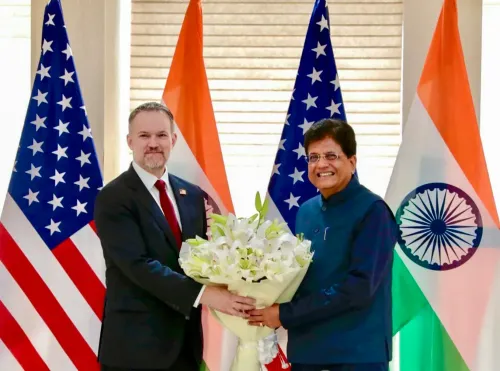
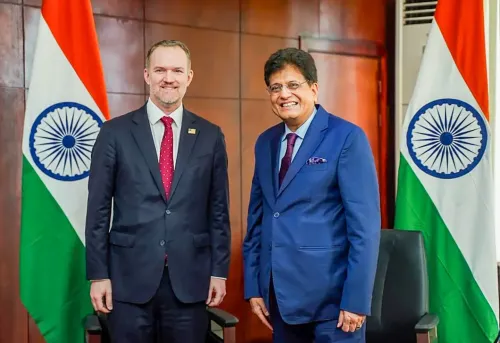
India and the United States are on the verge of signing their first-ever Bilateral Trade Agreement (BTA), with Union Minister of Commerce and Industry Piyush Goyal confirming on Monday, 1 June that nearly all discussions have been concluded and only a handful of issues remain. The announcement signals the most significant trade milestone between the two nations in recent memory.
What Goyal Said
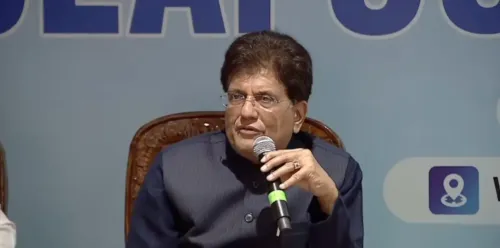
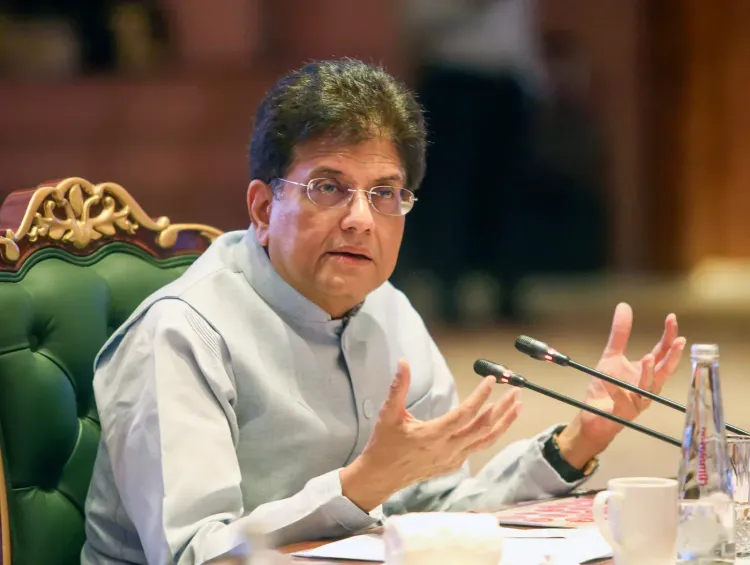
Goyal stated that the two sides will proceed to a second phase of negotiations immediately after the initial pact is formalised. “We will very soon announce the signing of the first BTA with the US and continue our conversations on the second phase,” he said.
He added that approximately 99 per cent of the talks have already been wrapped up, with only residual issues under active resolution. Crucially, fresh discussions between the two sides are scheduled for 2 June to 4 June, after which the first phase of the agreement is expected to be announced.
Who Is at the Table
The US delegation will be led by chief negotiator Brendan Lynch, while India’s team will be headed by Darpan Jain, Additional Secretary in the Department of Commerce. The upcoming round is focused on finalising the legal text and ironing out remaining details of the proposed interim pact, whose broad framework was agreed upon by both sides earlier.
Key Areas Under Negotiation
The first phase of the BTA covers a wide range of trade priorities: market access, non-tariff barriers, customs and trade facilitation, investment promotion, and economic security cooperation. These areas reflect the strategic depth both governments are seeking to embed in the agreement, beyond conventional tariff-reduction frameworks.
Background: Tariff Turbulence and Resumed Talks
The road to this agreement has not been without disruption. The US Supreme Court ruled against President Donald Trump’s reciprocal tariff regime in February, which had been implemented under the International Emergency Economic Powers Act (IEEPA) of 1977. Following that ruling, the US administration introduced a uniform 10 per cent tariff on imports from all countries for 150 days beginning 24 February — a structural shift that led to the postponement of an earlier planned meeting between chief negotiators.
Talks subsequently resumed in Washington in April, when an Indian delegation led by Jain visited the US from 20 April to 23 April, setting the stage for the current sprint toward a signing.
What Comes Next
With the 2–4 June negotiating window now critical, both governments appear to be racing against diplomatic calendars. A successful first-phase signing would unlock the second phase of talks, covering deeper structural issues. Trade analysts and industry bodies will be closely watching whether the legal text resolves pending non-tariff barrier disputes — historically the most contentious element in India-US trade negotiations.
Point of View
But the harder work begins after the signing. India-US trade talks have repeatedly stalled on non-tariff barriers — agricultural standards, digital trade rules, price controls on pharmaceuticals — none of which a market-access-focused first phase will fully resolve. The tariff backdrop is also unstable: a US Supreme Court ruling already upended one tariff regime, and the current 10 per cent uniform rate is a 150-day measure, not a permanent settlement. Goyal’s ‘99 per cent done’ framing is optimistic, but the remaining 1 per cent in trade deals is almost always where the deal lives or dies.
NationPress
16 Oct 2026
Frequently Asked Questions
What is the India-US Bilateral Trade Agreement (BTA)?
The India-US BTA is a proposed trade pact covering market access, non-tariff barriers, customs facilitation, investment promotion, and economic security cooperation. Its first phase is expected to be announced following talks scheduled for 2–4 June 2025, with a second phase of deeper negotiations to follow.
How close are India and the US to signing the trade deal?
Commerce Minister Piyush Goyal stated on 1 June that approximately 99 per cent of negotiations have been completed. A final round of talks between 2 and 4 June is expected to resolve outstanding issues and pave the way for the first-phase announcement.
Who is leading the negotiations on each side?
The US delegation is being led by chief negotiator Brendan Lynch, while India’s team is headed by Darpan Jain, Additional Secretary in the Department of Commerce.
Why were India-US trade talks disrupted earlier?
The US Supreme Court struck down President Donald Trump’s reciprocal tariff regime in February, which had been enacted under the International Emergency Economic Powers Act (IEEPA) of 1977. The US then introduced a uniform 10 per cent tariff on all imports for 150 days from 24 February, causing the postponement of a planned negotiating round.
What happens after the first phase of the BTA is signed?
Both governments have indicated that discussions on a second, more comprehensive phase of the Bilateral Trade Agreement will begin immediately after the first phase is formalised. The second phase is expected to address deeper structural trade issues.