India-US Bilateral Trade Agreement talks begin June 2: What the first phase covers
Synopsis
India and the US entered what could be the final stretch of their long-pending Bilateral Trade Agreement, with Commerce Minister Piyush Goyal declaring 99% of talks complete. With a uniform 10% US tariff ticking down and rival economies also courting Washington, the pressure to seal the first phase by 4 June has rarely been higher.
Key Takeaways
India-US Bilateral Trade Agreement (BTA) talks began on 2 June and run through 4 June 2025 .
Commerce Minister Piyush Goyal said 99 per cent of negotiations are complete, with only technical issues remaining.
First phase covers market access , non-tariff barriers , customs facilitation , investment promotion , and economic security cooperation .
Section 301 tariff relief for India is reportedly on the agenda as a key sticking point.
US delegation is led by chief negotiator Brendan Lynch ; India's team is headed by Darpan Jain , Additional Secretary, Department of Commerce.
A 10 per cent uniform US tariff on all imports has been in effect since 24 February for 150 days , following the US Supreme Court's ruling against Trump's IEEPA-based tariff regime.
India and the United States began a fresh round of trade negotiations on Tuesday, 2 June, with both sides working to finalise the first phase of a long-awaited Bilateral Trade Agreement (BTA) that could significantly reshape commerce between the world's largest democracy and its biggest trading partner. The three-day talks, scheduled through 4 June, are focused on locking down the legal text and resolving outstanding technical issues in the proposed interim agreement.
State of Play: 99% Done, Last Mile Remaining
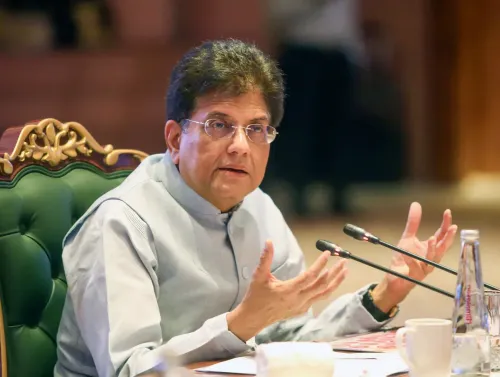
Union Minister of Commerce and Industry Piyush Goyal on Monday said that roughly 99 per cent of negotiations have already been concluded, with only a handful of issues still under discussion. 'We will very soon announce the signing of the first BTA with the US and continue our conversations on the second phase,' Goyal said. Officials indicated that both delegations are now working through technical residuals before a formal announcement can be made.
Key Areas on the Negotiating Table
The first phase of the BTA framework is expected to cover market access, non-tariff barriers, customs facilitation, investment promotion, and economic security cooperation. According to government sources, the agenda also includes tariffs imposed under Section 301 of US trade law, with India reportedly seeking relief from ongoing investigations — a point that has emerged as a significant sticking point in the broader talks.
Who Is at the Table
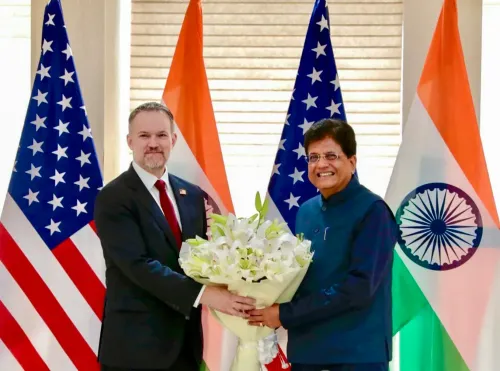
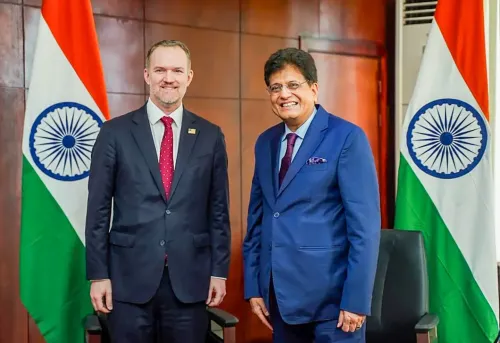
The US delegation is being led by chief negotiator Brendan Lynch, while India's team is headed by Darpan Jain, Additional Secretary in the Department of Commerce. The pairing of senior technical officials on both sides signals that these sessions are aimed at finalising language rather than reopening broad policy positions.
The Tariff Backdrop: Supreme Court Ruling and the 10% Regime
The negotiations are taking place against a complicated tariff backdrop. The US Supreme Court had earlier ruled against President Donald Trump's reciprocal tariff regime implemented under the International Emergency Economic Powers Act (IEEPA) of 1977. Following that ruling, the US administration introduced a uniform 10 per cent tariff on imports from all countries for 150 days beginning 24 February, which had also delayed an earlier planned meeting between the chief negotiators.
What a Deal Would Mean for Indian Exporters
A finalised BTA — even at the first-phase level — could give Indian exporters preferential access to the US market relative to competing economies, particularly those without a bilateral framework in place. This comes amid intensifying global trade realignment, as several Asian economies race to lock in favourable terms with Washington. Notably, the second phase of negotiations, which is expected to cover deeper structural issues, will follow after the interim deal is signed.
Both delegations are expected to conclude the current round by 4 June, with a formal announcement on the first phase potentially following in the near term.
Point of View
But it also gives Washington leverage. If India secures preferential access before competing Asian economies, the BTA becomes a genuine strategic win; if it does not, the first phase risks being a headline without heft.
NationPress
19 Oct 2026
Frequently Asked Questions
What is the India-US Bilateral Trade Agreement (BTA)?
The India-US Bilateral Trade Agreement is a proposed trade pact aimed at reshaping commerce between the two countries. The first phase, currently being negotiated, covers market access, non-tariff barriers, customs facilitation, investment promotion, and economic security cooperation.
How far along are the India-US trade negotiations?
Commerce Minister Piyush Goyal said on Monday that approximately 99 per cent of negotiations have been completed. Both sides are now working to resolve remaining technical issues before a formal announcement on the first phase can be made.
Who is leading the negotiations on each side?
The US delegation is led by chief negotiator Brendan Lynch, while India's team is headed by Darpan Jain, Additional Secretary in the Department of Commerce.
What is Section 301 and why does it matter for these talks?
Section 301 of US trade law allows Washington to impose tariffs in response to trade practices it deems unfair. India is reportedly seeking relief from ongoing Section 301 investigations, making it a significant agenda item in the current round of talks.
What is the current US tariff situation affecting India?
Following a US Supreme Court ruling against President Donald Trump's reciprocal tariff regime under the IEEPA of 1977, the US introduced a uniform 10 per cent tariff on imports from all countries for 150 days starting 24 February. This had also delayed an earlier scheduled meeting between the chief negotiators.