Gehlot slams BJP over 28-day gap in Rajasthan Panchayat polls
Synopsis
Ashok Gehlot has accused the BJP government in Rajasthan of deliberately creating a 28-day gap between voting and counting in the Panchayati Raj polls — time he says is being used to confine elected candidates in out-of-state resorts and engineer outcomes through money and muscle power. The allegation, and his admission that Congress is doing the same defensively, spotlights a structural flaw in India's indirect local-body election model.
Key Takeaways
Ashok Gehlot on 12 November 2026 accused the BJP -led Rajasthan government of creating an ‘unprecedented’ 28-day gap between first-phase voting ( 22 October ) and counting ( 20 November ) in the Panchayati Raj polls.
Indirect elections for Zila Pramukhs are scheduled for 25 November , Pradhans on 27 November , and deputy heads on 28 November .
Gehlot alleged that BJP candidates are being confined in resorts and pilgrimage sites in other states, with mobile phones switched off, even during Diwali .
He claimed to have urged Chief Minister Bhajanlal Sharma to ban such camps, but received no response.
Gehlot admitted Congress has also taken protective measures for its own candidates amid alleged administrative pressure.
He called on the State Election Commission to strictly monitor the indirect elections to prevent coercion or inducements.
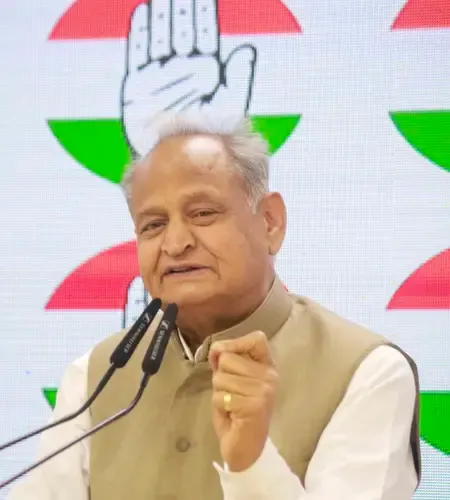
Former Rajasthan Chief Minister Ashok Gehlot on Thursday, 12 November 2026, mounted a sharp attack on the BJP-led state government, alleging that an “unprecedented gap” between voting, counting, and subsequent indirect elections in the ongoing Panchayati Raj polls is being deliberately engineered to enable horse-trading. The Congress leader's remarks in Jaipur add fresh political heat to an already contested local-body election cycle in Rajasthan.
The Timeline Under Scrutiny
Gehlot pointed to a 28-day interval between the first phase of voting for Zila Parishads (district councils) and panchayat samitis — held on 22 October — and the scheduled counting date of 20 November. Elections for Zila Pramukhs (district council chairpersons) are set for 25 November, followed by elections for Pradhans (panchayat samiti heads) on 27 November and deputy heads on 28 November. “Such a gap has never been left before. Why has this interval been created?” Gehlot asked.
Allegations of Resort Politics and Candidate Confinement
The former Chief Minister alleged that the ruling BJP is relocating its district council and panchayat samiti candidates to resorts and pilgrimage sites in other states, keeping their mobile phones switched off and cutting them off from their families — reportedly even through the Diwali festival period. “In areas where voting took place in the first phase, candidates have been held in confinement for almost a month. What kind of democracy is being practised by keeping people whom the public has elected as its representatives away from their homes and families?” he said.
Gehlot accused the state government of planning to deploy money and muscle power to manipulate outcomes, drawing a parallel with what he described as similar tactics during the recent urban local body elections in Rajasthan. He added that he had previously urged Chief Minister Bhajanlal Sharma to prohibit such camps, but no action was taken.
Congress Also Playing Defence
Notably, Gehlot conceded that the situation has compelled the Congress itself to take protective measures for its own candidates, shielding them from alleged administrative pressure and misuse of official machinery. The admission underscores how the extended electoral timeline has drawn both major parties into the resort-politics dynamic that has become a recurring feature of indirect elections across Indian states.
Call for Election Commission Intervention
Gehlot urged the State Election Commission and district administration to strictly monitor the upcoming indirect elections — for Zila Pramukhs, Pradhans, and deputy heads — to ensure candidates are free from coercion, inducements, or undue influence. He framed the extended gap not as an administrative oversight but as a structural opportunity for manipulation. This is not the first time Rajasthan's local body elections have drawn allegations of horse-trading; similar complaints surfaced during the 2020 Panchayati Raj elections in the state.
With counting still days away and indirect elections stretching into late November, the political temperature around Rajasthan's grassroots democracy is set to rise further.
Point of View
But his admission that Congress has also moved its own candidates into protective custody inadvertently validates the very dynamic he is criticising. The real issue is structural: India's indirect local-body election model — where elected ward members choose chairpersons — creates an almost mechanical incentive for resort politics whenever a gap exists between direct voting and indirect elections. Rajasthan has seen this pattern before in 2020 and again now, regardless of which party holds power. The State Election Commission, not opposition rhetoric, is the credible check here — and its silence so far is the more consequential story.
NationPress
13 Nov 2026
Frequently Asked Questions
What is the controversy over Rajasthan's Panchayat polls in 2026?
Former Chief Minister Ashok Gehlot has alleged that the BJP-led Rajasthan government deliberately created a 28-day gap between the first phase of voting (22 October) and counting (20 November) in the ongoing Panchayati Raj elections, enabling horse-trading and candidate confinement. He claims elected candidates are being held at out-of-state resorts with their phones switched off.
What is the full election schedule for Rajasthan's Panchayati Raj polls?
First-phase voting for Zila Parishads and panchayat samitis was held on 22 October. Counting across all phases is scheduled for 20 November, followed by elections for Zila Pramukhs on 25 November, Pradhans on 27 November, and deputy heads on 28 November.
Why does Gehlot call the electoral gap 'unprecedented'?
Gehlot argues that no previous Panchayati Raj election in Rajasthan has had such a long interval between direct polling and counting, and that the extended timeline provides a window for the ruling party to manipulate the indirect elections for chairpersons and samiti heads through money and muscle power.
Has Congress also been accused of similar tactics?
Gehlot himself admitted that Congress has been compelled to take protective measures for its own candidates to shield them from alleged administrative pressure. This suggests both major parties are participating in the resort-politics dynamic, even as Congress frames its actions as defensive.
What action has Gehlot demanded?
Gehlot has urged the Rajasthan State Election Commission and district administration to strictly monitor the upcoming indirect elections — for Zila Pramukhs, Pradhans, and deputy heads — to ensure candidates are free from coercion, inducements, or undue influence from any party or official machinery.