Is Ghazipur Leading UP with the First Millet Unit?
Synopsis
Discover how Ghazipur is pioneering Uttar Pradesh's first millet processing unit, an initiative aimed at promoting healthy and sustainable food practices under PM Modi's leadership. This innovative step not only boosts local agriculture but also enhances nutrition for residents, marking a significant milestone in the journey towards toxin-free farming.
Key Takeaways
First Millet Processing Unit: Established in Ghazipur, UP.
Investment: Approximately Rs 95 lakh.
Health Benefits: Nutritional value of millets enhances diets.
Sustainable Farming: Millets require fewer chemicals.
Local Support: Encouraging local farmers to grow millets.
Ghazipur, Jan 6 (NationPress) Following the initiative of Prime Minister Narendra Modi to advocate for millets, Uttar Pradesh has inaugurated its inaugural millet processing unit at the Krishi Vigyan Kendra (KVK) in Ghazipur.
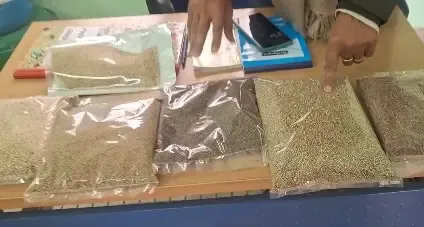
This unit, set up with an investment of approximately Rs 95 lakh, processes various coarse grains such as bajra, kodo, kutki, ragi, and sawa, allowing local residents to access these products directly or via markets.
PM Modi has proclaimed 2023 as the “Year of Millets”.
The Prime Minister has also encouraged people to incorporate these nutritious coarse grains into their everyday meals.
Shiv Kumar Singh, the head of the Millet Processing Unit at KVK Ghazipur, praised the initiative, highlighting that the Union government intends to establish similar units in every state and district.
Uttar Pradesh has taken the lead by launching this first processing unit in Ghazipur.
The unit manufactures a variety of products, including ragi flour, bajra flour, kodo rice, kutki rice, and sawa rice, which are distributed to the district's residents.
Singh emphasized the health benefits of integrating millets into daily diets, noting that even adding 5–10 percent millets to wheat roti can enhance nutritional value.
He pointed out that ragi is a rich source of calcium, containing 364 mg per 100 grams.
Singh also mentioned the environmental and health benefits of millet cultivation.
Unlike wheat and rice, which often need extensive fertilizers and pesticides, millets can be cultivated naturally without chemical interventions, making them a crucial part of toxin-free farming and healthier diets.
All millets used in the processing unit are sourced from the KVK's own farm, with local farmers encouraged to cultivate these crops using seeds provided by the center.
The harvested grains are bought at government-specified prices, processed in the unit, and made available to the community.
In the past two to three months, around five quintals of processed millet products have been sold.
Singh urged farmers to decrease the area dedicated to paddy and wheat farming, advocating for a shift towards millet crops, which can be sown in June–July and harvested in September–October in just 90–100 days, without the need for fertilizers or pesticides.
He stressed that traditional rice farming degrades soil health and introduces toxins into the food supply, while millets offer a sustainable and healthier choice.
Point of View
It is crucial to acknowledge the government's efforts to promote sustainable farming and healthy eating habits. This initiative aligns with global trends towards organic farming and healthier diets, and it is a significant development for farmers and consumers alike.
NationPress
20 Sept 2026
Frequently Asked Questions
What is the significance of the millet processing unit in Ghazipur?
The millet processing unit in Ghazipur signifies Uttar Pradesh's commitment to promoting sustainable agriculture and healthy eating. It provides local farmers with a platform to process and sell their crops, contributing to the economy and public health.
How does millet cultivation benefit the environment?
Millet cultivation is beneficial for the environment as it requires fewer fertilizers and pesticides compared to traditional crops like wheat and rice. This natural farming approach preserves soil quality and promotes toxin-free farming.
What health benefits do millets offer?
Millets are nutrient-rich, providing essential vitamins and minerals. For example, ragi is a great source of calcium. Including millets in the diet can improve overall nutrition and health.
How can farmers get involved in millet cultivation?
Farmers can get involved by utilizing seeds provided by the Krishi Vigyan Kendra and following sustainable farming practices to grow millets. The government also buys harvested grains at mandated rates.
When can millets be planted and harvested?
Millets can typically be sown in June to July and harvested in September to October, with a short growth cycle of 90 to 100 days.