Swasth Bharat Portal launched to unify India's digital health systems

Synopsis
India's fragmented digital health infrastructure — multiple logins, siloed datasets, and duplicate data entry for ASHAs, ANMs, and MOs — just got a single-window fix. The Swasth Bharat Portal promises 40% less repetitive data entry and up to 30% infrastructure savings, but its real test will be adoption at the last mile.
Key Takeaways
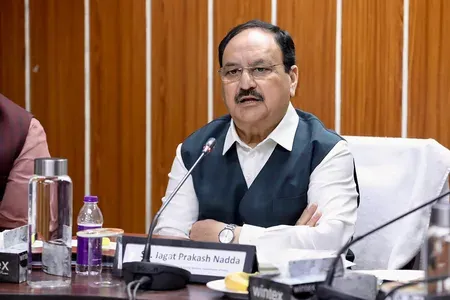
Union Health Minister Jagat Prakash Nadda launched the Swasth Bharat Portal on 6 May 2025 at the 10th National Summit on Innovation and Inclusivity .
The portal integrates multiple national health programme applications into a single API-based aggregator platform , eliminating multiple logins and repetitive data entry.
The Ministry estimates infrastructure savings of 20–30% and reductions in repetitive data entry of up to 40% .
The platform is ABDM-compliant and supports integration with the Ayushman Bharat Health Account , HPR , and HFR .
Frontline workers — ASHAs, ANMs, CHOs, and MOs — are the primary beneficiaries, gaining a unified interface for programme reporting.
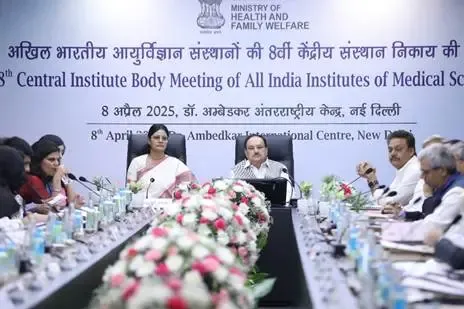
The Union government on Wednesday, 6 May launched the Swasth Bharat Portal, a single interoperable platform designed to integrate multiple national health programme applications, according to an official statement from the Ministry of Health and Family Welfare. Union Health Minister Jagat Prakash Nadda unveiled the platform during the 10th National Summit on Innovation and Inclusivity in New Delhi.
What the Swasth Bharat Portal Does
The portal is built as an API-based aggregator platform, engineered to eliminate siloed systems, fragmented datasets, sub-optimal resource utilisation, and duplication of efforts across India's public health infrastructure. It brings multiple national health programmes onto a single interface, removing the need for multiple logins and repetitive data entry for frontline health workers.
The platform also provides data visualisation tools and supports the use of localised data for monitoring and evidence-based planning — a significant upgrade from the fragmented reporting environment that preceded it.
Who Benefits and How
India's frontline health workforce — including Accredited Social Health Activists (ASHAs), Auxiliary Nurse Midwives (ANMs), Community Health Officers (CHOs), and Medical Officers (MOs) — has historically spent considerable time navigating multiple applications for programme reporting. The Swasth Bharat Portal directly addresses this operational burden by consolidating access into one platform.
The Ministry estimated that efficiency gains from consolidation will deliver infrastructure savings of approximately 20–30%, reductions in repetitive data entry of up to 40%, and similar declines in human-resource duplication, according to the official statement.
Technical Architecture and Compliance
The portal is built on a federated architecture via APIs, which the Ministry says will ensure higher interoperability across programmes. It is Ayushman Bharat Digital Mission (ABDM)-compliant and supports integration with the Ayushman Bharat Health Account for seamless and secure exchange of patient health records.
The system is also designed to integrate with national registries, including the Healthcare Professionals Registry (HPR) and the Health Facility Registry (HFR), as it evolves into a comprehensive digital health ecosystem. Currently, independent hosting, storage, and compute resources are maintained separately across programmes — a redundancy the new aggregation model is expected to reduce significantly.
Broader Significance for Public Health Governance
The Ministry described the portal as a transformative step towards convergence, efficiency, and data-driven governance in India's public health system. Decision-making speed is also expected to improve as data flows become unified and real-time, the statement added.
This comes amid India's broader push to build a robust digital health infrastructure, anchored by the Ayushman Bharat Digital Mission. The Swasth Bharat Portal represents a meaningful consolidation effort, though the scale of real-world adoption among frontline workers will ultimately determine whether the projected efficiency gains materialise.
Point of View
Programme-specific applications that eat into care delivery time. The efficiency projections — 40% less data entry, 30% infrastructure savings — are credible on paper, but India's digital health history is littered with well-architected platforms that struggled at the last mile. The real accountability metric here is not launch-day compliance but six-month adoption rates among ASHAs and ANMs in low-connectivity districts. Without tracking that, the portal risks becoming another layer in the stack rather than a simplification of it.
NationPress
25 Sept 2026
Frequently Asked Questions
What is the Swasth Bharat Portal?
The Swasth Bharat Portal is a government-launched, API-based aggregator platform that integrates multiple national health programme applications into a single interoperable interface. It was unveiled by Union Health Minister Jagat Prakash Nadda on 6 May 2025 at the 10th National Summit on Innovation and Inclusivity.
Who are the primary beneficiaries of the Swasth Bharat Portal?
Frontline health workers — including ASHAs, ANMs, CHOs, and MOs — are the primary beneficiaries. They previously had to navigate multiple applications for programme reporting; the portal consolidates this into a single login with data visualisation tools.
What efficiency gains does the portal promise?
The Ministry of Health and Family Welfare estimates infrastructure savings of approximately 20–30%, reductions in repetitive data entry of up to 40%, and similar declines in human-resource duplication, according to the official statement.
Is the Swasth Bharat Portal linked to Ayushman Bharat?
Yes. The portal is Ayushman Bharat Digital Mission (ABDM)-compliant and supports integration with the Ayushman Bharat Health Account for secure exchange of patient health records. It is also designed to connect with the Healthcare Professionals Registry and Health Facility Registry.
How is the portal technically built?
The Swasth Bharat Portal is built on a federated architecture using APIs, which the Ministry says ensures higher interoperability. It is designed to evolve into a comprehensive digital health ecosystem by integrating with national health registries over time.