Belgian PM De Wever's India Gate chocolate sculpture melted on way to Modi
Synopsis
Belgian Prime Minister Bart De Wever arrived in New Delhi bearing a chocolate replica of India Gate for PM Modi — only for it to not survive the journey. The light-hearted episode underscored a more substantive moment: the first Belgian PM visit to India in 20 years, anchored in WWI shared history and a push to deepen bilateral ties.
Key Takeaways
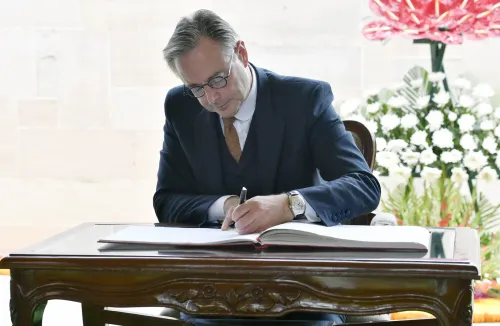
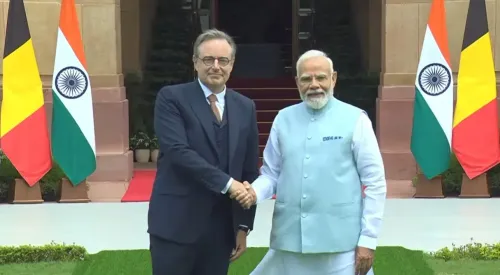
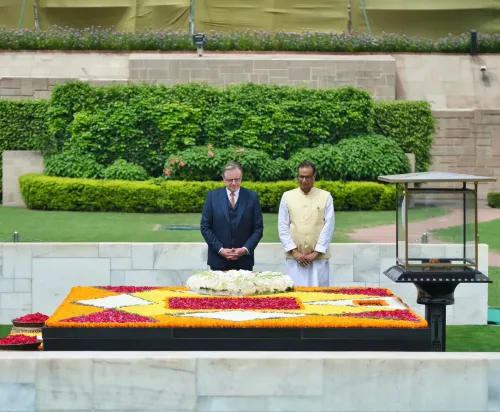
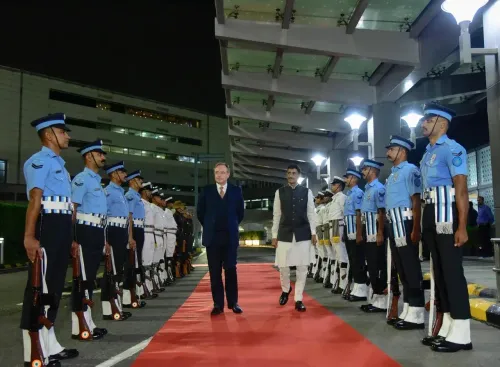
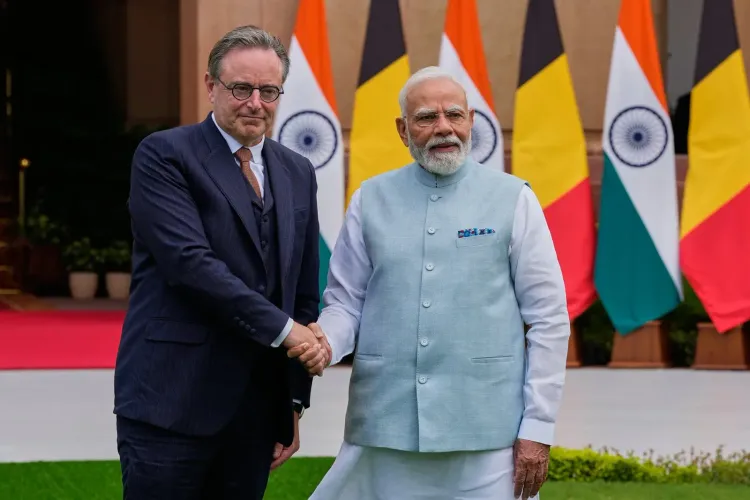
Belgian PM Bart De Wever visited New Delhi on 3 September — the first Belgian Prime Minister to do so in 20 years .
A chocolate sculpture of India Gate , intended as a gift for PM Modi , did not survive the journey from Belgium to India.
De Wever pledged to deliver a back-up version of the sculpture to Modi.
The replica featured an inscription honouring Indian soldiers who fought in Flanders Fields during the First World War .
Bilateral talks were held at Hyderabad House ; De Wever called India the fastest-growing major economy and an increasingly important partner for Belgium.
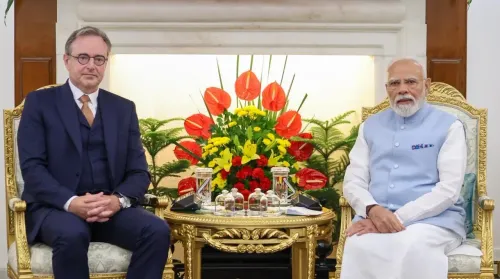
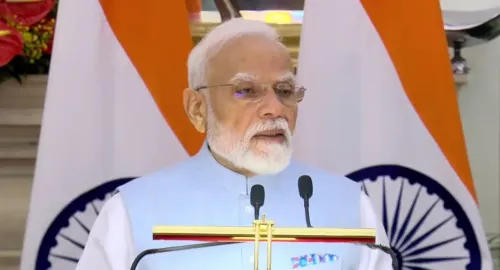
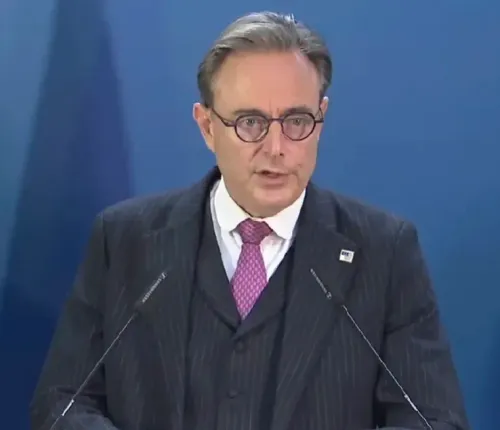
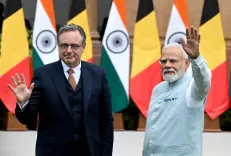
Belgian Prime Minister Bart De Wever revealed on Thursday, 3 September that a chocolate sculpture of India Gate — crafted entirely from Belgian chocolates and intended as a gift for Prime Minister Narendra Modi — did not survive the journey to New Delhi. The disclosure came during a joint press conference at Hyderabad House following bilateral talks between the two leaders.
The Gift That Didn't Make It
De Wever recounted the episode with good humour, noting that the replica, while made of the finest Belgian chocolates, proved no match for the rigours of diplomatic travel. 'Chocolate is excellent for diplomacy, but not excellent for diplomatic travel, we noticed,' he said. He assured Modi that a back-up version remains in Belgium and pledged to have it delivered intact. 'That's an ambition I leave India with today,' De Wever added.
Why India Gate Was Chosen
The choice of India Gate as the subject of the sculpture was deliberate, De Wever explained, calling it a symbol of 'shared history and future partnership' between India and Belgium. The chocolate replica reportedly featured an enlarged section of the monument's inscription commemorating Indian soldiers who fought and fell in Flanders Fields during the First World War. 'More than a century ago, Indian soldiers travelled thousands of miles to fight on Belgian soil, and we have not forgotten this. We have not forgotten their courage and their sacrifice,' he said.
First Belgian PM Visit in 20 Years
De Wever described his visit to India as 'meaningful', noting that it was the first by a Belgian Prime Minister in 20 years — a gap he acknowledged was 'too long.' He praised the transformation India has undergone, particularly under Modi's leadership, describing the country as 'the world's largest democracy', the 'fastest-growing major economy', and a rising 'geopolitical factor' whose influence extends well beyond the region.
Belgium's Case as a Partner
Positioning Belgium as a natural economic counterpart, De Wever highlighted his country's standing as one of the world's most open and internationally connected economies, built on trade and access to global markets. He expressed confidence that Belgium has 'a lot to offer to India in return,' even if the two nations differ considerably in scale. The bilateral meeting at Hyderabad House covered trade, technology, and historical ties, though specific outcomes were not detailed at the press conference.
What Comes Next
The chocolate sculpture aside, De Wever's visit signals a reset in India-Belgium diplomatic engagement after two decades of limited high-level contact. The shared wartime history — symbolised by the India Gate tribute — provides a foundation for deepening ties, and both sides are expected to follow up on the discussions held during this visit.
Point of View
But the more consequential detail is that this is the first Belgian PM visit to India in 20 years — a gap that reflects how under-prioritised the India-Europe bilateral has been at the head-of-government level. De Wever's framing around Flanders Fields is smart diplomacy: it roots a modern trade pitch in a century-old emotional bond. Whether the visit produces concrete deliverables beyond goodwill remains to be seen, and that will be the real measure of whether the 20-year gap has truly been bridged.
NationPress
3 Sept 2026
Frequently Asked Questions
What happened to the chocolate India Gate sculpture meant for PM Modi?
Belgian Prime Minister Bart De Wever had commissioned a sculpture of India Gate made entirely of Belgian chocolates as a gift for PM Narendra Modi, but it did not survive the journey to India. De Wever said a back-up version is in Belgium and he intends to have it delivered to Modi.
Why did Belgian PM De Wever choose India Gate for the chocolate gift?
De Wever said India Gate was chosen deliberately as a symbol of shared history between India and Belgium. The replica featured an enlarged inscription commemorating Indian soldiers who fought and died in Flanders Fields during the First World War, which took place on Belgian soil.
When was the last time a Belgian Prime Minister visited India?
De Wever's visit on 3 September marks the first by a Belgian Prime Minister in 20 years. He acknowledged the gap was 'too long' and noted that India has changed enormously in that period.
What was discussed during the India-Belgium bilateral talks?
Prime Ministers Modi and De Wever held bilateral talks at Hyderabad House in New Delhi. De Wever described India as the world's fastest-growing major economy and a key geopolitical partner, and positioned Belgium as an open, trade-connected economy with much to offer India, though specific outcomes were not detailed publicly.
Who is Bart De Wever?
Bart De Wever is the Prime Minister of Belgium. He is also a citizen of Antwerp, which he mentioned during his remarks in New Delhi. His visit to India on 3 September is the first by a Belgian head of government in two decades.