Giriraj Singh greets pilgrims as Amarnath Yatra 2026 begins
Synopsis
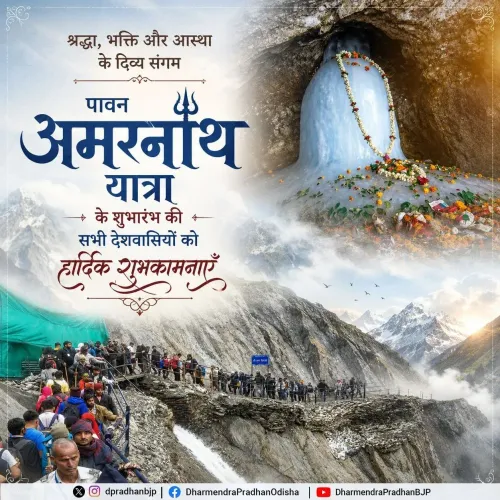
Union Textiles Minister Giriraj Singh on 3 July 2026 conveyed greetings to devotees as the Shri Amarnath Yatra began, invoking the blessings of Baba Barfani for a safe and auspicious pilgrimage to the Himalayan cave shrine in Jammu and Kashmir.
Key Takeaways
Union Textiles Minister Giriraj Singh posted greetings on 3 July 2026 marking the commencement of the Shri Amarnath Yatra .
The Amarnath Cave Shrine is located at approximately 3,888 metres altitude in Jammu and Kashmir and is central to Shaivite tradition.
The central government has supported the yatra with security and logistics since the 1990s , following disruptions caused by militancy.
BJP leaders routinely issue public greetings for major Hindu pilgrimages, consistent with the party's cultural policy emphasis.
The yatra has significant economic impact for Jammu and Kashmir , generating seasonal livelihoods in hospitality, transport, and trade.
Registration numbers, security deployments, and daily pilgrim movement data are expected from the Shri Amarnathji Shrine Board (SASB) as the season progresses.
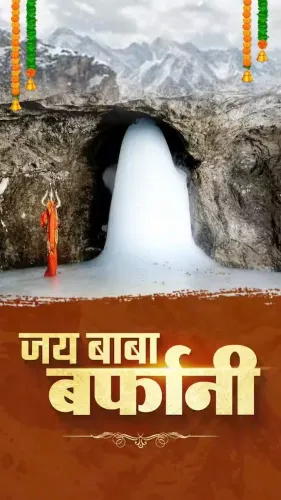
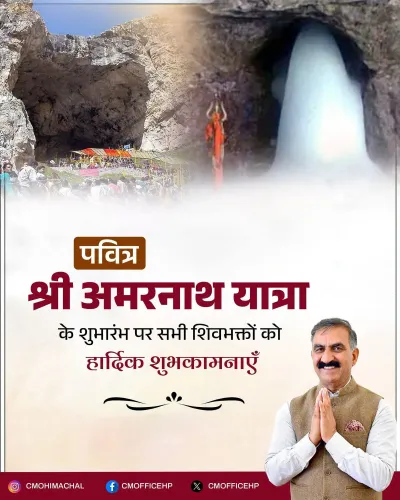
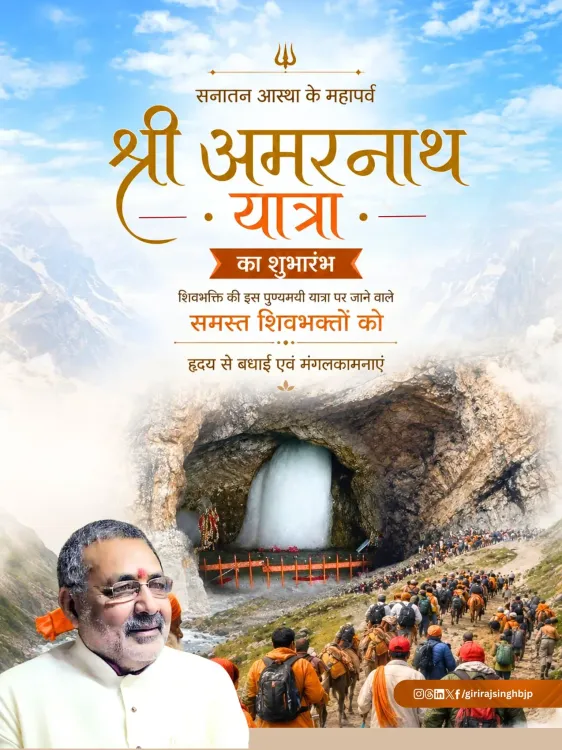
Union Textiles Minister Giriraj Singh on Friday, 3 July 2026 extended greetings to devotees marking the commencement of the Shri Amarnath Yatra, the annual Shaivite pilgrimage to the high-altitude cave shrine in Jammu and Kashmir. The senior BJP leader and Lok Sabha MP from Begusarai, Bihar, posted his wishes on X, invoking the blessing of Baba Barfani (the 'Ice God') for a safe and auspicious journey for all pilgrims.
Context
In his post, Giriraj Singh wrote in Hindi: 'सनातन आस्था के महापर्व 'श्री अमरनाथ यात्रा' के पावन शुभारंभ की सभी श्रद्धालुओं और शिवभक्तों को हार्दिक बधाई एवं मंगलकामनाएं!' — translated: 'Heartfelt congratulations and best wishes to all devotees and Shiva bhakts on the auspicious commencement of the great festival of Sanatan faith, the Shri Amarnath Yatra!' He concluded with the traditional invocation 'Har Har Mahadev', a salutation to Lord Shiva widely used by pilgrims and BJP leaders alike.
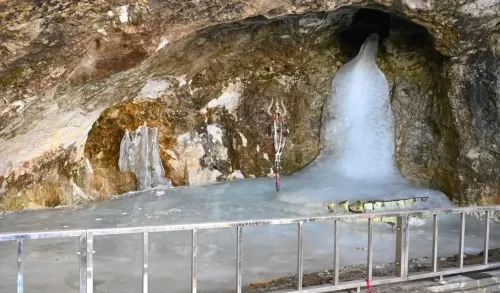
The Amarnath Cave Shrine, situated at an altitude of approximately 3,888 metres in the Himalayan ranges of Jammu and Kashmir, is revered in Shaivite tradition for its naturally occurring ice lingam — a formation believed to represent Lord Shiva. The pilgrimage draws hundreds of thousands of devotees each year from across India and beyond.
Policy Backdrop
The central government has provided coordinated security, medical, and logistical support for the Amarnath Yatra since the 1990s, a period when the pilgrimage faced severe disruptions due to militancy in the region. Over the decades, successive administrations have invested in route infrastructure, base camp facilities, and emergency medical services to ensure pilgrim safety along the challenging Himalayan terrain.
The BJP-led central government has placed particular emphasis on religious tourism and pilgrimage infrastructure as part of a broader cultural policy framework. Official support for the yatra — encompassing the Jammu and Kashmir administration, central paramilitary forces, and health agencies — represents one of the most complex annual logistical exercises undertaken by the Indian state.
Stakeholders and Impact
The yatra has significant economic and social implications for Jammu and Kashmir, providing seasonal livelihoods to local residents through hospitality, transport, and trade. Security forces, including the CRPF and the Jammu and Kashmir Police, are deployed in large numbers along both the Baltal and Pahalgam routes to ensure the safety of pilgrims traversing difficult mountain passes.
For the BJP and its leadership, public association with major Hindu pilgrimages carries cultural and political resonance. Union ministers routinely issue greetings marking significant religious events, a practice that reflects the party's sustained emphasis on Sanatan Hindu traditions in its public communication.
What's Next
Official figures on yatra registration numbers, daily pilgrim movement, and security deployment details are expected to be released by the Shri Amarnathji Shrine Board (SASB) as the pilgrimage season progresses. Authorities will also monitor weather conditions closely, as the high-altitude route is vulnerable to sudden snowfall and flash floods during the monsoon season. The smooth conduct of the 2026 yatra will be closely watched as a marker of the security and administrative situation in Jammu and Kashmir.
Point of View
Reinforcing the party's cultural identity at the national level. The post's timing — on the very day of the yatra's commencement — signals deliberate alignment with a high-visibility religious moment. More broadly, the central government's sustained investment in Amarnath Yatra infrastructure since the 1990s has transformed a once-disrupted pilgrimage into a flagship demonstration of restored normalcy in Jammu and Kashmir. As the region's political status continues to evolve post the 2019 reorganisation, the smooth conduct of the yatra carries symbolic weight well beyond its religious significance.
NationPress
1 Oct 2026
Frequently Asked Questions
When did the Amarnath Yatra 2026 start?
The Shri Amarnath Yatra 2026 commenced on 3 July 2026 , with Union Minister Giriraj Singh among the officials extending greetings to pilgrims on the opening day.
What is the Amarnath Yatra?
The Amarnath Yatra is an annual Hindu pilgrimage to the Amarnath Cave Shrine in Jammu and Kashmir , situated at about 3,888 metres altitude, revered for its naturally occurring ice lingam believed to represent Lord Shiva.
Who is Giriraj Singh?
Giriraj Singh is the Union Minister of Textiles in the Government of India, a senior BJP leader, and the Lok Sabha MP from Begusarai, Bihar .
What security arrangements are made for the Amarnath Yatra?
The central government deploys CRPF personnel and Jammu and Kashmir Police along both the Baltal and Pahalgam routes, with coordinated medical and logistical support that has been in place since the 1990s .
What is 'Baba Barfani'?
Baba Barfani , meaning 'the Ice God,' is a popular name for Lord Shiva as worshipped at the Amarnath Cave Shrine , referring to the naturally formed ice lingam inside the cave.