Pradhan Greets Pilgrims as Amarnath Yatra 2026 Begins
Synopsis
Union Education Minister Dharmendra Pradhan on 3 July 2026 extended greetings to pilgrims as the annual Shri Amarnath Yatra began, praying that Baba Barfani's blessings bring peace and prosperity to all devotees undertaking the high-altitude pilgrimage in Jammu and Kashmir.
Key Takeaways
Dharmendra Pradhan , Union Education Minister and senior BJP leader, publicly greeted pilgrims on the commencement of the Shri Amarnath Yatra 2026 on 3 July 2026 .
The Amarnath cave shrine is located at approximately 3,888 metres altitude in Jammu and Kashmir , with yatra routes passing through Anantnag and Ganderbal districts.
The Shri Amarnathji Shrine Board manages logistics, registration and facilities for the annual pilgrimage under the Jammu and Kashmir administration.
Following the abrogation of Article 370 in 2019 , the central government enhanced security and medical infrastructure coordination for the yatra.
The smooth conduct of the yatra is treated by the government as a marker of improved security and administrative normalcy in the Kashmir Valley .
Local communities along the yatra routes — including porters, pony operators and hospitality providers — depend significantly on the annual pilgrim influx.
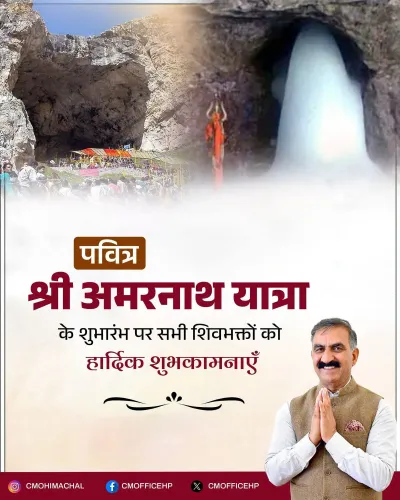
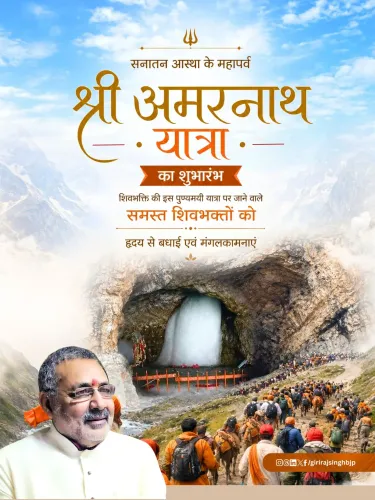
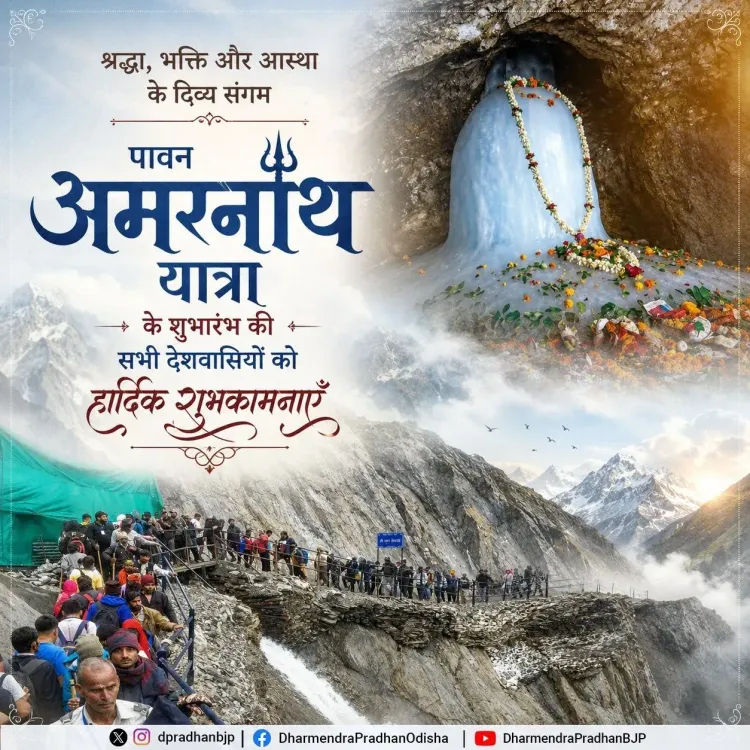
Union Education Minister Dharmendra Pradhan extended warm wishes to pilgrims on Friday, 3 July 2026, as the annual Shri Amarnath Yatra commenced, invoking divine blessings for the health and prosperity of all devotees undertaking the high-altitude pilgrimage in Jammu and Kashmir.
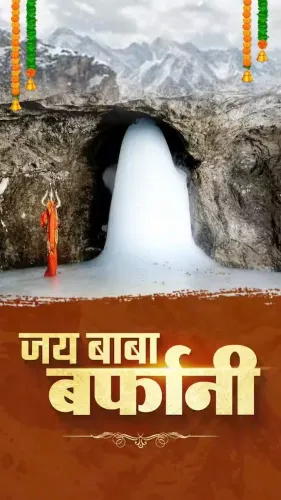
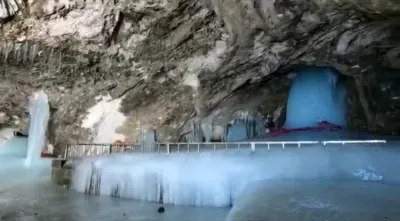
Posting in Hindi on X, Pradhan described the yatra as a 'shradha, bhakti aur aastha ka pavan parv' (sacred festival of reverence, devotion and faith). He prayed that the divine blessings of Baba Barfani — the colloquial name for the ice Shivalinga enshrined in the Amarnath cave — bring 'happiness, peace and prosperity' to the lives of all devotees, signing off with the invocation 'Jai Baba Amarnath!'
Context
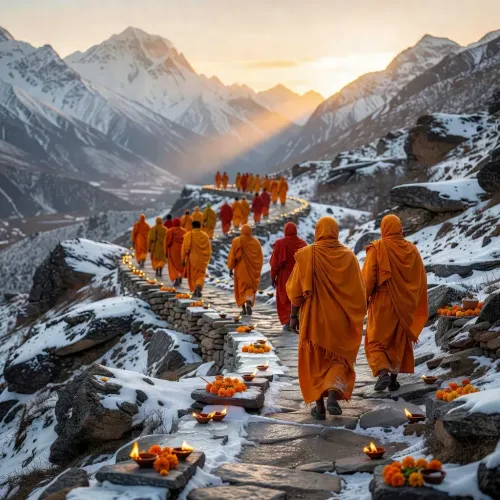
The Shri Amarnath Yatra is one of India's most significant Hindu pilgrimages, drawing hundreds of thousands of devotees each year to the Amarnath cave shrine nestled in the Himalayas of Jammu and Kashmir, typically during the months of June and July. The cave, situated at an altitude of approximately 3,888 metres, is revered for its naturally forming ice Shivalinga, which waxes and wanes with the lunar cycle. The yatra routes pass through Anantnag and Ganderbal districts.
Central ministers and senior political figures across parties routinely issue public messages at the yatra's commencement, a practice that aligns the event with broader national integration and religious-tourism messaging.
Policy Backdrop
The Shri Amarnathji Shrine Board, a statutory body constituted by the Jammu and Kashmir administration, oversees registration, logistics and facilities for the annual pilgrimage. Following the abrogation of Article 370 in 2019 and the reorganisation of Jammu and Kashmir into a Union Territory, the central government directed enhanced coordination for the yatra, including deployment of additional security personnel and medical infrastructure along the routes.
In 2022, the Shrine Board introduced an updated online registration portal and daily pilgrim caps to manage movement more efficiently after COVID-19-related restrictions were lifted. The smooth conduct of the yatra has since been positioned by successive administrations as an indicator of improved security and administrative normalcy in the Kashmir Valley.
Stakeholders and Impact
The pilgrimage carries significant economic and social weight for Jammu and Kashmir. Local communities along the yatra routes — including pony operators, porters, shopkeepers and hospitality providers — depend heavily on the annual influx of pilgrims. Security forces are deployed in large numbers to ensure safe passage through terrain that presents both logistical and security challenges.
For the broader Hindu pilgrim community, the Amarnath Yatra holds deep spiritual significance, and a minister-level public greeting at its commencement reflects the event's standing as a matter of both religious sentiment and national policy. Pradhan's message, amplified through his official social-media presence, is consistent with the BJP-led government's emphasis on cultural continuity and religious tourism in the region.
What's Next
Attention will now turn to pilgrim registration numbers and any route-specific infrastructure upgrades announced by the Shri Amarnathji Shrine Board ahead of peak movement in mid-July. Any updates on security protocols or funding for high-altitude pilgrimages are expected to surface through administrative channels as the yatra progresses through its scheduled duration.
Point of View
While ceremonial in form, is part of a deliberate pattern by BJP ministers of publicly associating the party with the Amarnath Yatra — an event that sits at the intersection of religious sentiment, national integration and the government's post-2019 Kashmir narrative. The yatra's uninterrupted conduct each year is presented as evidence of restored normalcy in the Valley, making ministerial visibility at its commencement politically meaningful beyond mere courtesy. For the Education Minister specifically, such posts reinforce a broader public persona that spans cultural and religious engagement alongside policy work. The messaging also feeds into the government's push to position Jammu and Kashmir as a viable religious-tourism destination under Union Territory administration.
NationPress
2 Oct 2026
Frequently Asked Questions
When did Amarnath Yatra 2026 start?
The Shri Amarnath Yatra 2026 commenced on or around 3 July 2026 , the date on which Union Education Minister Dharmendra Pradhan posted his official greetings marking the yatra's beginning.
Who is Baba Barfani?
Baba Barfani is the popular name for the naturally forming ice Shivalinga inside the Amarnath cave shrine in Jammu and Kashmir, which is the central object of veneration for pilgrims undertaking the annual yatra.
Who manages the Amarnath Yatra?
The Shri Amarnathji Shrine Board , a statutory body under the Jammu and Kashmir administration, is responsible for managing pilgrim registration, logistics, security coordination and facilities for the annual Amarnath Yatra.
Where is the Amarnath cave located?
The Amarnath cave shrine is located in the Himalayas of Jammu and Kashmir , at an altitude of approximately 3,888 metres , with routes passing through Anantnag and Ganderbal districts.
Why do BJP ministers greet Amarnath Yatra pilgrims?
Senior BJP ministers routinely issue public greetings at the commencement of the Amarnath Yatra as part of a broader pattern of aligning the party with religious and cultural events, and to reinforce the government's narrative of improved security and normalcy in Jammu and Kashmir since the abrogation of Article 370 in 2019 .