Giriraj Singh lauds Bihar's pavilion at India Trade Fair
Synopsis
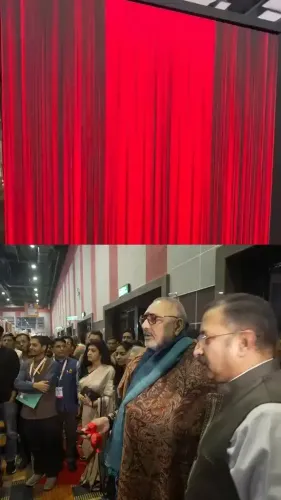
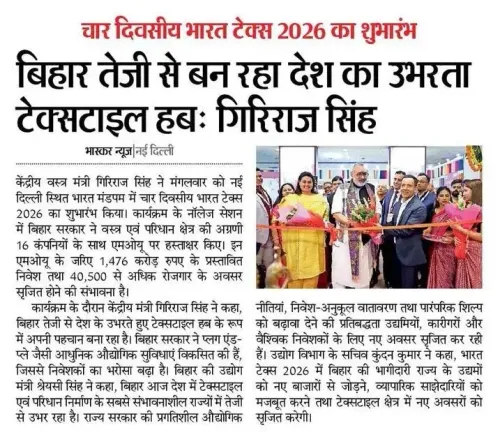
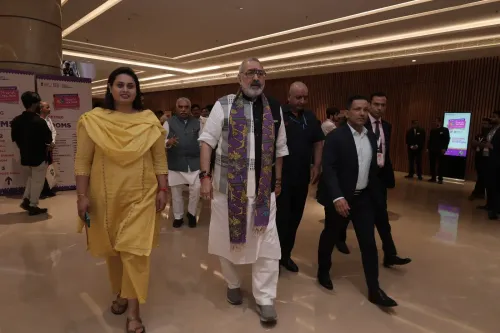
Union Textiles Minister Giriraj Singh on 17 November 2026 praised Bihar's combined showcase of art, handicrafts, and industrial potential at the India International Trade Fair in New Delhi, calling it a reflection of the state's progress.
Key Takeaways
Union Textiles Minister Giriraj Singh praised Bihar's pavilion at the India International Trade Fair (IITF) on 17 November 2026 .
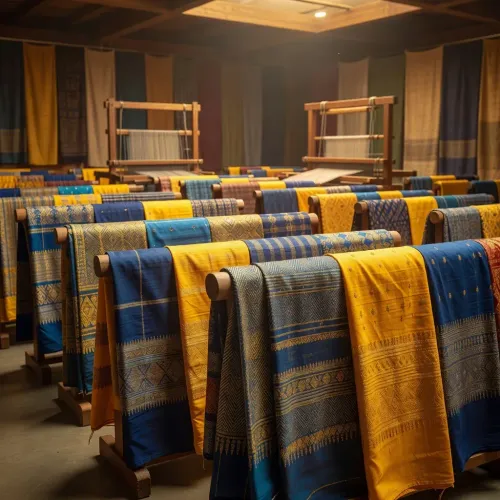
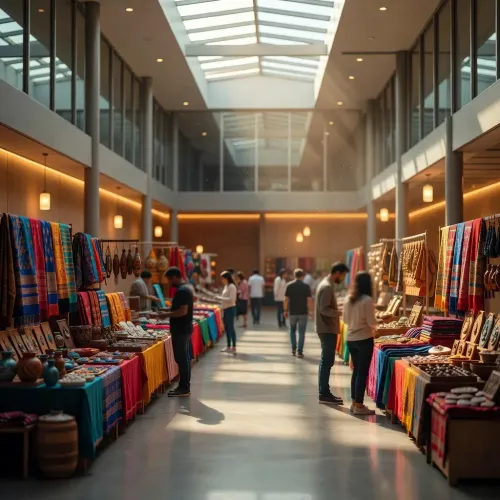
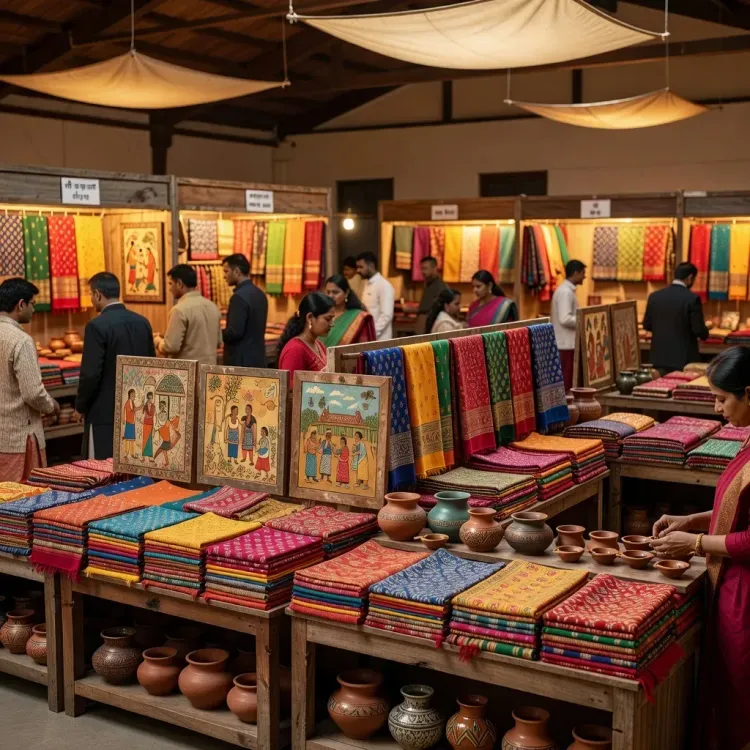
The pavilion jointly presents Bihar's rich art, culture, handicrafts, and industrial potential.
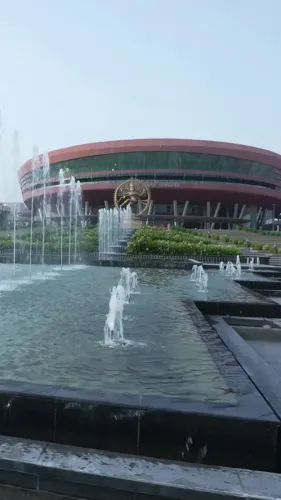
The IITF is organised annually by the India Trade Promotion Organisation at Pragati Maidan, New Delhi.
Bihar's traditional crafts — including Madhubani painting — are part of the showcase alongside industrial growth messaging.
As Union Textiles Minister, Giriraj Singh oversees schemes directly relevant to Bihar's artisan and MSME clusters.
Bihar's centuries-old Madhubani canvases and its ambitions as an industrial destination are sharing the same stage this week — and Union Textiles Minister Giriraj Singh wants the country to notice. On Tuesday, 17 November 2026, the minister took to X to applaud Bihar's presence at the India International Trade Fair (IITF) in New Delhi, calling the initiative to present the state's art, culture, handicrafts, and industrial potential under one roof 'praiseworthy.'
Posting in Hindi, Singh wrote: 'Bharat Antarrashtriya Vyapar Mele mein Bihar ki samridh kala, sanskriti, hastashilp aur audyogik sambhavnaon ko ek saath prastut karne ki yah pahel sarahniya hai' — 'The initiative to present Bihar's rich art, culture, handicrafts, and industrial potential together at the India International Trade Fair is commendable.' He added that Bihar, connecting its glorious heritage with new possibilities for development, reflects the state's progress.
IITF as a showcase for eastern India's ambitions
The India International Trade Fair is an annual exhibition organised by the India Trade Promotion Organisation at Pragati Maidan, New Delhi. It serves as one of the country's largest platforms for states to pitch their investment climate alongside their cultural exports. For Bihar — historically associated with handicrafts such as Madhubani painting, Sikki grass craft, and Sujuni embroidery — the fair is a rare national window.
The state has in recent years pushed hard to reframe its identity: not just as a custodian of ancient heritage, but as a destination for manufacturing and MSME growth. Placing artisans and industry brochures in the same pavilion is a deliberate messaging choice — one that federal platforms like IITF are designed to amplify.
Why a Textiles Minister's endorsement carries weight
Giriraj Singh is not merely a proud Bihar MP making a home-state gesture. As Union Minister of Textiles, his attention to handicraft exports and MSME clusters in eastern India carries policy weight. The Ministry of Textiles oversees schemes that directly support weaver cooperatives and craft clusters — the same artisan communities that Bihar's pavilion is showcasing. His public endorsement signals that New Delhi is watching the state's pitch with more than ceremonial interest.
Bihar's artisans and state-based MSMEs stand to benefit most immediately — an encouraging word from a ministry that controls scheme funding is never purely symbolic on the trade-fair floor.
Point of View
Not just tourism optics. The IITF platform increasingly functions as a soft-power auction where states bid for both tourist footfall and factory investment simultaneously. For Bihar, with its large artisan workforce and improving infrastructure narrative, ministerial visibility at this moment is a multiplier.
NationPress
17 Nov 2026
Frequently Asked Questions
What is the India International Trade Fair?
The India International Trade Fair (IITF) is an annual trade exhibition held at Pragati Maidan in New Delhi, organised by the India Trade Promotion Organisation to promote domestic products, regional heritage, and investment opportunities from across India.
What did Giriraj Singh say about Bihar at IITF 2026?
Giriraj Singh called Bihar's initiative to jointly showcase its art, culture, handicrafts, and industrial potential at IITF 2026 'praiseworthy,' saying it reflects the state's progress by linking its glorious heritage with new development possibilities.
What handicrafts is Bihar famous for?
Bihar is renowned for traditional crafts including Madhubani painting, Sikki grass craft, and Sujuni embroidery, all of which represent the state's rich artisan heritage.
Why is the Textiles Minister's support significant for Bihar artisans?
The Union Ministry of Textiles administers schemes that fund weaver cooperatives and craft clusters. Ministerial attention can translate into scheme allocations and export promotion support for Bihar's artisan and MSME communities.
Where is IITF held every year?
IITF is held annually at Pragati Maidan in New Delhi, typically in November, and is one of India's largest multi-sectoral trade exhibitions.