Giriraj Singh fires at opposition over dynastic politics
Synopsis
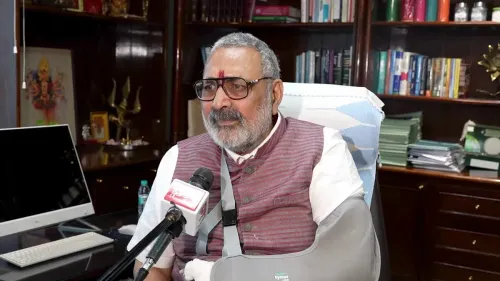
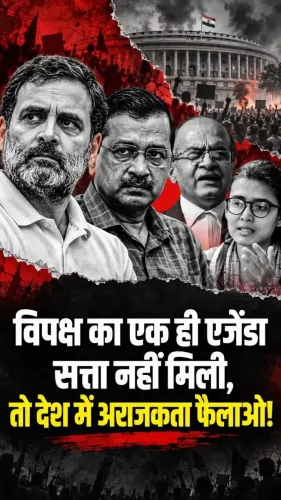
Union Textiles Minister Giriraj Singh launched a sharp broadside against the opposition on 1 November 2026, accusing it of treating power as a family inheritance, looting the country during its years in government, and dismantling the dignity of constitutional offices rather than accepting democratic mandates.
Key Takeaways
Giriraj Singh posted a combative statement on 1 November 2026 attacking the opposition over dynastic politics and institutional conduct.
He accused the opposition of 'looting the country and dividing society' during its years in power.
He charged that the opposition is 'tearing apart the dignity of constitutional offices' instead of accepting the people's mandate.
He used the Hindi idiom chori aur seenajori ('theft and brazenness') to describe the opposition's stance, declaring it would no longer be tolerated.
The BJP has deployed anti-dynastic messaging consistently since the 2014 general election , with the Indian National Congress as its primary target.
Singh closed by affirming: 'Power is no one's fiefdom; democracy is the strength of the people.'
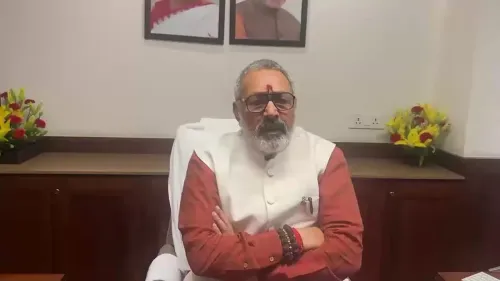
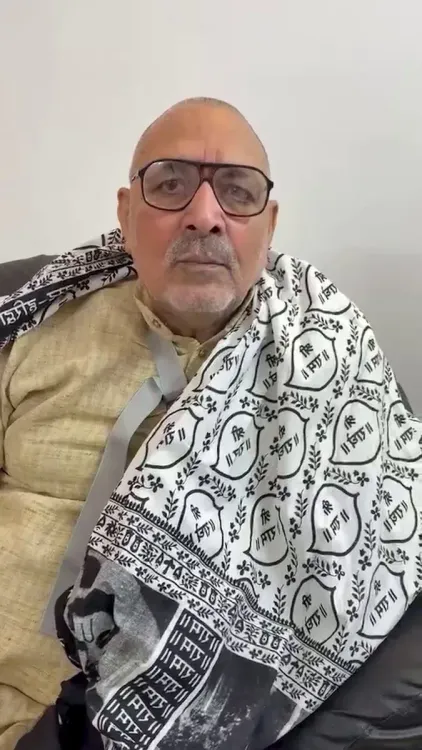
Power belongs to the people, not to political dynasties — that is the blunt message Union Textiles Minister Giriraj Singh fired at the opposition on Sunday, 1 November 2026, in a pointed post on X that escalated BJP's long-running battle against what it calls entitlement politics.
The charge: 'theft and brazenness' in constitutional offices
Posting in Hindi, the Begusarai MP did not mince words. 'यह देश संविधान से चलेगा, यह किसी के परिवार की विरासत नहीं है' — 'This country will run by the Constitution, it is not the legacy of anyone's family' — he wrote, framing the confrontation squarely as constitutional principle versus inherited privilege.
He accused the opposition of having 'looted the country and divided society' during 'years in power', and said that instead of accepting electoral mandates, they were 'tearing apart the dignity of constitutional offices' — a phrase that signals frustration at what the BJP sees as institutional disruption. He closed with a stinging idiom: 'चोरी और सीनाजोरी' — 'theft and brazenness' — declaring it would no longer be tolerated.
BJP's decade-long dynastic-politics playbook
The broadside is not spontaneous. Since the 2014 general election, the BJP has systematically built a political identity around dismantling what it frames as Congress-era dynastic entitlement. The Indian National Congress, long associated with the Nehru-Gandhi family and extended stretches of national power, has been the primary target of that framing.
The language Singh deployed — constitutional primacy, people's mandate, rejection of inherited power — is a well-worn template, but its deployment by a senior Cabinet minister at this pitch signals that a fresh flashpoint has sharpened the rhetoric. The specific trigger for Sunday's post could not be independently verified, but such statements have historically clustered around opposition protests, parliamentary disruptions, or contested election results.
Why the timing lands with force
The reference to 'dignified constitutional positions being shredded' is the sharpest edge. It suggests the dispute has moved beyond electoral arithmetic into a fight over institutional conduct — the kind of argument that can drag in Parliament's presiding officers, privilege committees, and questions of what dissent looks like versus what obstruction does.
'Democracy's verdict is supreme,' Singh wrote. 'The country's aware public now understands everything.' It is a direct appeal over the heads of opposition leadership to voters — the classic populist move of treating electoral wins as ongoing referendums that opponents are obliged to honour in their behaviour, not just in seat counts.
The punchline Singh chose — 'सत्ता किसी की जागीर नहीं, लोकतंत्र जनता की ताकत है' ('Power is no one's fiefdom; democracy is the strength of the people') — is the kind of line built for sharing, and it will almost certainly be tested against whatever parliamentary or institutional storm is already building.
Point of View
But the sharpened reference to 'constitutional offices being dismantled' suggests the confrontation has recently escalated beyond standard electoral sparring into a dispute over institutional norms — potentially involving Parliament, courts, or election bodies. The populist framing — invoking the 'aware public' as the ultimate arbiter — is designed to delegitimise opposition conduct before any formal institutional process concludes. Over twelve years, BJP has found this language electorally durable; the risk is that its repeated use dulls its edge precisely when a genuine constitutional dispute may need clear, specific articulation to land with voters.
NationPress
1 Nov 2026
Frequently Asked Questions
What did Giriraj Singh say about the opposition on 1 November 2026?
He accused the opposition of treating political power as a family inheritance, looting the country during years in government, dividing society, and now disrespecting constitutional offices instead of accepting the people's mandate.
Who is Giriraj Singh?
Giriraj Singh is a senior BJP leader, Union Minister of Textiles, and Lok Sabha MP from Begusarai, Bihar.
What does 'chori aur seenajori' mean in his post?
The Hindi idiom chori aur seenajori literally means 'theft and brazenness' — doing something wrong and then bold-facedly defending it. Singh used it to describe the opposition's conduct.
Is the BJP's anti-dynastic messaging new?
No. The BJP has consistently framed its politics around ending dynastic entitlement since the 2014 general election, primarily targeting the Indian National Congress and its association with the Nehru-Gandhi family.
What did Giriraj Singh mean by 'dignity of constitutional offices being torn apart'?
The phrase signals BJP's view that the opposition is disrupting or delegitimising constitutional institutions — such as Parliament, election bodies, or other offices — rather than engaging through democratic processes. The specific recent incident that prompted the remark could not be independently verified.